DCS 2.9

To expand a little bit what works and what doesn’t (in DCS ofc) I will expand this a little. This is only to set up long range AMRAAM engagements in a test scenario, in a proper mission you will of course run into all kinds of situations.

I will take the Viper for this because it’s what I am familiar with. I never liked the radar workflow in the Hornet although using AWACS data link with the nose cold for AMRAAMs is quite a lot of fun I must admit

It’s been a while since I ran proper tests but the last mission I have flown before Christmas I winged it and went away with a PK of 0.75 (4 shots, 3 kills) against MiGs with R-77. The shot I missed was about half-way down between Raero and Rte and it was a close one.

The nice thing with the Viper is that managing the radar and missile employment is very straightforward. It’s all controlled via the HOTAS which in my book is a huge plus vs the Hornet. Although the Hornet has a better radar and its DLZ gives you a little more information IIRC, it has a higher workload due to the subpar HOTAS controls (that is only my opinion, I have always disliked radar management in the Hornet).

So the DLZ in the Viper has three important marks. You have Raero, Rtr and Rmin.

Raero is your missiles maximum aerodynamic range

Rtr is the turn-and-run range which means if the target turns around and runs the missile will still be able to catch it. If you want to ensure a kill you wait for Rtr if your timeline allows for it. It doesn’t guarantee a kill but the PK against AI is very good here. Going high and fast can extend this range to over 20 miles in a head-on scenario

Finally Rmin is the minimum range for the missile pretty self-explanatory.

The question when you want to shoot your first missile is obviously completely dependent on the situation but for the sake of simplicity let’s say you’re up against a MiG-29S with R-77 in a head-on high altitude scenario and you have AWACS data-link.

I don’t have a precise timeline here but a conservative MAR of 20nmi is reasonably safe and gives you a high PK.

You should be able to pick up the MiG around 35-40nm on radar and get solid TWS tracks around 30nmi.

Using Data-Link you can comfortably set up your engagement. In a simple test scenario like this, I climb to an altitude of 25’000ft-27’000ft, level off and accelerate at mil power to about M0.95 before turning hot. At about 45-50nmi I plug in the burner, accelerate past M1 and start a supersonic climb. Things will happen very fast now, ideally the engagement is over in a few minutes.

There are three good options for AMRAAM employment, STT, dual target track and TWS. TWS is pretty solid but it can be a bit trickier to use than STT or dual target track.

In the end the mode doesn’t matter that much. STT is the most reliable option but I have the feeling that the AI will always know precisely when you shoot in STT. In TWS their spidery senses are not quite as good last I checked although still way better than any human player.

Once you have a good track or lock, look at your DLZ. In a head-on, going supersonic at above 30’000ft you should see a Rtr of at least 15nmi, probably more, depending on altitudes, aspect and closure. It can be well over 20nmi in this scenario.

Treat the zone between Raero and Rte as a suggestion. I have had good results by waiting for the range to drop to the lower quarter for this zone. Unless I am forced to shoot I wait with my first missile for the range to come down to this bracket, usually between 20 and 25nmi but for testing purposes you can try all kinds of ranges within the bracket. Waiting for the lower quarter will give you a very high PK. If Rtr extends past 20nmi I usually wait for it because that’s almost a guaranteed kill vs AI.

As soon as you shoot, drop out of burner and turn hard to reduce speed until the target is at your radars azimuth limit. Turn around when the missile goes pitbull or when you hit your MAR, whatever comes first.

In the above mentioned mission I did a supersonic sprint for three of the engagements, including the miss. I was airborne for a little under 2h, refuelled a little over 3000lbs and landed with about 2200lbs in the tank.
8 Likes

Weirdly I used to not have this issue, with 20nm shots being quite reliable from M0.8~M0.9 range as long as I was up near the 30,000ft block. To clarify, by “10,000ft altitude advantage” I mean that I was at 30,000ft and my target was at 20,000ft. What I also don’t get is how their R-27ER can outrange an AMRAAM when they’re at M0.25, as they got the first shot off at around 23nm or so. I’ll need to check the tacview again, but at such a speed and altitude disadvantage I don’t see how they stood a chance much less had an R-27 firing solution.

1 Like

That R-27ER will never reach you unless you fly along like nothing happened. M0.84 still deprives your AMRAAM of a lot of energy. Going supersonic should enable 25nmi shots with a pretty decent PK in this scenario.

Edit: we’re talking about the Charlie here, right?

2 Likes

Yep, Charlie AMRAAM. Flying in the Viper. I’m usually struggling to get her to M1.0 with any respectable payload, though. Clean doesn’t allow enough fuel.

Two bags, 184 long, sniper pod, 5 AMRAAMs and 1 AIM-9 is my go-to A2A loadout. At around 25.000ft-27000ft you can accelerate past M1 pretty easily, shallow dive helps. Once past M1.1 you can start a slow supersonic climb with that loadout

3 Likes

Skyraider is still alive. YAY! Ok… Get the Pop Corn out…

5 Likes

Just got done flying the first couple flights in this:

Nice change of pace from the difficult and frozen flying in Arctic Thunder, wich is over the winter Kola peninsula. Love the radio chatter.

Man the viper is not easy to hook up to the tanker! I had to put a curve and limit the deflection of my stick in order to not PIO myself into madness. Managed to get about 1.5K before I gave up. And it’s not just the undampened PIO-ing b’stard of a jet, but also an engine that I never had any complaints about before, but now feels slow to rev while the jet is slick as an oiled weasel. Them pounds were not easy to get!

4 Likes

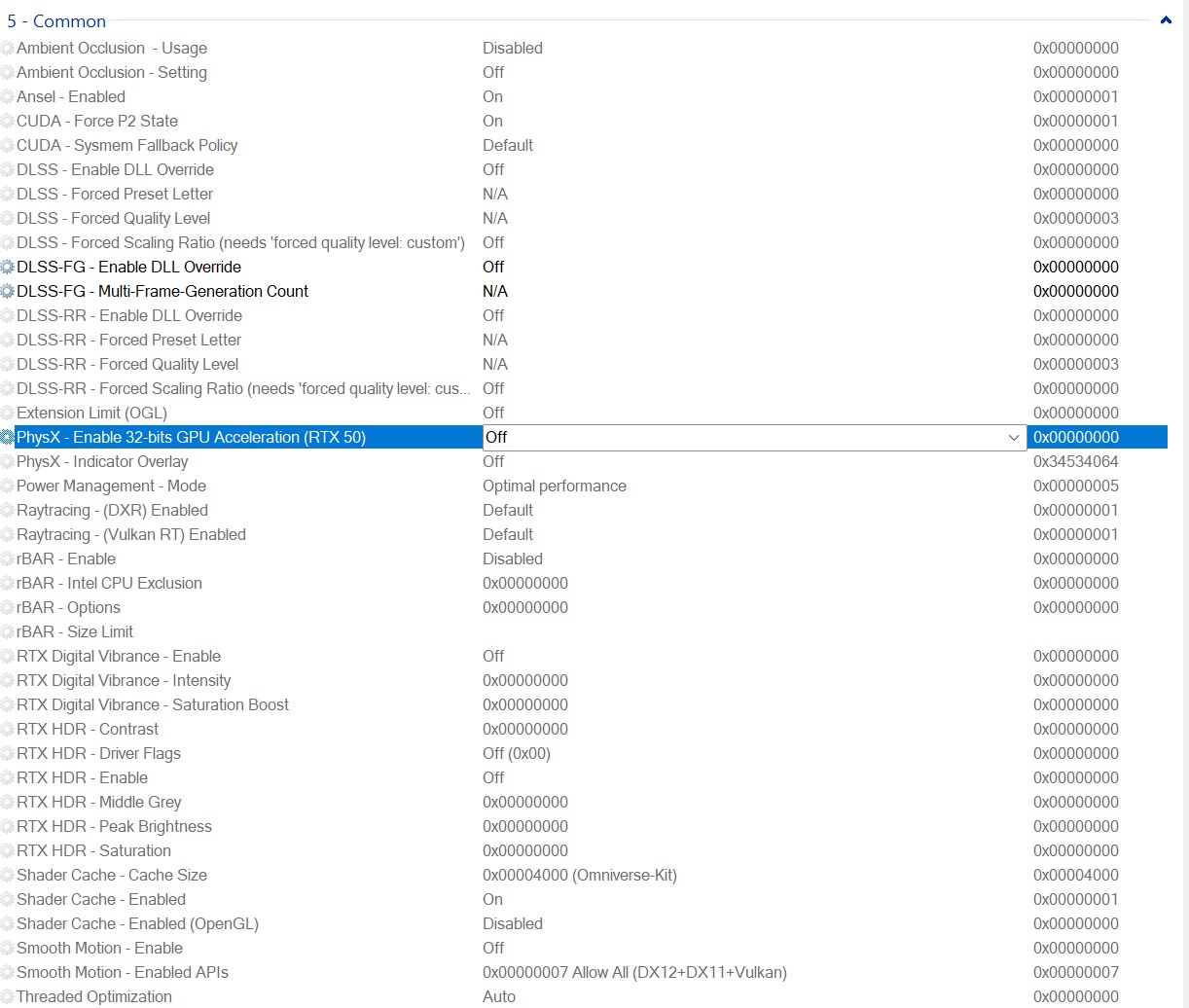
I’m confused by all the information out there. My new laptop has a 5070Ti - I am struggling to understand how or if I should enable DLSS? I downloaded NVidia Inspector but I see an awful lot of sections related to DLSS.

There’s not much to it. I have the stock Nvidia profile settings. In the Nvidia app, make sure the DLSS setting is ‘latest’. Then in DCS, make sure DLSS is enabled in the graphics settings.

I didn’t use Inspector, just the stock Nvidia app.

As for the “should”, it’s a matter of taste. DLSS gives me much better frame rates and reduces shimmering but at the expense of ghosting on the edges of objects. The latest 4.5 DLSS preset M does a great job of reducing the ghosting.

If I switch back to MSAA 4, I get dramatically lower FPS and a lot of shimmering, very noticable on things like fences, towers and power lines.

Only enable DLSS if your GPU is struggling to push the graphics you want to the pixels you have. Very useful in VR. Flat screen with a modern GPU?
Maybe - only if you want very high refresh rates at 4K res. Below 4K, I wouldn’t even bother

2 Likes

Inside the Nvidia app, go to your games and find DCS world. Inside there, make sure that the app can control the usage of DLSS. Then inside DCS, set the upscaling mode to DLSS and choose a preset for performance to quality ratio. I choose to go for max quality. The only expense is minor ghosting in certain very fast objects that mostly goes unnoticed. I haven’t tested if things changed with version 4.5.

1 Like

I have a harder time with this too, even in VR. The ‘stick the thing -my thing- into the thing” [Hornet, Tomcat, etc] is a piece-o-cake for me compared to that[1]. I think it’s a FOV issue moreso. That and I haven’t done enough practice.

[1] If they ever get basket/hose physics going I may change my mind.

1 Like

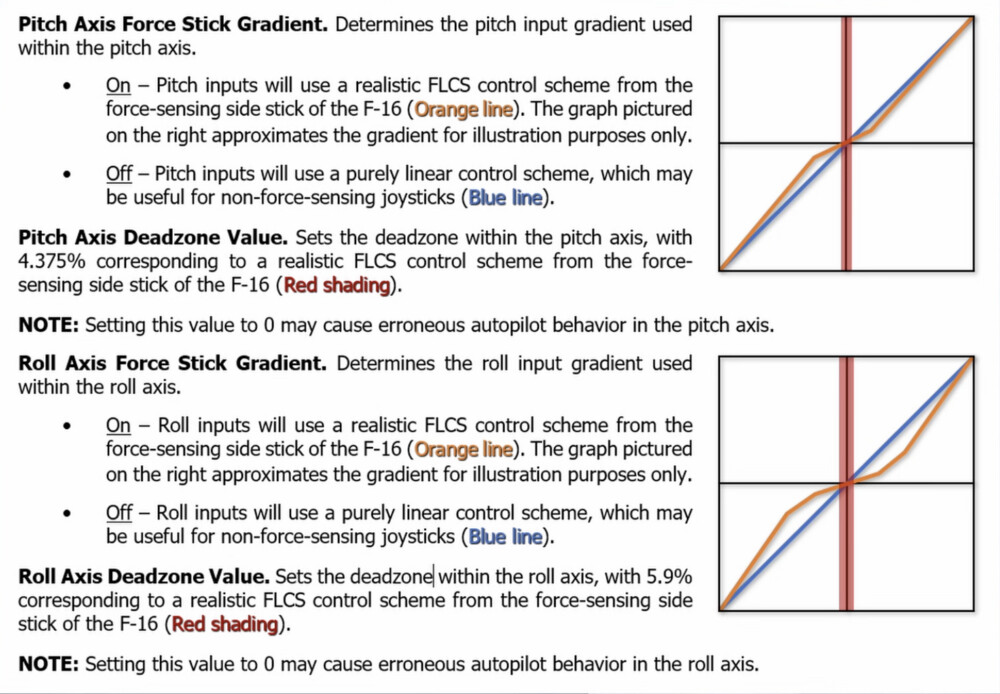
Go to the F-16C special options tab. Make sure FLCS gradient is set to off and then set pitch and roll dead zone to 0%. This should make flying formation much easier. The Viper isn’t much harder to refuel than the Phantom and that is one of the easiest planes to fly formation in. It’s just incredibly stable.

2 Likes

That reminds me: I haven’t tried AR in the Viper since pluggin in my Moza FFB. Me thinks this might help [me].

3 Likes

Mhh maybe. I would really like to try a force sensing stick in the Viper though^^

Here’s my special tab for the viper. I just tried the refueling instant action to check whether something has changed. Dead easy with the settings shown here. I then put the dead zone to max, still managed to refuel in one go but had some PIO while settling behind the tanker. With the FLCS gradient on I also managed to refuel in one go but it was hell. Almost disconnected a few times even though you don’t take on much fuel in the instant action

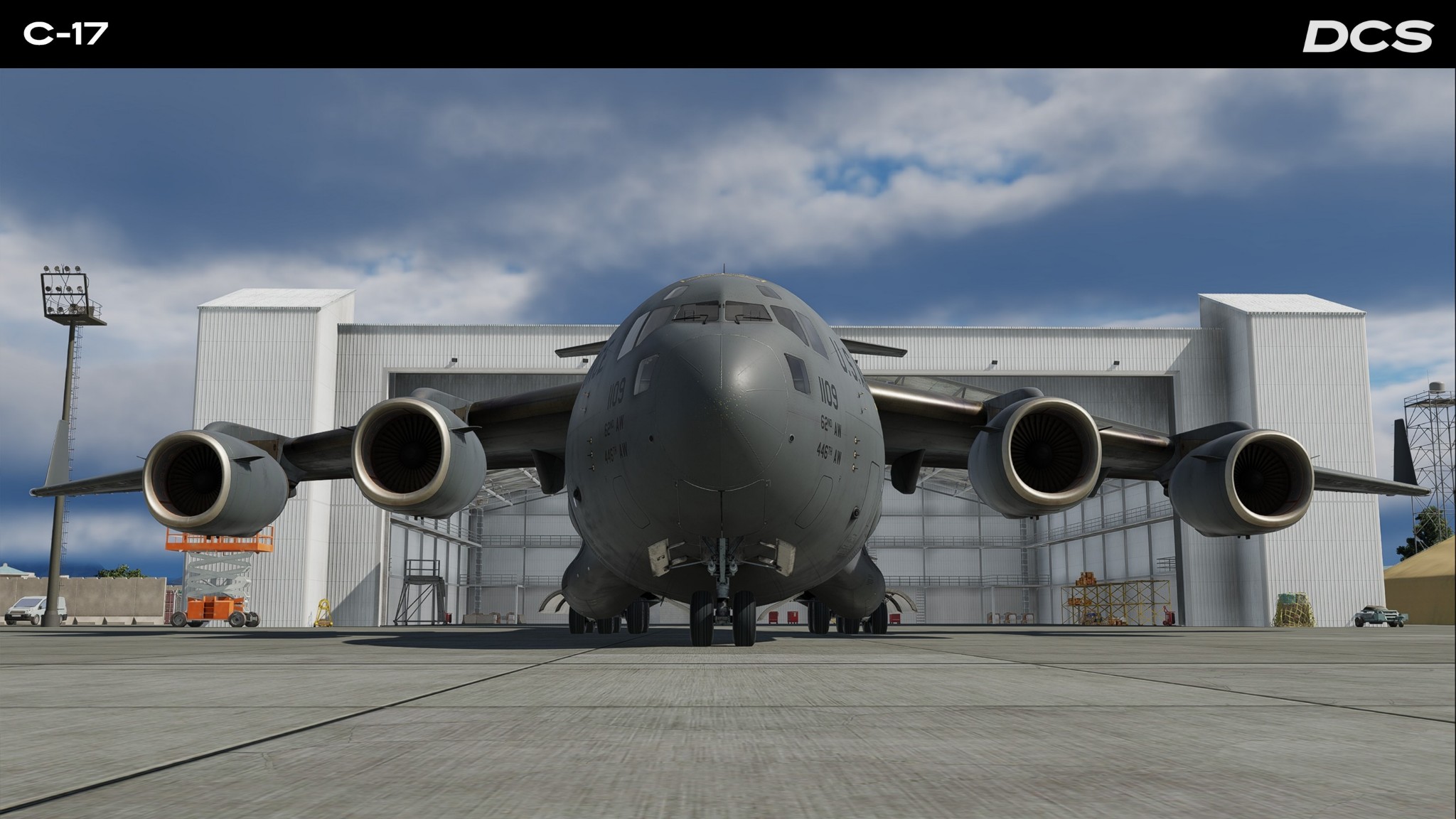
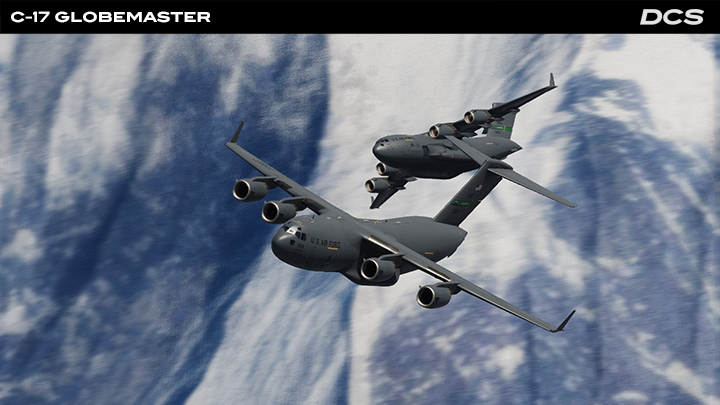
Y’all see those jummy C-17s? We’re getting a fresh model for those it seems…

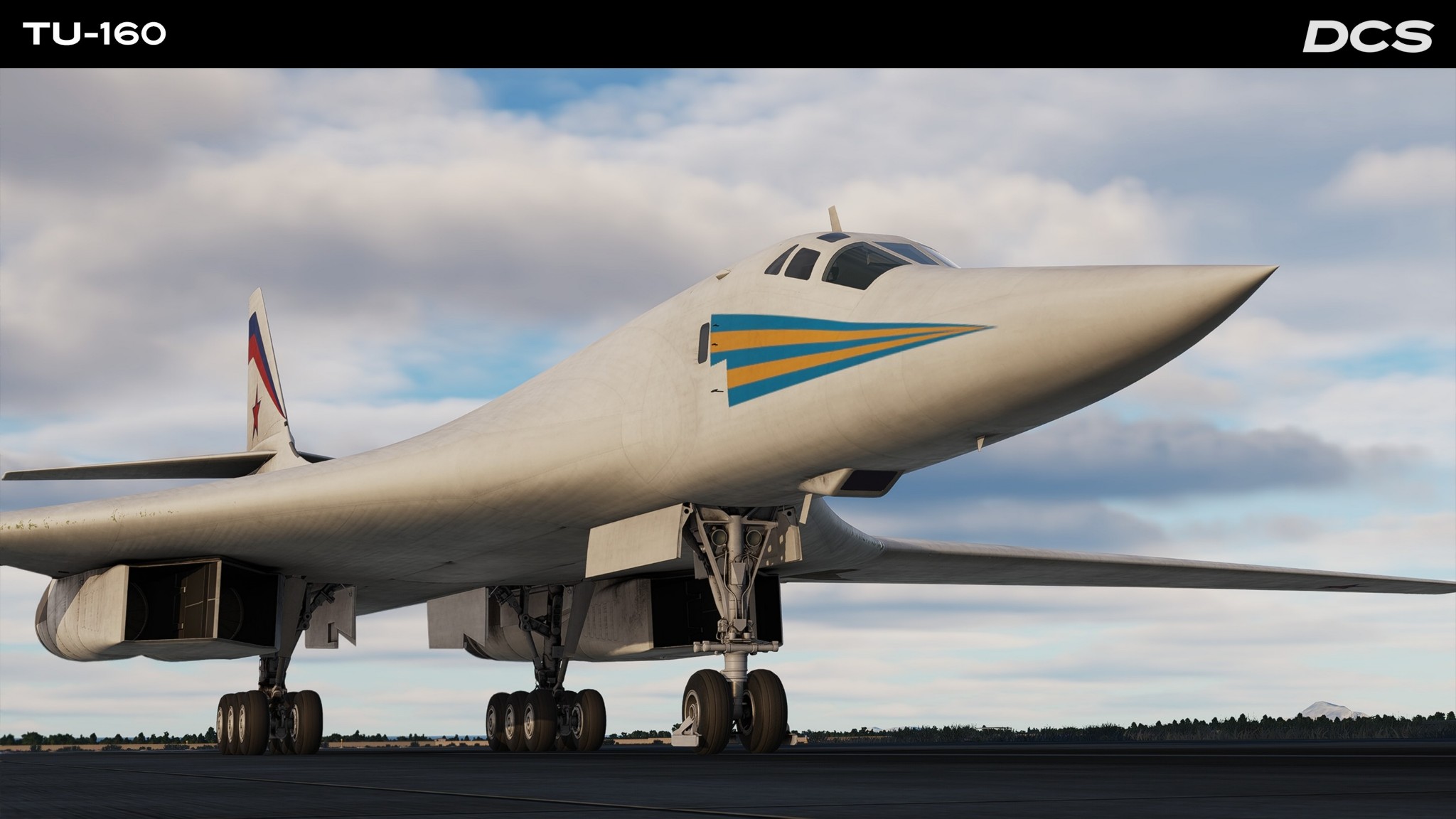
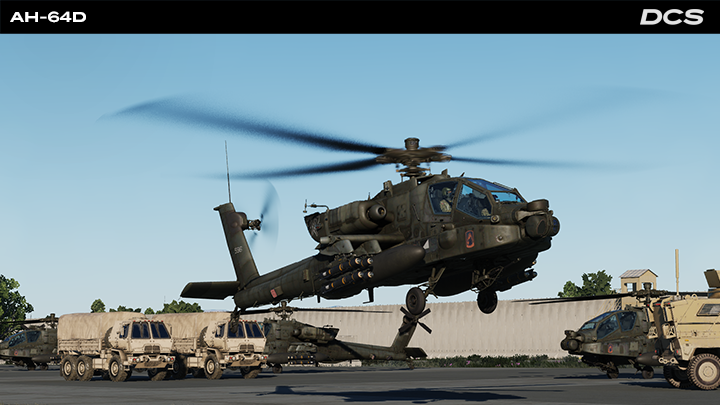
And look at this gorgeous target:

5 Likes

Can you explain briefly what flcs gradient does or what effect it has on control?

The stick in the real jet is a force-sensing stick that barely moves. It ignores minute amounts of force applied to it (like a deadzone but in force instead of motion), responds mildy to small forces and engages fully with large forces. This often doesn’t translate well to what we can do with our sticks at home (I share Derby’s desire to have something like Winwings force-sensing stick.. if only we had too much beer money). These special settings allow you to adjust this behavior in the virtual jet so you can more comfortably control it with your flight stick.

4 Likes

09 January 2026

Dear Fighter Pilots, Partners and Friends,

In last week’s newsletter we looked at what Eagle Dynamics will be working on in 2026 and beyond. We have a lot more in motion that will shape how you fly DCS over the coming years. Work on new, free Su-25 is progressing, as well as completing both the Iraq and Afghanistan maps. We will also continue researching new technologies and features like 1st person walk-around mode, Combined Arms 2.0 features (like VR support), and research, design, and development of the F-15C and F-35A.

The Pacific Theatre of Operations (PTO) will be a pillar of DCS, with player-controlled Hellcats and A6M5 Zeros. This, combined with the free Marians 1944 map and an extensive PTO assets pack of aircraft, ships, and ground units, will create the depth and scope needed to recreate summer 1944 PTO operations.

The DCS Winter Sale is in its final hours and we encourage you to review the offers and secure any last minute deals before they disappear. Please note that the sale ends on the 12th of January 2026 at 15:00 GMT. DCS Winter Sale video!

Thank you for your passion and support.

Yours sincerely,

Eagle Dynamics

2026 Roadmap

Part 2

Hero1.png

As with last week’s newsletter, this is a partial list of the items we will be developing in 2026. Please note that not all are expected to be released in 2026; some will come afterward.

DCS F-35A and F-15C. Although the F-15C design is complete and the F-35A design is maturing, development has been a bit delayed pending additional art and engineering resource availability.

Existing Module Support. 2026 will see continued development across most aircraft, terrains, and technical modules. Work will continue on improving the Mosquito FB VI, F-16C, F/A-18C, AH-64D, CH-47F, Mi-24P, MiG-29A and other aircraft, while both the Afghan and Iraq maps will have final regions added. Supercarrier will see the introduction of the Ready Room, improved landing aid guidance, and a dynamic deck crew.

Hellcat, Zero, and WWII PTO Assets. The Pacific Theater of Operations (PTO) has been a big focus for us over the past year and will continue well into 2026. This includes finalising the release of the Hellcat, the development of the iconic A6M5 “Zero”, which is currently seeing great progress. To create a great simulation of the PTO air war in 1944, many of our artists have been creating a large collection of US Navy and Imperial Japan AI aircraft, ships, and ground forces. Some of these naval vessels are to an exceptionally high level of detail and quality.

Afghanistan and Iraq Map Completion. Last year saw the addition of the eastern region to the Afghan map, and a great improvement to the entire map with more realistic terrain, trees, urban areas, and detail. We are now far along in creating the final region: Northern Afghanistan. The Iraq map also saw continued work on the northern region, and most of the Iraq map work is now focused on the southern region to include the remainder of Iraq, Kuwait, Bahrain, Qatar, and parts of Saudi Arabia.

Spherical Earth. This effort is currently on hold as we focus our resources on the Vulkan API, improved clouds and weather, better visual effects, and further virtual reality performance improvements. This remains an important feature for the future of DCS, but we’ve had to prioritise resources on these pressing tasks. We look forward to returning to this later.

New, free Su-25. The new, free Flaming Cliffs level Su-25 is nearing completion. The level of detail and photorealism is truly excellent. We want our ‘free to play’ first experience to be fabulous.

Following this free, Flaming Cliffs level Frogfoot, we will explore the development of a paid-for full fidelity Su-25 with a new external model and complete systems, sensors, weapons, radios, etc. modeling, similar to the DCS: MiG-29A Fulcrum.

Combined Arms 2.0. The new and greatly updated version of Combined Arms is still on the cards and awaiting development resources being made available. Some of the important items planned are VR support and a more modern and intuitive Real Time Strategy (RTS) interface/command system.

New Infantry Units. Work is steadily progressing on several types of units including US, Russian, Insurgent, and World War II units. There will be a huge improvement in the existing units regarding detail, animations, and accuracy. New infantry units have AI routines to work as a group, move between cover and traverse obstacles. The new infantry will also utilize the new navmesh technology to their advantage. Additionally, we are considering the addition of ATGM teams.

1st Person Walk Around Mode. In a recent MiG-29A video, we included a test simulation of what this might look like in DCS, and the ability to walk around and inside all assets and cargo aircraft similar to the C-130J.

AI Improvements. In almost all DCS Update changelogs, you will find a list of AI fixes and improvements. This will continue in 2026 and beyond with much of the focus being related to supporting the dynamic campaign. Aside from dynamic campaign support, other AI work will be dedicated toward dynamic Supercarrier deck crew, the new radio communication system with an emphasis on ATC and AWACS AI, air defense unit barrage fire logic when attacking aircraft, additional ground vehicles malfunctions caused by damage, tuning of dogfight and beyond visual range aerial combat, and more. We strongly suggest that you keep a close eye on the change logs.

DTC. 2025 saw the introduction of the Data Transfer Cartridge to the F-16C, F/A-18C, and MiG-29A. 2026 will continue this with a focus on navigation and line/point data, sensor and weapon data, and system configurations. We will also expand the DTC to other aircraft including the AH-64D and A-10C II.

Winter Sale

Final Hours

Hero2.png

The DCS Winter Sale discounts on our growing list of aircraft, terrains, and campaigns will continue only until the 12th of January 2026 at 15:00 GMT. Please do not miss this opportunity to grab yourselves a bargain. Shop.

Thank you again for your passion and support,

Yours sincerely,

6 Likes