Haha, not much of one! But thank you! 
@schurem is pretty much right on the money in his assessment.
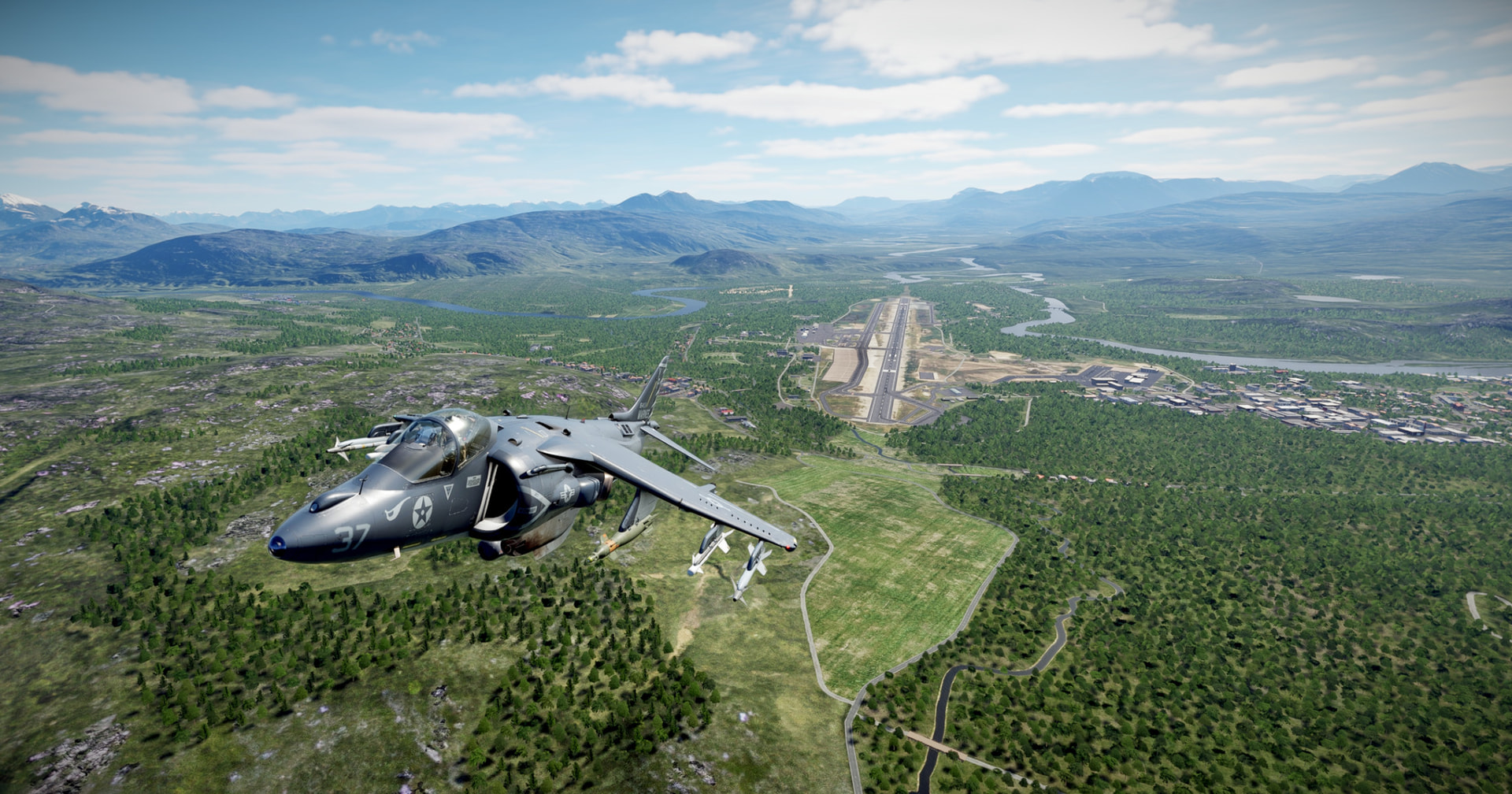
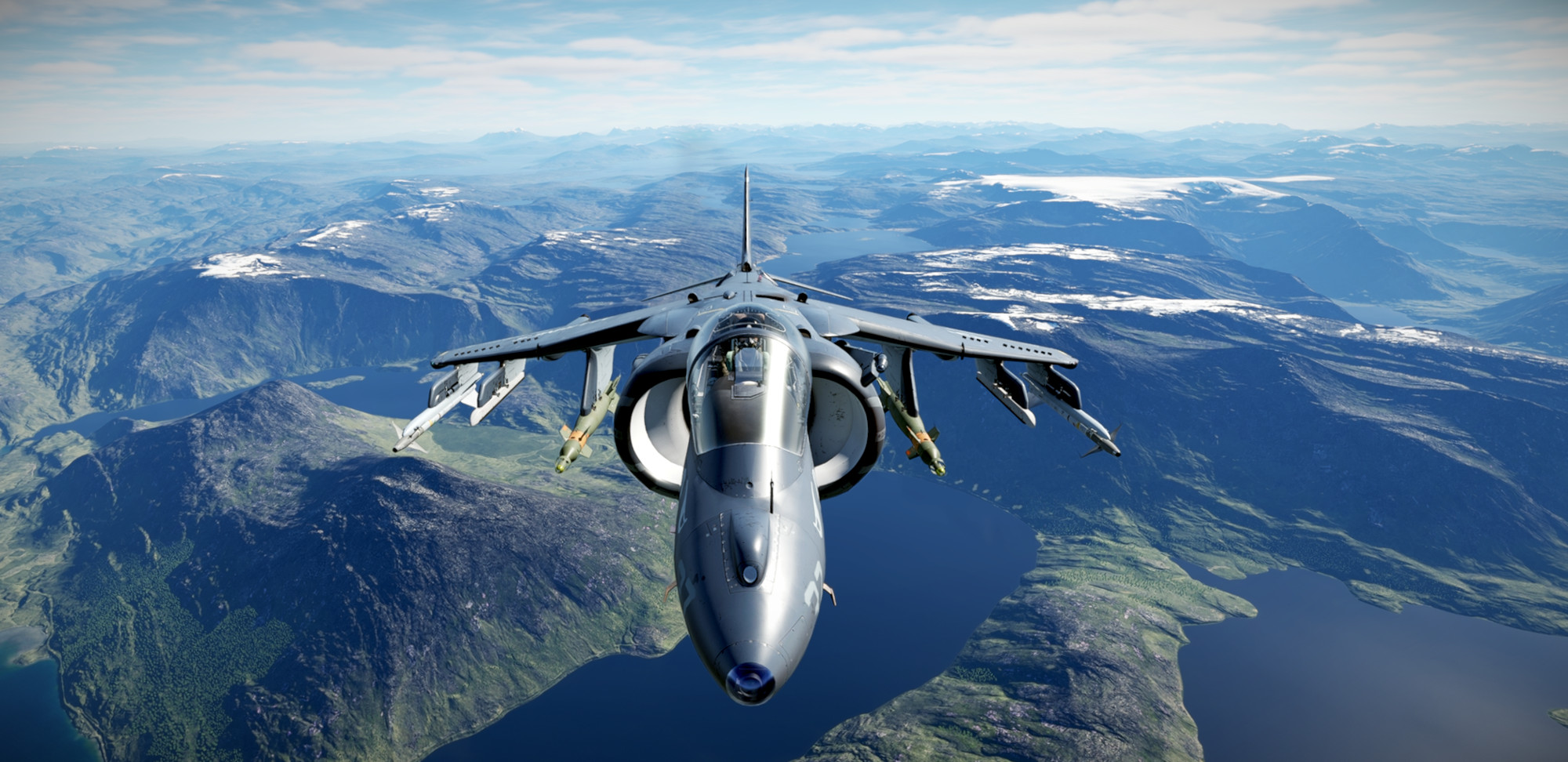
The Harrier, with the Marine Corps being the primary contractor (at least for the B) was made very much with their needs in mind. What the Marines wanted, and arguably what they got, was an airborne artillery platform that they could take with them on their amphibious assault ships and which could follow them ashore as they moved further inland.
As such, you’ll notice a distinct lack of special or advanced weapons in its arsenal…some would say that this was not an accident.
Though no one would likely say this directly, and perhaps it wasn’t even decided consciously, the Marines were utterly pragmatic in requesting an aircraft that could drop dumb bombs, very well, and was capable of doing almost nothing else.
This had two primary consequences. The first was that the Marine Corps could justify this comparatively inexpensive jet. And the second (and perhaps equally important to the Corps) was that no air battle commander would ever take the Harrier away from the Marines to shoot HARMs, hunt warships with Harpoons, provide fleet defense with AMRAAMs, bust bunkers with Mk-84s, etc.
It literally couldn’t do half of those things, and was poorly equipped to do the other half.
But, with a good ARBS lock, it could drop a load of old, cheap, plentiful Mk-82s with near PGM accuracy.
…and come back to do it again in little more time than it took the Ordies to wrestle them onto the pylons.
Note that this was back in the ‘70s-‘80s, when LGBs didn’t exactly grow on trees, JDAM was a an epithet, and JSOW was some kind of pig. 
Note also that the original Bs couldn’t self lase. So, if they did want to drop some of those “special” munitions, it was going to be for a FAC or FAC(A). And some might again argue that this was also not an accident.
Later, as technology moved on (and the Harrier risked becoming combat irrelevant), the Harrier community (including the Brits, Spanish, and Italians for whom the Marine Corps should be eternally grateful lest the Marines be given squat) lobbied hard for the inclusion of the LITENING pod and later the Radar.
But the Harrier would always carry the earmarks of its origins. The Maverick and the LGB were fitted onto the earliest model, the “Day Attack”. But the LITENING required some creative wiring and HOTAS integration.
And, because throughout much of the service history of the Harrier there were three models (Day Attack, Night Attack, and Radar) of the jet, the workflow of any one of them couldn’t be so different from the other two that you couldn’t fly them all on the same day. [Actually, efforts were made at the time to only have two models in a single squadron with a war deploying squadron often plussing up to only have the most capable type available].
So all this word salad aside, that’s why the more advanced capabilities of the Harrier sometimes feel like they were bolted on.
Because they were! 


 ‘Care Bear Mode = on’