I am looking to get a decent quality benchtop mill and lathe, to do some milling and lathe’ing (it should be a word, turning just doesn’t seem like the best verb). There are a myriad of options for benchtop options that range from cheap to way more than I’m going to spend. I know that home machining isn’t necessarily a topic that pop’s up on MS real often (if ever), but we’ve got a lot of folks with a lot of interesting backgrounds, figured it wouldn’t hurt to ask. Thanks in advance!
2 Likes
A lot would depend on what size of items you want to work on and whether it’s for wood or metal.
I’m interested to see what you end up with.
Concerns around cheaper options would be around the strength of motor. For example, I’ve a cheap bench top grinder/polisher which if I press too hard slows the wheel a lot and it’s possible to stop it.
So I guess budget vs motor power is going to be a lot of it.
I’d love a machine shop size lathe. You can get some of these in plant auctions for not silly money in industrial auction sites, though I’d need to get three phase electric put in the barn.
3 Likes
I’ve been wanting to build a scale steam engine forever, so that’s primarily what I’d be using it for right now. My larger scale metal working is amenable to a plasma cutter and angle grinder  A lot of brass, copper, etc, though I would like the ability to turn steel if doesn’t require too much of an upgrade in power.
That’s certainly one issue, the other is the actual stability of the machine. I know that usually the smaller and cheaper the machine the more flex it has, which is a big problem. I’ve had my eye on a few “concrete lathe” builds on youtube. It’s a great idea, but honestly I think I’ll just spend the money rather then than the time and aggrevation.
3 Likes
I have the Proxxon PD250/E and I’m happy with it.
https://www.proxxon.com/en/micromot/24002.php
I’m looking at getting a mill and there is a PF230 mill head that can be mounted to the same frame as the lathe. If you scroll down on the page you will see it.
2 Likes
That looks like a handy setup. The mill drill attachment is a plus (no need for lathe and mill). Saves a heap of bench space.
The only issue I can see is that it is 240V.
2 Likes
Ah! Good catch.
Here’s the link to the US version with 110-120V.
2 Likes
When my dad died, he had an enormous lathe and a a manual milling machine in the garage. One of my biggest regrets is selling them and not learning how to bloody use them. I think about that all the time
4 Likes
This is what makes this site so good. 
That Lathe/Mill combination machine retails around £1000 and change here. So good value in two machines in one.
As a comparison I checked eBay and this has caught my eye. Myford Super 7 Lathe working condition | eBay UK
Myford lathes were originally made in Nottingham and the Super 7’s are nice to use. Can I get to Skipton this week…. 
3 Likes
My dad is/was a fitter & turner. You should see his workshop, Only has his lathe with the 6ft bed now. He said he wasn’t getting the use out of the ‘big’ one anymore and sold it. Also has a 4 axis CNC mill.
He taught me the basics. I can cut a half decent thread. It is all about setting up the job properly and using the right speed. Also, small cuts especially with a thread… don’t try to cut it in a single pass.
The milling machine is easy. Put the billet in and press ‘go’ on the CAD program 
3 Likes
Manual engine lathes typically have a thread chart on them that tells you the gearing necessary to cut different threads.
Figuring feeds on a CNC lathe for threads is pretty straight forward too. Figuring TPI (threads per inch) is just simple division.
24 pitch
1÷24=.041666 tool feed rate
1 inch divided by 24 TPI gives you .041666 feed rate to make that 24 TPI thread.
Most CNC’s that I worked on only allowed 6 places after the decimal but the more numbers you can add after the decimal the more accurate your finished thread is going to be.
Wheels
1 Like
Manual lathe, and funny you should mention a 24 pitch thread. Probably 99% of the threads I have done are 24 pitch.
1 Like
Makes sense, 24 pitch is one of the most common commercial threads.
Wheels
1 Like
And that’s all you need really. The rest is experience and necessity or “I just need a …….”
Such a nice memory to have him teach you.
Our milling machine teacher used to have something in his hand at all times, usually a rolled up newspaper. Always ready to slap you when you forgot to set the milling machine bit to on, before you engaged the movement.
(Non milling machine types, you’d snap the bit if the milling bit wasn’t turning)

4 Likes
Dad is still alive  I said is/was because he’s retired, but still makes all sorts of metal parts for himself, family and friends.
He is also handy with a forge because back when he did his apprenticeship they had to know how to do blacksmithing and hardening steel as well.
He made this for my 40th birthday:
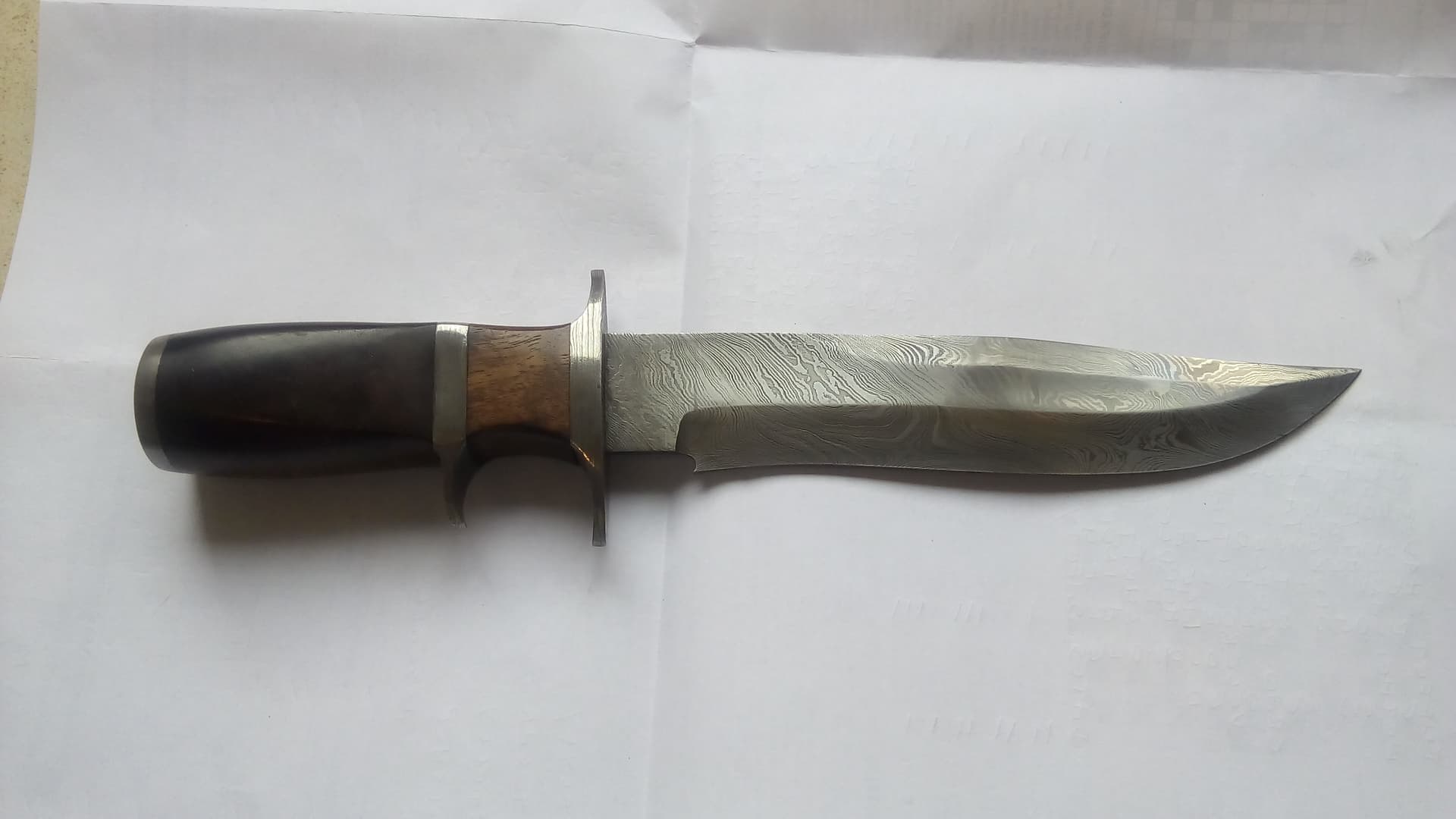
10 Likes
@Troll thanks for the link to the Proxxon, the 250 might be bit small with a 75mm swing. Other than that, it’s ticks a lot of boxes.
You can search by distance, and I’m within 200 miles of Dallas/Ft. Worth, San Antonio, and Houston. There are tons of industrial sized machines available for pretty reasonable prices. A 12’ turret lathe isn’t really anything I can fit in the garage. Now the back porch however…
Warner & Swasey M-3550 4A Square Head Saddle Type Turret Lathe | eBay
Found a few benchtop size lathes that might be worth doing some research on, but in general the results are largely Chinese imports of questionable quality.
2 Likes