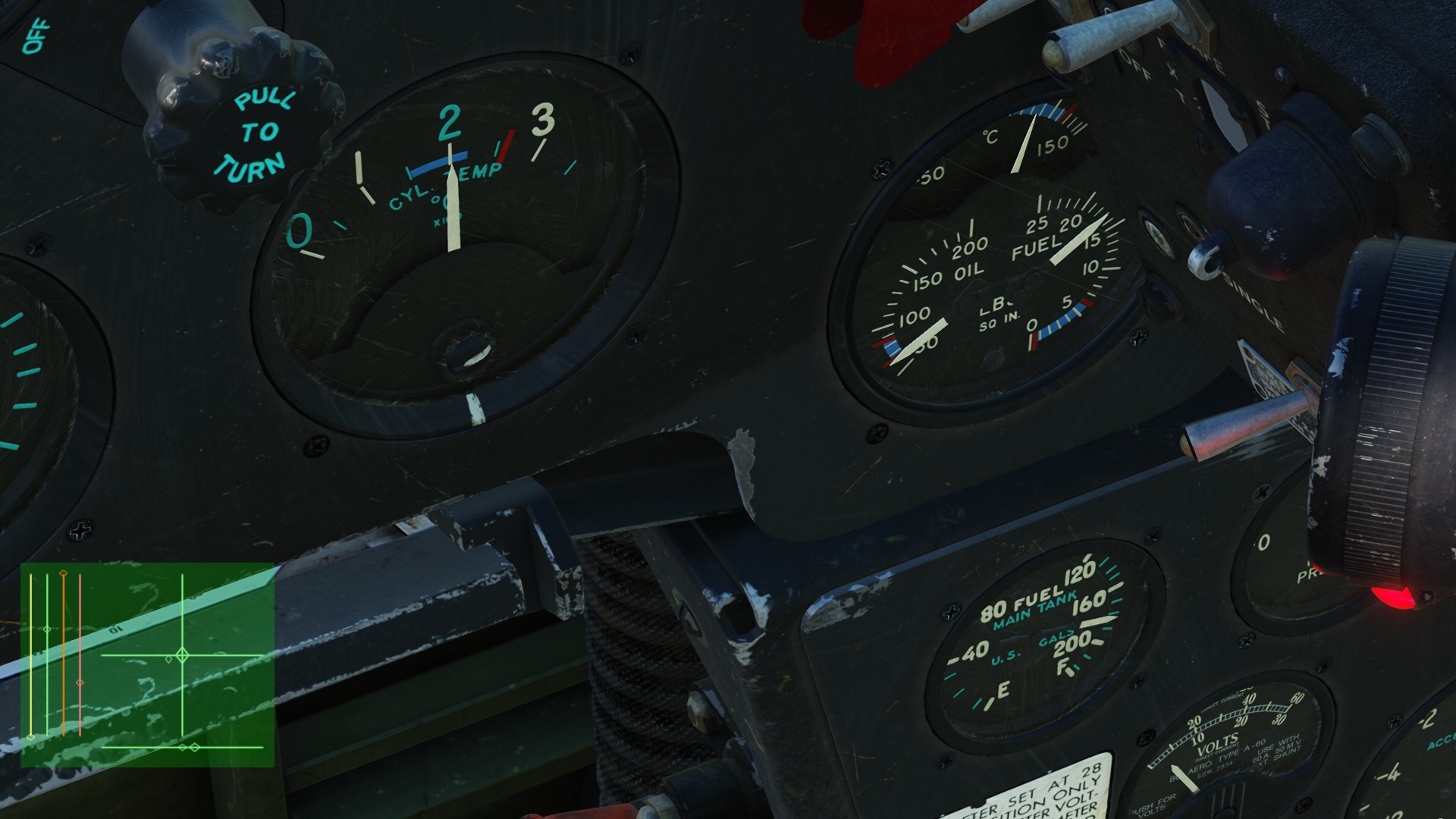
I been trying this for a bit just now, but for some reason the engine keeps conking out on me. That brings to mind my miserable experience with the mozzie, that also tends to just stop at the most inopportune moments. Guess my jet-addled brain can’t deal with the complexities of a Real Man’s Engine™ .
So, who can explain it to me like I’m five? Thanks.
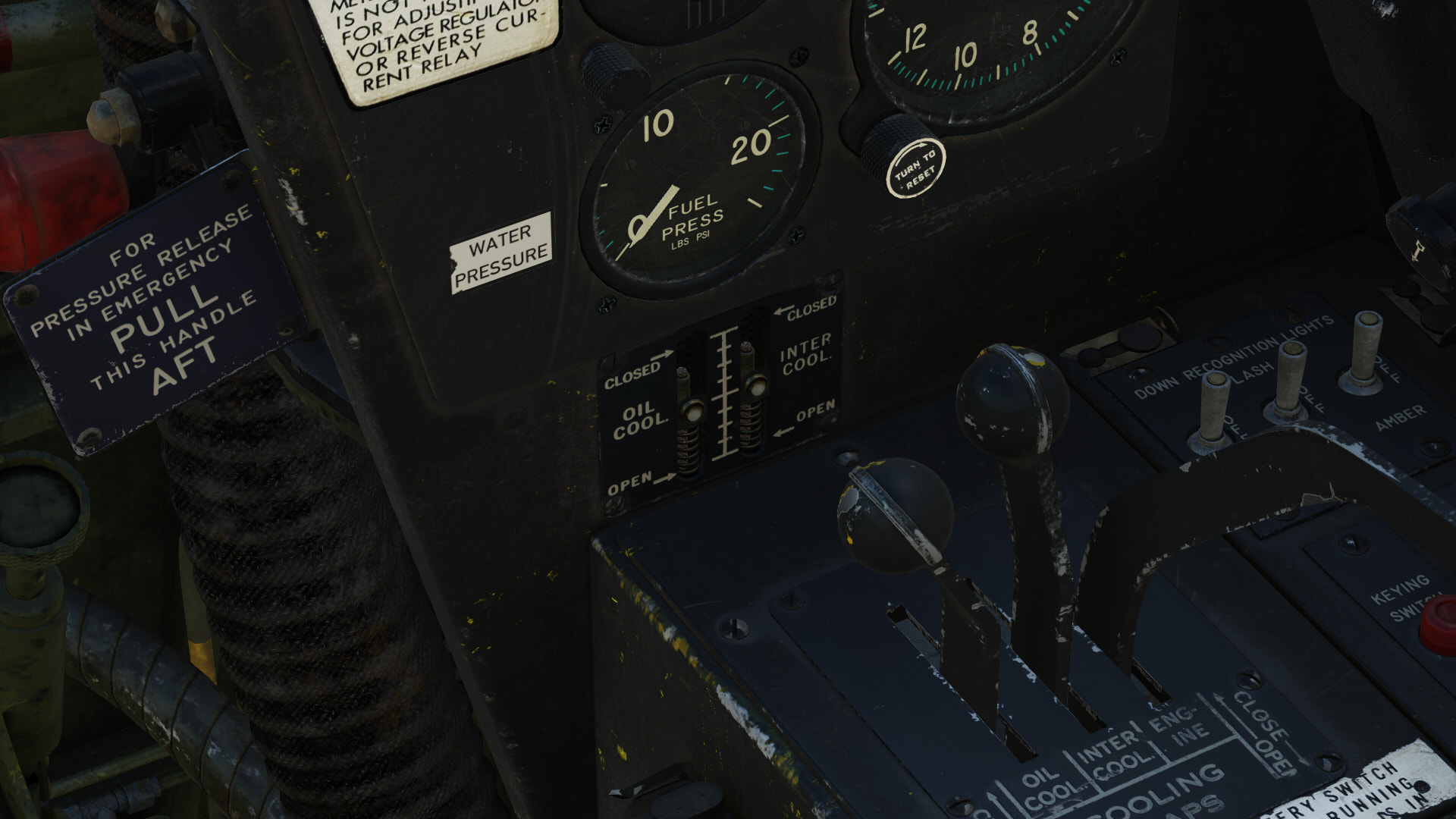
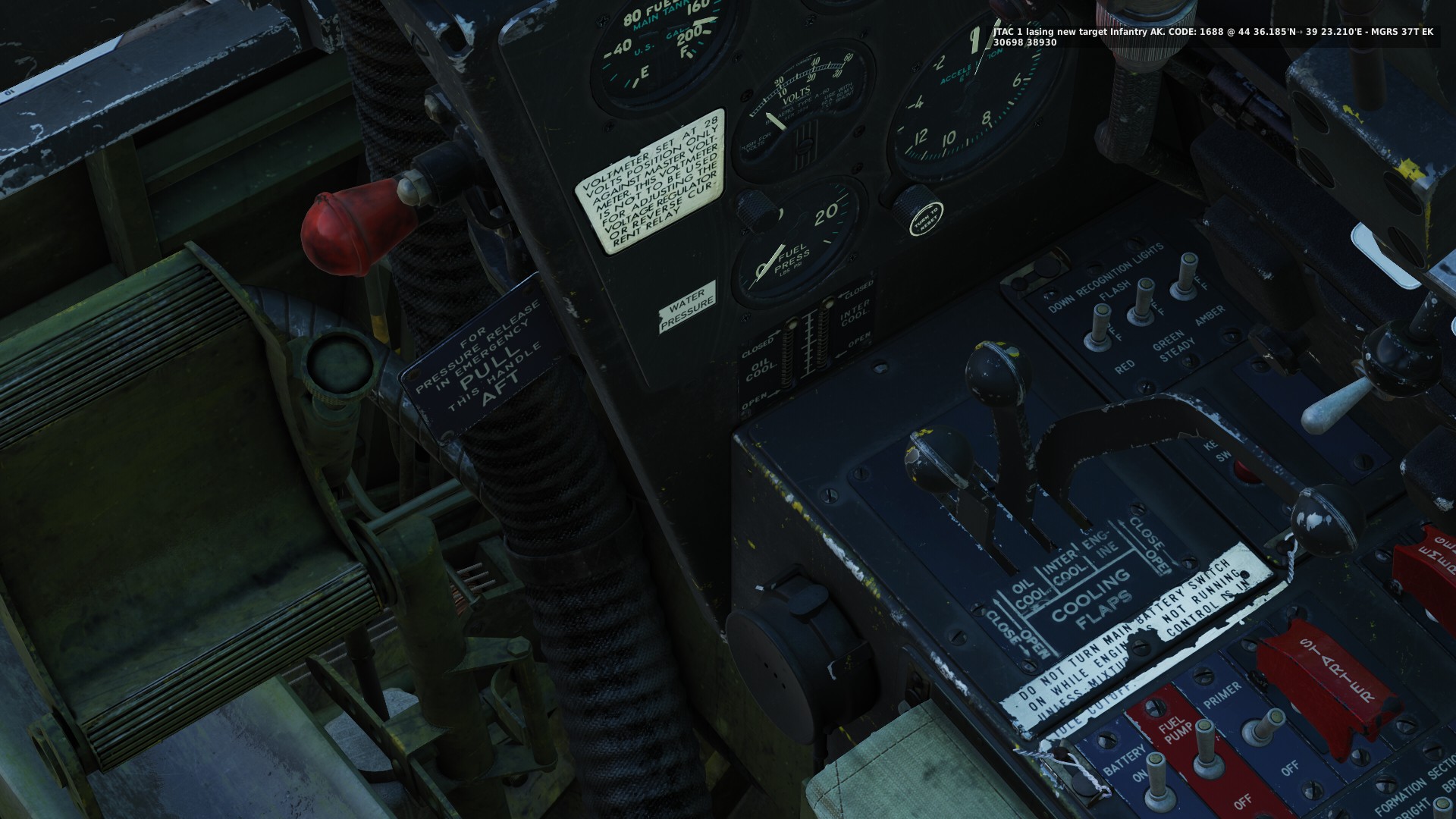
I had this issue as well,After a long absence of using the F4U I came back and noticed my engine overheating and dying mid flight,I solves it by opening “The Oil Cooler Lever” on upper right side panel.
IIRC (pre-the update previous to the latest one) cooling is bugged a bit. I didn’t have any issues keeping oil cooler a third open or greater. Also had to chameleon-eye the cylinder head temp and fiddle with cowl flaps more than I would expect.
For a furball I’d pop oil and intercooler half open or full open. As long as you don’t go WEP you shouldn’t have issues but I noticed sim coders like to treat manual limitations like a binary kill switch instead of any nuanced stress.
That’s the issue for me.
You can’t easily start a module by throwing yourself in a fight.
Especially WWII warbirds.
Don’t really have the time yet to write a full treatment on the Corsair, doubt i ever will, but I do remember how the official DCS manual for the Mustang put it…
Approach it with respect and it will give you all you need.
Take the time to do some familiarization flights,and learn the basics of the engine management.
Introduce one complication at a time.
If only there were a little more feedback than just the gauge. A slight change in the sound or something. In a car you hear when it ain’t running right.
Been a few weeks months, but last I tried, it ■■■■ itself even when I very calmly took off with recommended engine setting from the manual, then switched to recommended cruise setting and just flew straight and level for a few minutes. Very frustrating and very reproducible.
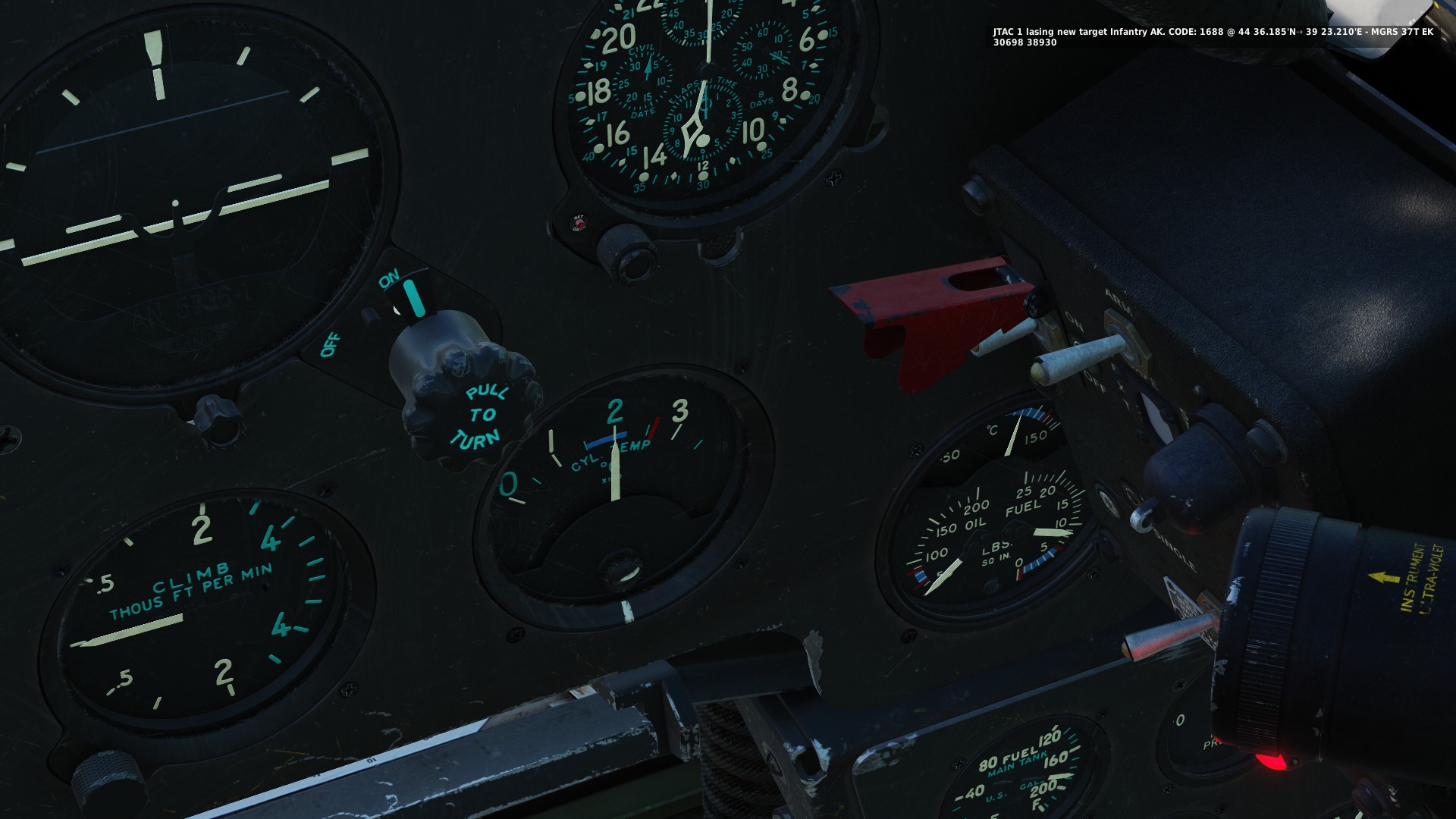
I was looking at the temperature gauges and managing the cowl flaps manually to keep those in the indicated range.
My indications are purely intuition based and logically grounded by my experience with the Mustang (the only other warbird I ever tried to approach kinda methodically).
Some planes need the engine warmed up to the right point, others don’t care, plus the Corsair is early access, IIRC? So definitely there’s multiple factors at play.
Surely it can be bugged, but whatever the reality is, all of that is exacerbated when someone is trying to fight in it without a clear idea of how to handle it.
Being a double wasp I’d indeed expect it to handle battle damage well, but if that translates to “resilient to any form of abuse” that’s an entirely different point already.
Haven’t flown the Corsair in a few updates, so they may have changed the engine modeling again.
3 things you need to pay attention to in a warbird.
Cylinder head temperature - in the Corsair use your cowl flaps. Too hot, engine is done. Too cold, not great, but usually not catastrophic.
Oil temperature - in the Corsair use your oil cooler. Too hot, engine is done. Too cold, not great, but usually not catastrophic.
Intercooler temperature - In the Corsair use your intercooler flaps. Too hot, turbo is toast and usually bad things happen to the engine. Too cold, not great, but usually not catastrophic.
If you’re doing a hot start in DCS, everything is adequately warmed up already. The simplest answer is to crank all your cooling flaps wide open for take off, then once out of TO power close them by about half. If you see things start to overheat, open them up a bit until it stops. In DCS there is no real penalty besides speed for running all the cooling flaps wide open. Real world you can crack things from sudden over cooling (diving bombing with the cooling flaps wide open), but I don’t believe that is implemented yet in DCS.
I’ll mess with it this evening and see if they’ve screwed something up.
Prop full, throttle to 54" and off we go. One thing to bear in mind if you exceed 56.5"(or whatever WEP is) you’ll hear a “ticking” noise, keep that up too long and your engine will be done no matter the temps.
Here we are at 5 minutes of TO power with cowl flaps at the hot start default and oil and intercooler set to half open.
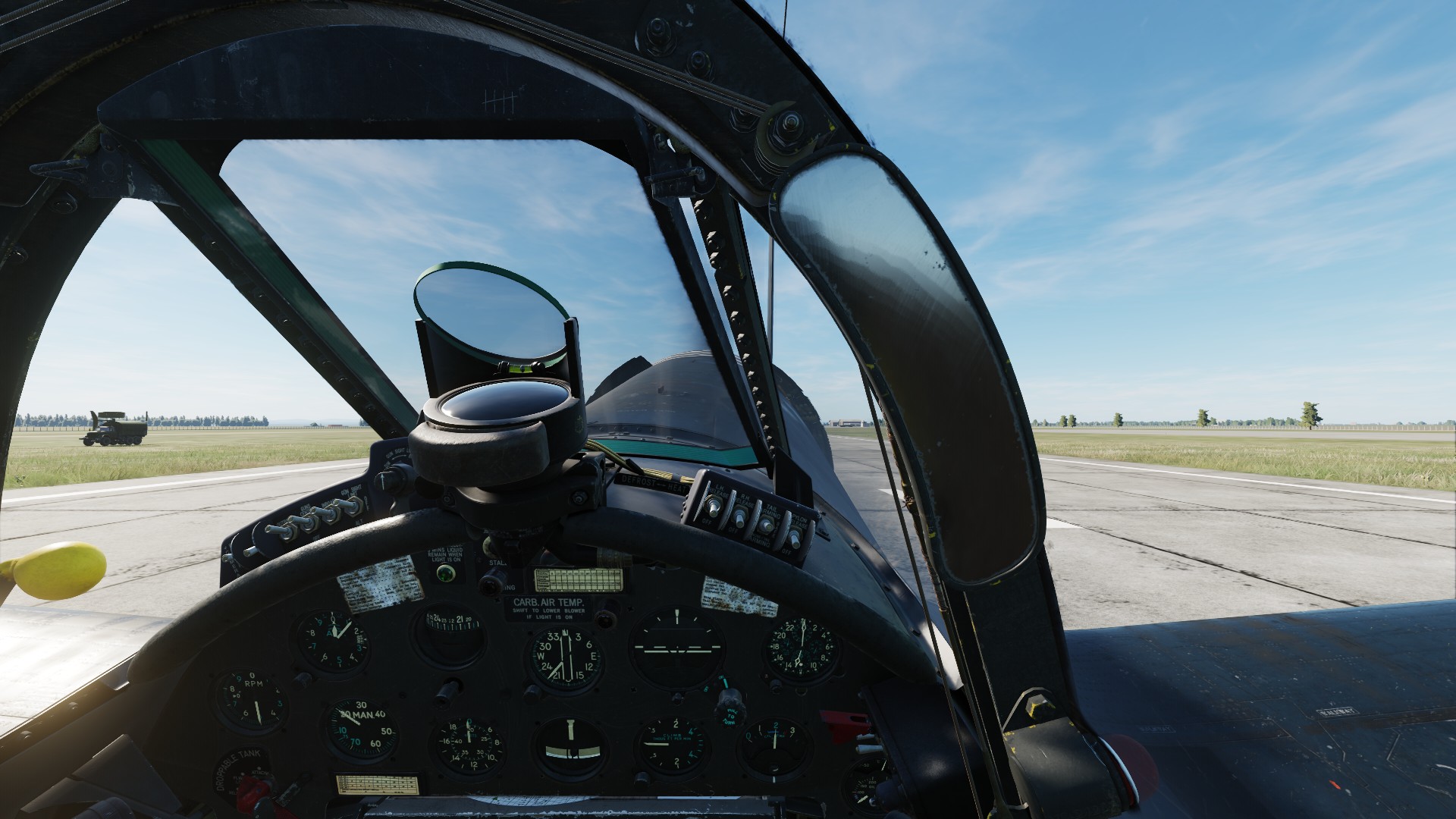
I think for most folks it’s either over boosting the engine or not opening the oil cooler flaps. Intercool flaps don’t really matter until you start to get a high carb air temperature warning (the big red warning light under the gunsight). Once that starts flickering, pop the intercooler flaps open to about half, and then gradually close them as much as you can get away with if you’re trying to maximize range or speed.
Cowl flaps control your cylinder head temperature. Running the engine hard heats up the cylinders, you keep them cool with the cowl flaps.
The oil heats up going through the hot engine. This helps cool the engine down some too, but you have to cool that hot oil down as well. The oil cooler does that, the more open the flaps the more cooling the oil can do.
The engine breathes in air through the carburetor. If that air is too hot, bad things happen in the engine. The intercooler is used to cool that air down.
Opening any of the cooling flaps creates more drag on the aircraft, slowing it down and decreasing range. For most DCS flying, range isn’t a concern, speed might be. Open your cowl/cooling flaps the minimum amount necessary to keep the cylinder head and oil temperature gauges in their respective bands. If the red carb air temp light kicks on, open the intercooler flaps till it goes off.
YES the warbirds are a PITA to fly and engine management is really a thing.
First, a standing ovation for Mr @jenrick for that lovely writeup. So lets talk about it some more.
Every WW2 bird has limits for engine temps, rpm, ect. Radials dont have radiators since they are air cooled. i.e. Rata, Corsair, TBolt and 190A. 190D, Mustang, 109 and Mosquito are Water cooled. All require the (love this) Chameleon Eye while flying, especially in a Dog fight. Your eyes must keep going between the gauges and the outside world witch really makes you appreciate what these guys did in the war. You will develop a scan pattern. And acording to what bird you are in, you will know what is important. i.e. Keep an eye o the intake temp of the Corsair or die.
On the WinWing Throttle the last two switches at the bottom are for Auto Pilot. Since WW2 birds dont have AP, I use these switches to open and close Rad and Oil Cooler. If I need cowl flaps, I map them to my air brake, because again ww2 planes don’t have these. On Radials, the Cowl flaps allow the air hitting the front of the engine to flow through when open and cools the engine. In general terms the tradeoff is close things to go fast, open them to cool the engine. Want to cool fast? Open everything and dive and low engine speed. Fuel provides some cooling also (Auto Rich). And some birds have Water or Water Methatnol cooling.
When I am in the rhythm of flying WW2 birds, I am in the habit of looking at the temps and regularly opening and closing these vents. So say if the oil becomes the one I need the most, I will transfer that control to my airbrake. That way I don’t have to move my hands off the throttle as much. And yes, in a fight, its Very tought to do.
These are on the manual and of course Chuck Owl manuals as well.
Corsair
TO- 2700rpm 53.5" 260deg max 5 Min
Mil Power- 2700rpm 52"-54.5" 260deg 5 Min
Norm - 2550rpm 44-48 260deg NoLimit
LeanCruise-2230rpm 32-33.5" 232deg AutLn
The Jug
TakeOff 2700rpm 52" 2000HP 260deg 5 Min
WEP with H2O 2750rpm 64" 2430HP 260deg 5 Min
Max Mil 2700rpm 52" 2000HP 280deg 15 Min
Max Continuous 2550rpm 42" 1645HP 232deg No Limit
Lean Cruise 16-2300rpm 30-35" Auto Lean No Limit
The Stang
TakeOff 3000rpm 61" 1400HP 121deg Max 5 Min
WEP 3000rpm 67" 1595HP 121deg Max 5 Min
Max Mil 3000rpm 61" 2000HP 121deg Max 15 Min
Max Continuous 2700rpm 46" 1120HP 121deg Max No Limit
Max Cruise 2400rpm 35-36" 790HP Auto Lean No Limit
Optimum Coolant temp 100-110 Oil Temp Max 90 Optimum 70-90
Inspired by this thread, I got some stick time on the Corsair last night. I am far from in love with this module. The Ensign Eliminator can be the Simmers Demotivator. But I continue to persevere with it. My favorite scenario / version has become the clipped wing FAA Corsair. A few years ago, I found this to be my least favorite scheme. Now, I take on the 190s. The 190A is a good starter target for the Corsair. I was able to splash them a few times after some practice. There is yet hope for this Beast.
First thing I start out with everything open so I don’t crisp my engine on takeoff. I then reduce the oil cooler to about 50%. There are position indicators for the Oil Cooler and Intercooler right in front of the respective levers. The Cowl flaps are done by sight. I keep them about an inch open while cruising. As I enter the merge, I check Oil temp and keep all else as is. Instead of running at 2700, I try to keep it about 25 to 2600 unless I need more. I am frying the engine about 10% of the time now. All you need to do is ignore the Head Temp or Oil Temp for a couple of minutes and its toast. So when I can I check Head and Oil temps and move the levers accordingly. Should I get the Red intake warning then I open the Intercooler. Sometimes I must extend out of the fight if things get to Hot.
Note: About a year ago I started to assign View move Up and View Move down to keys on my stick. This is essential in the Beast. That front end sure is long.