What if you flew a VTOL on Saturn’s atmospheric moon, Titan? With orbital capacity, making money hauling cargo and with a fully interactive cockpit. All of that in VR? Coming in 2027
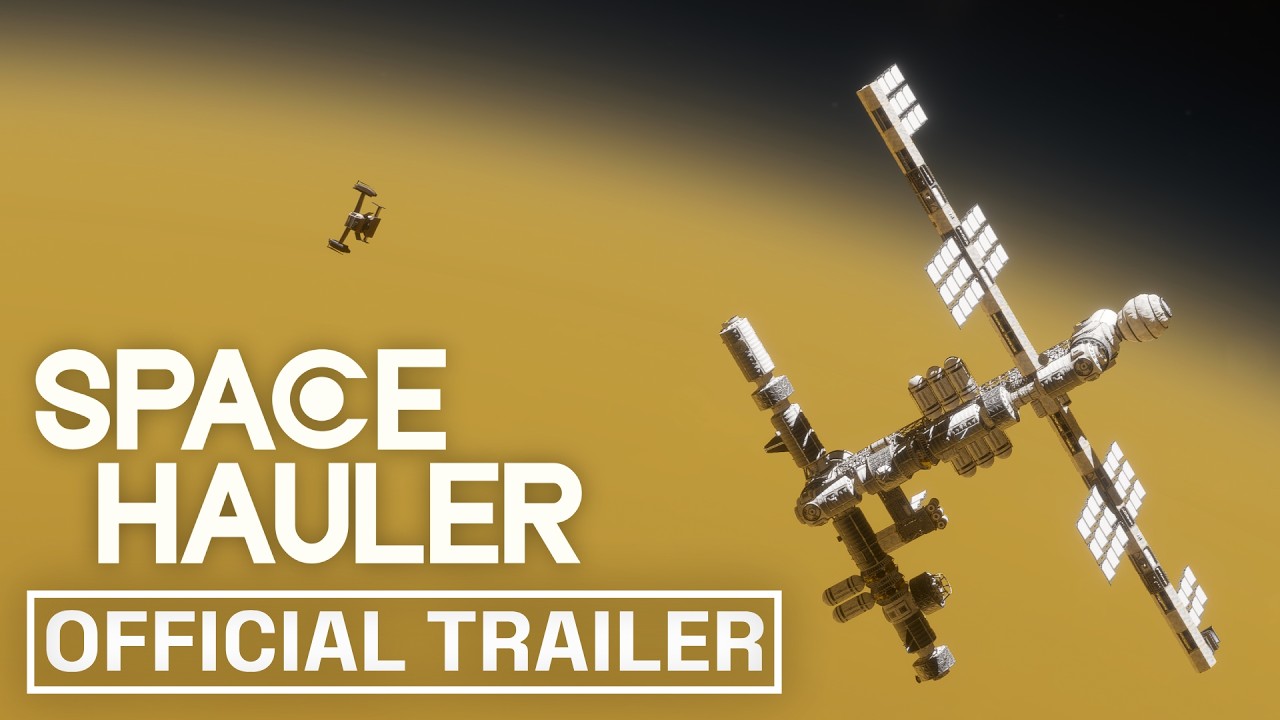
What if you flew a VTOL on Saturn’s atmospheric moon, Titan? With orbital capacity, making money hauling cargo and with a fully interactive cockpit. All of that in VR? Coming in 2027
Saw that today. I love the idea, just a steam gauge V-22 seems, a unusual choice. But I’ll probably still buy it.
Well somebody in the YT comments calls this very realistic, so clearly our expectations must be the problem. 
This „sim" causes pain to the little engineer in me. 

How odd!
More space sims are always a good thing, especially with VR support.
Having said that and just to ruin the vibe, my cynical guess on why it uses steam gauge standard cockpit designs is that you can pick them up really cheaply as pre-made assets in the unity store and AI is happy to mash up code with them very quickly; even if you have to put a VFR squawk code in near Titan..
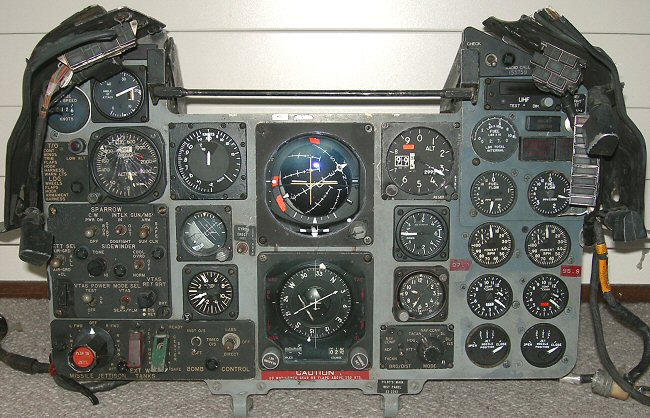
I was watching the trailer, thinking to myself that it looked like a FSX freeware pit. A nice one too be sure, but those are the bog standard FSX gauges and radio.
Though if they spent all their dev time and energy on the physics, and hired an artist off Fiver for the rest I can handle that.
Reading the steam page description, it reminds me of Frontier Pilot Simulator, just with exo-atmospheric flight. Need to dust that one off, it was a fun title.
Of all the features, it is the 1:1 scale solar system that interests me the most… But this looks like it is set solely on and around Titan? Otherwise it will takes weeks just to get to other moons of Saturn.
Hopefully a demo will be available so I can try before I buy, because I am a bit of a sucker for space sims.
Meanwhile if Newtonian physics, ‘realistic’ atmospheric flight and space trucking are your thing, this is available now (I haven’t played it a lot but I can recommend it):
VR planned but not yet implemented. If you have a Quest, you can apparently get 3DOF VR with a bit of fiddling via UUVR.
Well, if you stay out of Titan’s atmosphere, ya’ got to admit the weather is severe clear! 
Hey, I’m the developer of the game. Sorry for just barging in here (and yes, I was googling for every mention of my game when I found this thread…) I don’t normally find it useful to respond to negative comments and try to avoid it, but unlike some of the comments on YouTube and Reddit, I can tell yours are not coming from a place of ignorance.
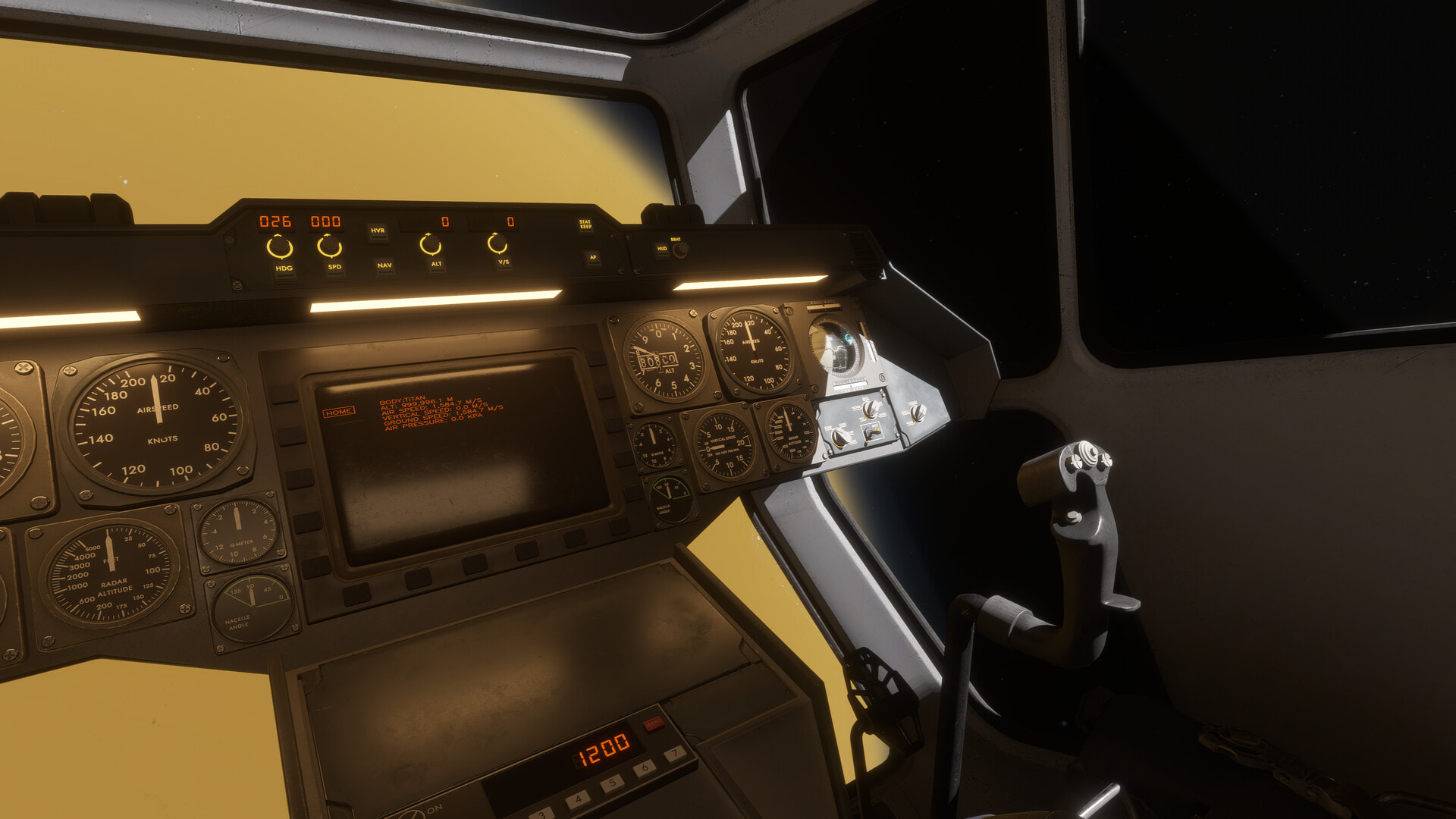
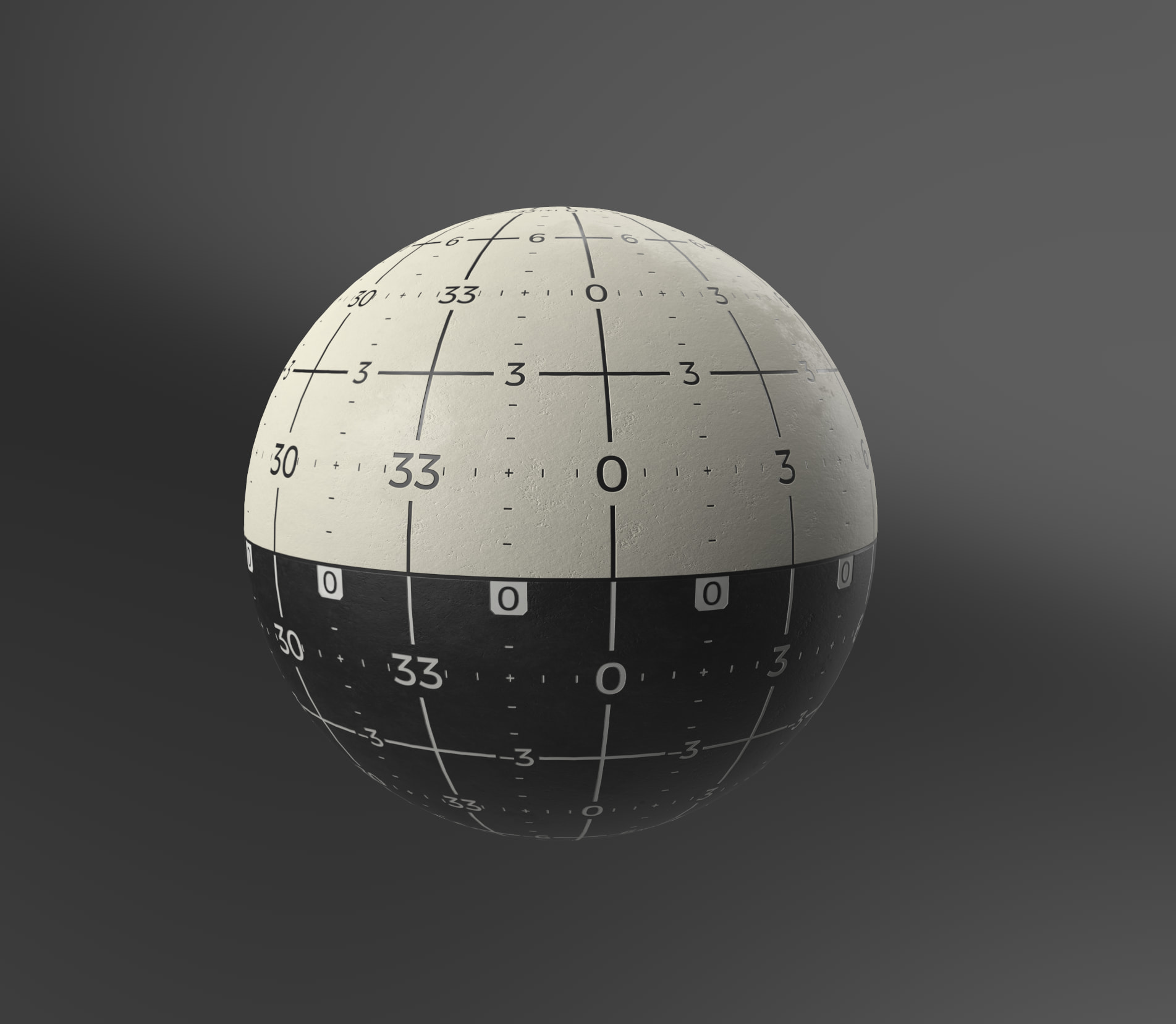
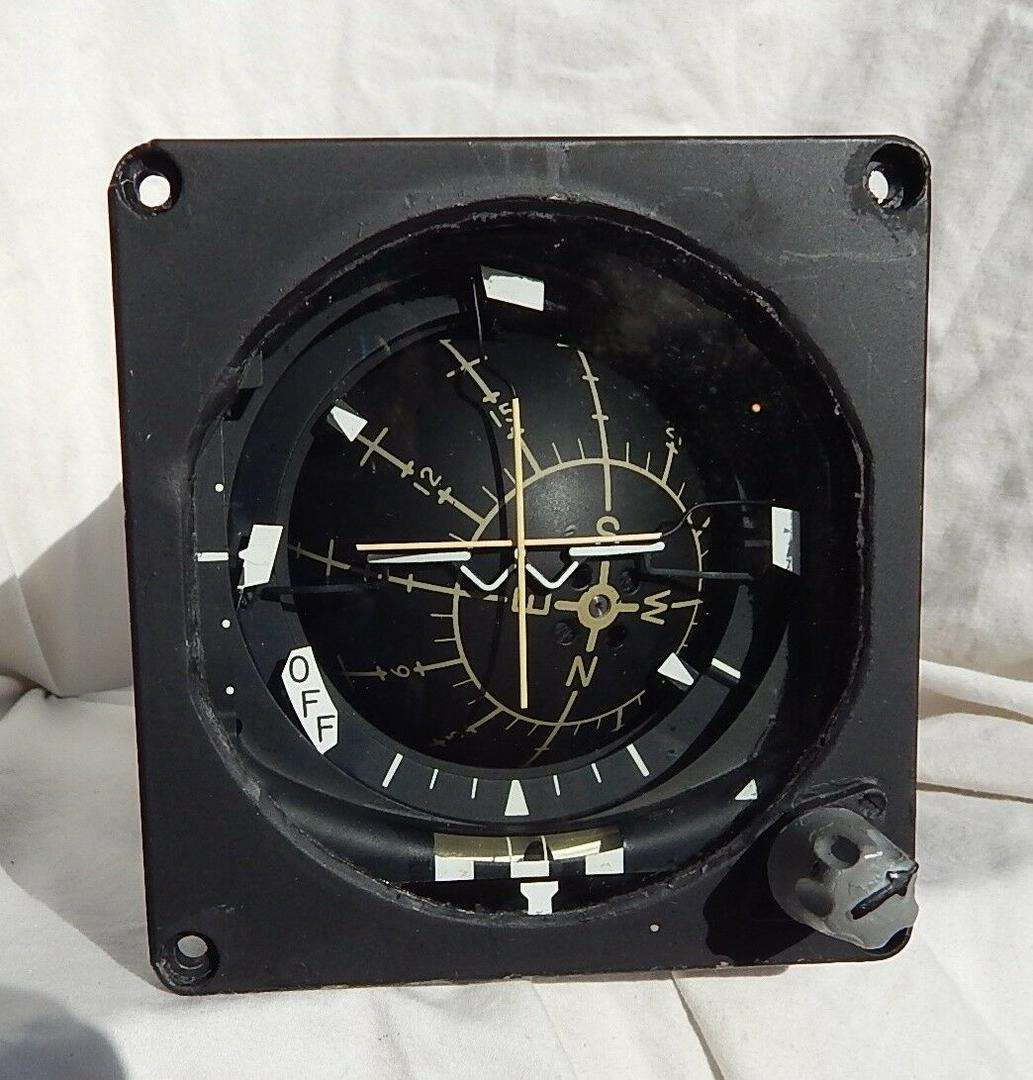
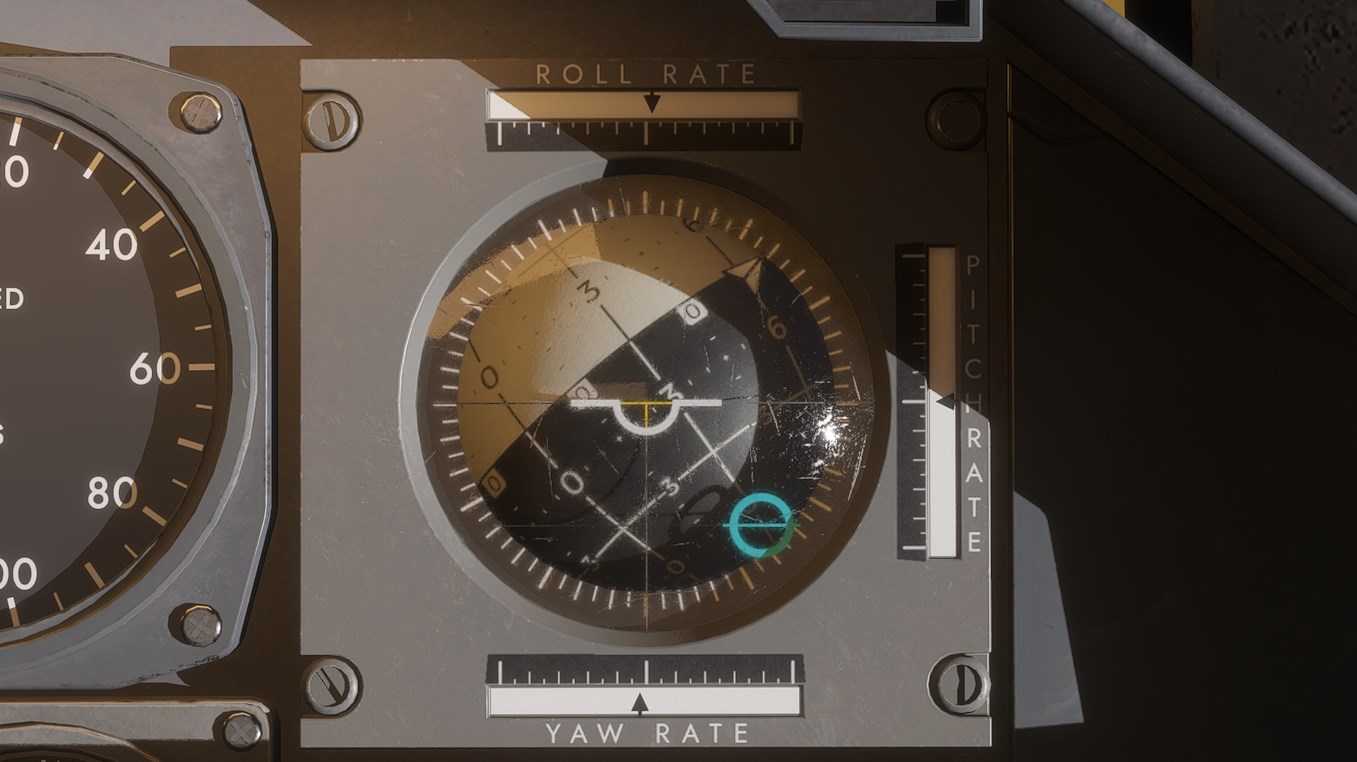
The steam gauges are an intentional choice, because I’m trying to go for a retro/cassette futurism aesthetic and steer clear of the more generic futuristic sci-fi look that has already been done countless times. I admit, that art direction could have been made more obvious in the trailer. The ship and everything in the cockpit is original. Much of it was by a 3D contractor I worked with, because I’m not much of a 3D artist, but I am proud of the 8-ball attitude indicator I made. I spent like 2 hours in Substance Painter painstakingly placing all the lines and numbers on the ball 
Space Hauler is a passion project of mine, I quit my game dev programming job in January and founded my first solo-dev studio to work on it full time. I applied for and received a startup grant from my government in Iceland to develop it, so the project is funded but without a publisher breathing down my neck and asking for changes.
While I can’t promise that the game will have flawless, professional flight-sim level accuracy (and there will probably be some things that a hardcore flight simmer would scoff at), what I can promise is that the game comes from a place of passion for space and flight sims.
So, first and foremost, I believe I speak of behalf of everyone here when I say great job! Also, absolutely, WELCOME!
We are a weird bunch of friends that love both deep simulations and Sim-lites alike so your game here is more than welcome!
Personally I prefer some leeway in the simulation, fun over realism, especially because my day job is exactly ultra realistic simulation R&D for the military! 
As a deep enjoyer of space I play a lot of Elite Dangerous and seeing a space Sim with steam gauges is pretty fun and cool.
Thank you for a brief look in the making of your game and, trust me, we are a much friendlier bunch than YouTube comments section or Reddit. 

Hi @StableSheep, welcome to MS!
Gotcha, in that case you have succeeded! I definitely wasn’t getting that vibe from the trailer or the steam page, but know that I know that I see it. And your ADI ball looks great  If I might make a suggestion then, more gauges, switches, and circuit breakers. The panel looks a bit sparse, particularly for something that’s doing exo-atmospheric flight. A mid 80’s-90’s panel was jam packed with them, as everything had it’s own readout, control, and circuit breaker. Of if you want to go a little more advanced, check out the Beech Starship as it had a “glass” panel, but each guage was it’s own display with controls, key pads, etc. If you’re keeping it simpler for VR use, then ignore my above suggestion
Since I’ve got you here, any particular reason to choose the V-22 for the player ships main inspiration? I’m guessing something to do with the density of Titans atmosphere?
Glad to have you here so we can pester you with questions as the release date get’s closer
Thanks for the warm welcome!
Agreed. The cockpit is incomplete and I’m slowly filling it out as I finalize the design and mechanics of the fictional VTOL craft. Since I want every gauge, switch, button and dial to actually have a purpose and be connected to the various systems of the craft, I can’t go the easy route of just filling it in with random, spacecraft/aircraft looking stuff.
Oh man, the Beech Starship is probably my favorite real-life example of a retro-futuristic cockpit, and I almost went with something like that. I still might, I’m not super happy with how the instrument panel ended up.
I’m still trying to find the right balance here. It can be very frustrating to use motion controllers in real-life aircraft in flight sims, and something like VTOL VR’s cockpit is a lot easier to use, but doesn’t look as nice. There is the argument that this cockpit could be designed to be easier for pilots to use in pressure suits and gloves, which might be a reason to make things a little bigger and spaced out. I’ve wondered if there are any real life examples of that being a design consideration in cockpits.
Yeah, so I knew I wanted the game to feature atmospheric and space flight at launch in Early Access, but I wasn’t sure I was going to be able to complete two separate crafts, an aircraft and a spacecraft, in the time I had. So I went with one design that could do both.
On Titan, because of the 4x denser atmosphere and 14% gravity, it’s extremely easy to fly and efficient to hover, about 1/40 of the power requirement. Air breathing jet engines aren’t possible with no oxygen in the air. Since there’s some methane in the air, I considered if it was feasible to do the reverse, carry the liquid oxidizer and breathe the methane, but the math for that didn’t work out. There just isn’t enough methane. I didn’t want to use super advanced propulsion, (though I might have airbreathing nuclear engines in the future, there’s a whole lot of very cold air on Titan, so that can work). But, propellers just made the most sense to me. For reaching orbit, the props fold away and the nacelles each have a small methalox rocket engine on the bottom. It’s easier to keep the cryogenic propellent cool when the surrounding air is a chilly 94 Kelvin 
For surface missions, I knew I wanted to be able to land pretty much anywhere, because you’re not going to have a runway at every remote outpost. So that’s where the idea of a VTOL came from.
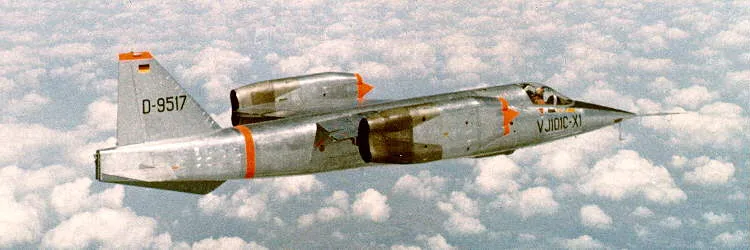
There’s not a whole lot of real life VTOL designs to be inspired by. For the nacelles, I was mainly inspired by the EWR VJ-101. But yes, also plenty of inspiration from the V-22 (though hopefully not all of its… characteristic…)
I’m still finishing a basic fly-by-wire system to make flying a little bit easier to handle, but it’s very interesting to fly in Titan’s atmosphere. It’s very forgiving in the sense that you fall a lot slower in a stall and your terminal velocity is a lot lower. But the drag can also be very punishing if you’re trying to get anywhere fast.
Away from a keyboard, so I’ll keep it short for now. You have no idea how happy I am with your thinking on things. VERY much looking forward to this.
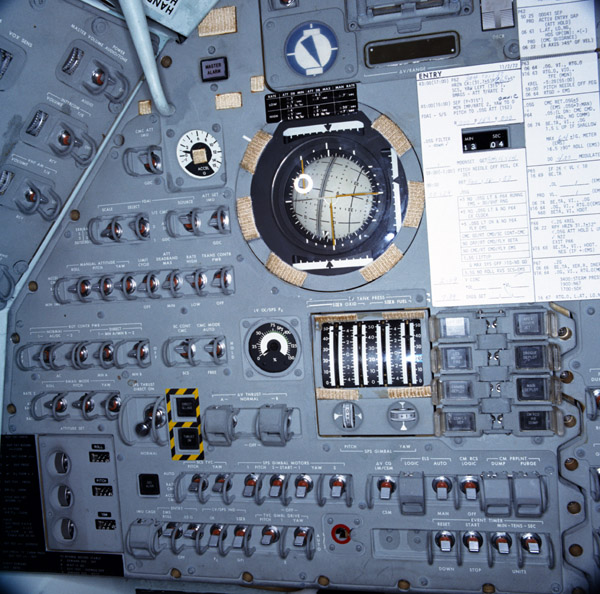
Excellent question, I’m thinking the SR-71 and U2 both had that as a consideration. Possibly the B-57? Pictures of the analog U-2 and SR-71 pits show the gauges crammed in as per usual 50’s-60’s style, but the switches in the U-2 do look to be separated a bit more than usual. The Gemini and Apollo capsules have a ton of switches, it looks like one for every possible operation. Maybe have an up-down switch for each digit of say the heading indicator (3 switches instead of one knob) for example. Not sure if you want to get that old school about it though.
I’m not sure exactly how much data is planned for the center MDF, but possibly having some of that on multiple discrete single purpose displays? That would help fill out a lot of the empty console space, unless there are upgrades available for those areas?
As you mention below about the different types of engines, having 2 completely different set of flight instruments and engine gauges for each type of propulsion is definitely an 80’s thing.
Interesting, make sense when it’s laid out that way. Love it, excellent bit of tech thinking there.
Makes perfect sense, and should make for some great gameplay.
Can’t wait to give it a try!
Thanks for answering my questions, really looking forward to this one 
To my “How weird” above I’d like to add “How cool!”
I’d like to add my welcome to Mudspike. Lot of big brains in here (myself excluded of course!) who are going to be all over this!
I’m with @BeachAV8R as far as steam gauges. My absolute favorite instrument, bar none, is the old “Abba Jabba” from the A-4.
A thing of beauty, fully articulated, it’s as close as I’ve ever seen to magic in an aircraft.
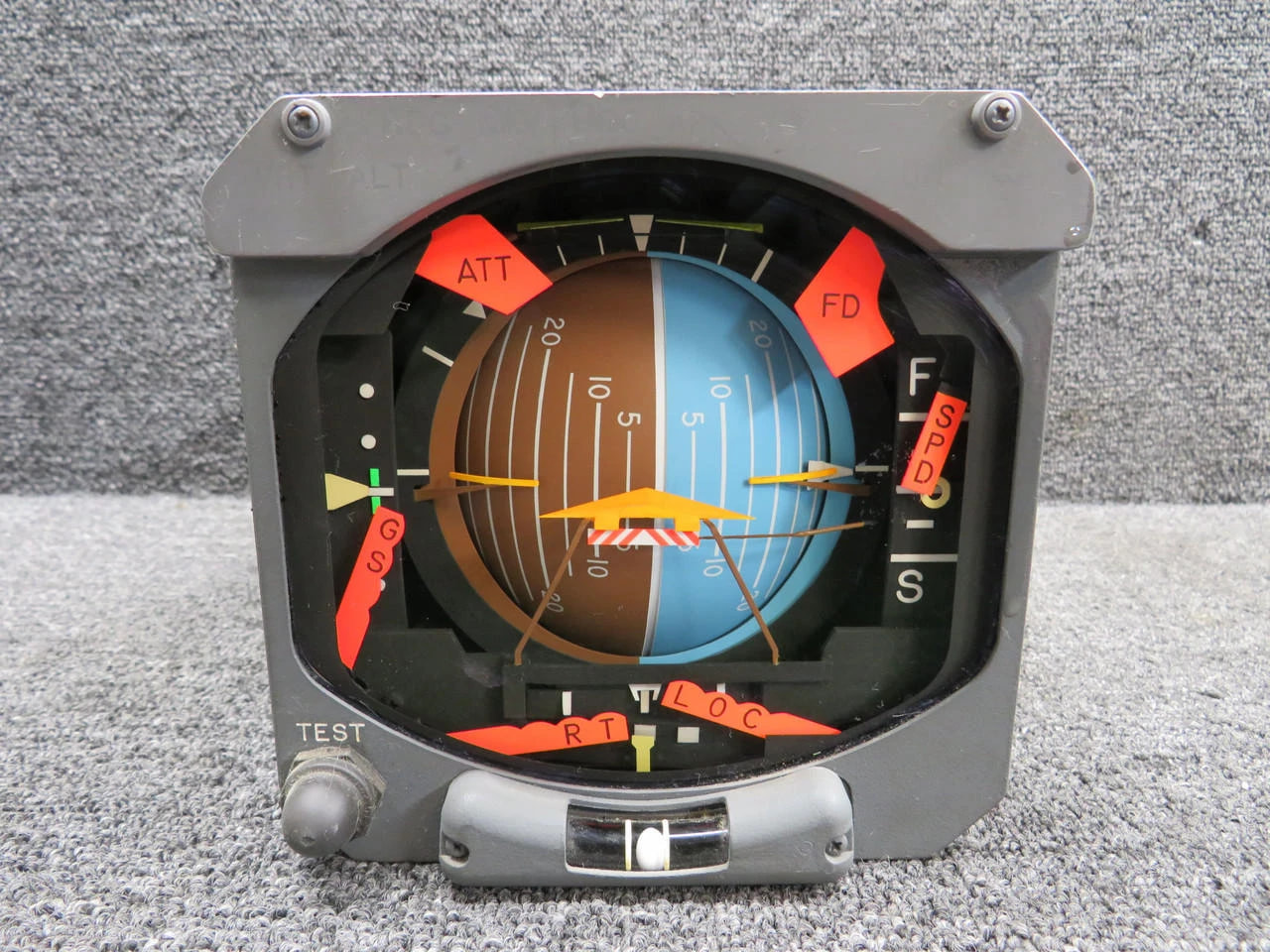
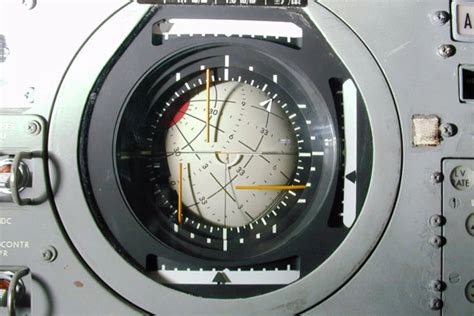
Clearly a close cousin, I’m guessing that you were emulating the ADI from the ‘60s series US spacecraft?
Very cool!
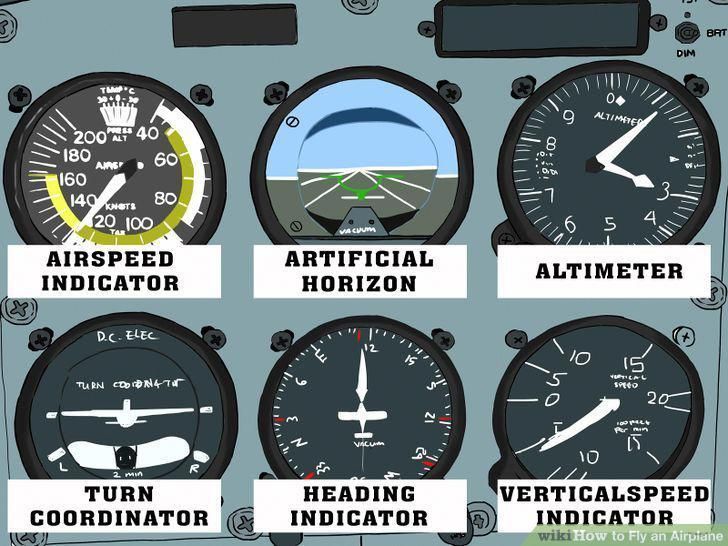
A suggestion, if you’ll allow me; a convention in many aircraft is the notion of a “six pack” where the location of various instruments are arranged with the artificial horizon in the center. The Altitude is typically right, the airspeed left, and the HSI in the center.
True in Cessnas,
but also in F-4s.
This was designed, so I was always told, to keep the primary reference instrument in the center of your scan.
Of course, it works no matter how you place the instruments…but I’d say it lends a certain sense of “familiarity” to a cockpit design. You can even see the carry over from this convention in HUDs and EFIS.
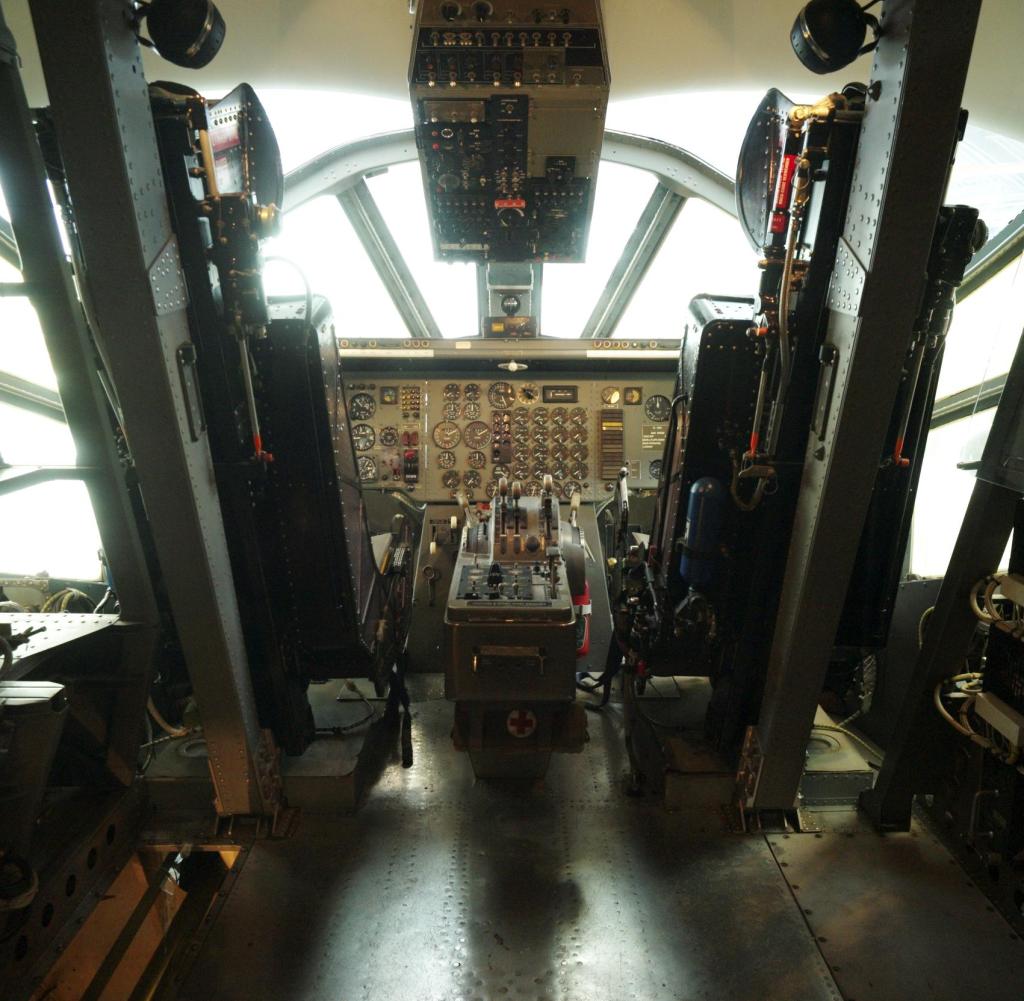
Sort of tangentially related, it might be worthwhile to look at the cockpit of the Do-31 for inspiration; it being another steam gauge VTOL design.
I am curious, looking at the 200kt (which makes me wonder if a Titan craft would even work in “knots”) airspeed indicator, as to how your craft would work with regards to sound barriers/escape velocities/orbital speeds/relative motion with the docking platform etc.
Many “sims” use some sort of “handwavium” to get you from the surface of a body to space. Only Orbiter (to my knowledge) and maybe KSP demonstrate all that escape velocity, orbital alignment stuff that made my head hurt when I first tried it.
But it sounds like you are attempting to incorporate real physics into the design, and I’d love to hear more!
I don’t know, man. That thing has a lot of red flags.
aaanyhow,
@StableSheep don’t get discouraged by criticism. You’re creating something, so somebody will complain. Probably the best thing to do is to surround yourself with other creators and largely ignore the common consumer. Have AI summarize their feedback once in a while to make it useful.
Love your passion! Also, balls are great.
@StableSheep Not saying you need my help but since I’m working on the German afirce simulators for the Ch-53, the NH/MH90 and the EC-135 I just kinda know a bit how stuff is placed around the cockpits. 
Yes, that was the main inspiration. Here it is in context:
I decided to simplify the three yellow guide sticks into one floating waypoint marker, so it’s more familiar to those who have played KSP. With a knob you can change what the waypoint is pointing to, velocity vector, orbital vectors, a target, a burn vector.
Because of the placement of the seats and the width of the panel, the attitude indicator ends up on the right side edge to stay centered with the pilot, which unfortunately messes up the standard six pack arrangement. And the attitude indicator really does need to be centered, not just for familiarity, but because of the 3D depth of the markers over the ball. But I agree, if I can keep things familiar to pilots while not being unnecessarily more complicated for non-pilots, that’s always more desirable.
You know, I did consider changing everything over to metric, since that’s what NASA does for all of its missions. There’s no question the orbital stuff will be in metric, but it felt weird to apply the same to standard aircraft instruments. The progression I have planned will have you flying on the surface and not unlock orbital capability until later, so it really will just play as a career based flight sim to begin with, so having familiar units and instruments is nice.
Yeah, there is currently no handwaving when it comes to the physics and scale of the world. Now, I’m not an expert on aerodynamics, I always knew that was going to be the hardest part and I almost didn’t want to include it because of that. It’s as realistic as I can currently make it, using the actual measurements of Titan’s atmosphere and simulating lift and drag on the airframe and control surfaces. It could well be that I’ve made some mistake somewhere that makes that part unrealistic, but I’m hopeful that will come up in playtests and with more knowledgeable people pitching in, we can get it closer to reality.
The orbital mechanics on the other hand is realistic and I can be confident that works correctly. To be honest, I think in some ways it’s just easier to implement real orbital mechanics than to make some handwavy solution. Everything just works as it should, because you’re just simulating gravity, which is a simple formula. It’s mainly just supporting the large worlds and kilometers per second velocities necessary for orbits where it gets a bit tricky with off-the-shelf game engines.
It’s perfectly understandable why games like Elite Dangerous and Star Citizen don’t do this, because when compelling ship-to-ship combat is one of your gameplay priorities, having ships moving at kilometers per second relative to each other makes for a very different game than their players want.