When you are practising, do you have to get special clearance from ATC? Is there a specific area they allow or direct you to or is it just make them aware you are doing aero practice?
On that note, How much do you have to pay attention to other traffic if you are doing your routines?
I’ve seen on videos display pilots warm up before they start the routine, do you have to do the same in the Pitts or is this just a fast jet thing?
When I do aerobatics/CFM in VR at some points I start to feel a bit meh, do you get the same doing your routines or get to the point where you think that’s enough or I’ll see my lunch?
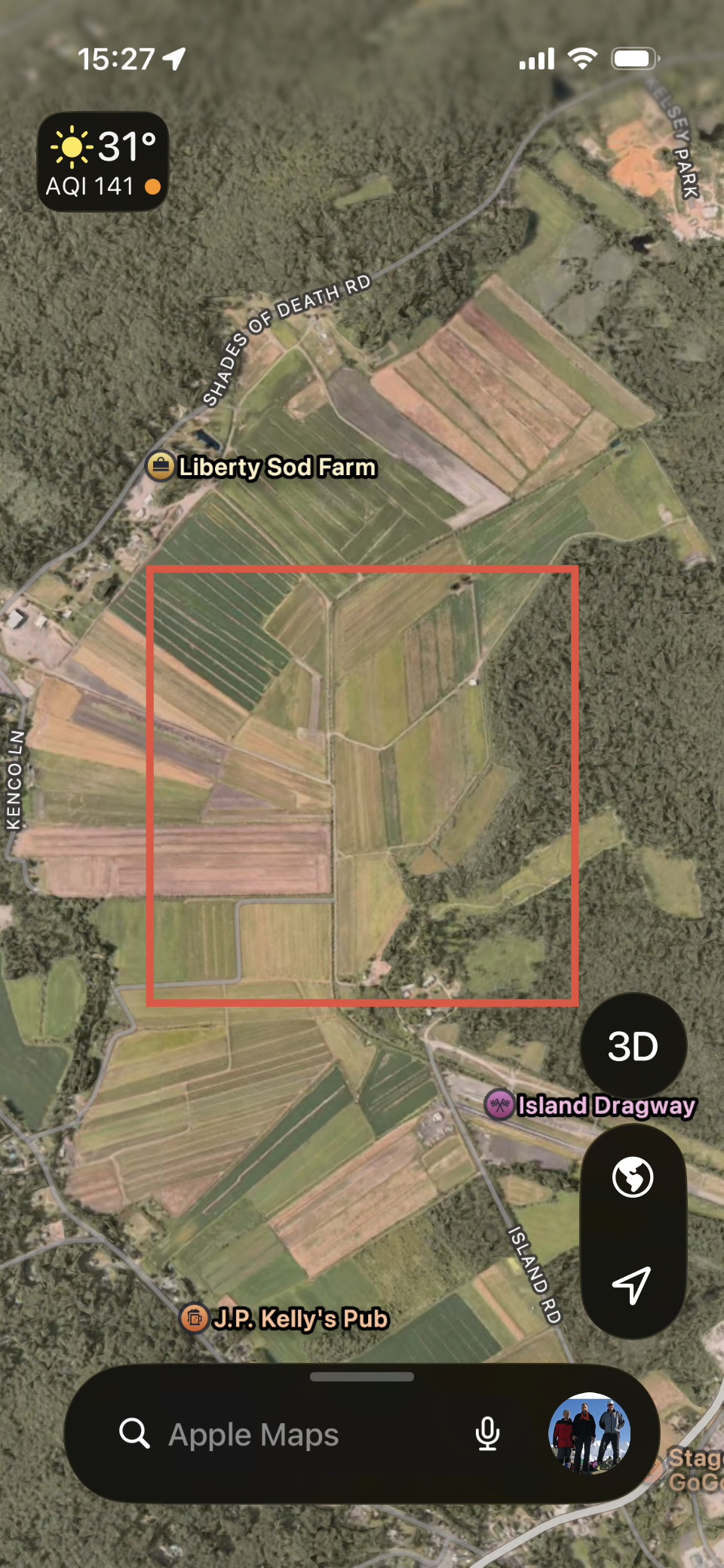
In America, one can’t fly acro in controlled airspace without a waiver. That typically means within 5-10 miles of any airport, even uncontrolled ones. And also the service volumes of airways. Taken together, these make all of New Jersey controlled airspace. For me the process is hard. I have to apply for a waiver with the FAA every 3 years. The application takes months to approve. 48 hours before my planned flights, I must call Lockheed Martin to file the NOTAM. 30 minutes before I fly, I must call by phone to advise both Philadelphia TRACON and Allentown Approach. This isn’t asking for permission, it’s just letting them mark the spot on their “scopes” for avoidance. This is just me. A pilot flying out west might have nearly the entire state to play in without the need for a waiver. One nice thing about the waiver is that it allows acro below the FAA floor of 1500’. In the video above, I am down to just below 1000’ AGL.
I do clearing turns before rocking in. But for the 4 minutes of a full sequence I am not looking for traffic at all. I am going on faith that a red, white, and blue plane will be easy to see. Intrusions do happen. I’ve chased pilots out of the box!
It’s the same. I pull 6gs and push 3. Jet pilots do very little pushing, and that’s the part that is most uncomfortable*. But they sustain the gs longer. I do nothing to prepare other than fly hydrated. I DO do an odd dance in my hangar to help get the flow of the sequence down. All acro pilots do the dance.
*With experience, your own gs start to feel good. I say “your own” because riding with someone else is a different experience altogether. Gs feel good! But you have to breathe and sometimes grunt to keep oxygen in your brain. The penalty for not doing that is a coning of your vision and lots of swimming stars. In the video I look like I am suffering. I am old. My muscles sag. Unless you are Patty Wagstaff or one of the hot Russians from 40 years ago, it is impossible to look good doing acro. But joy and laughter are there even if it doesn’t show. Having said that, after two 20 minute sessions, I feel exactly like I feel after a day of scuba diving. I’ve theorized that in both cases, this is because I am not breathing enough. My brain punishes me with a fog that lasts a day.
Fixed broken quotes; if you paste in edited text from something then sometimes it likes to use ” vs plain ordinary ascii non matching " and breaks the [quote= bits.
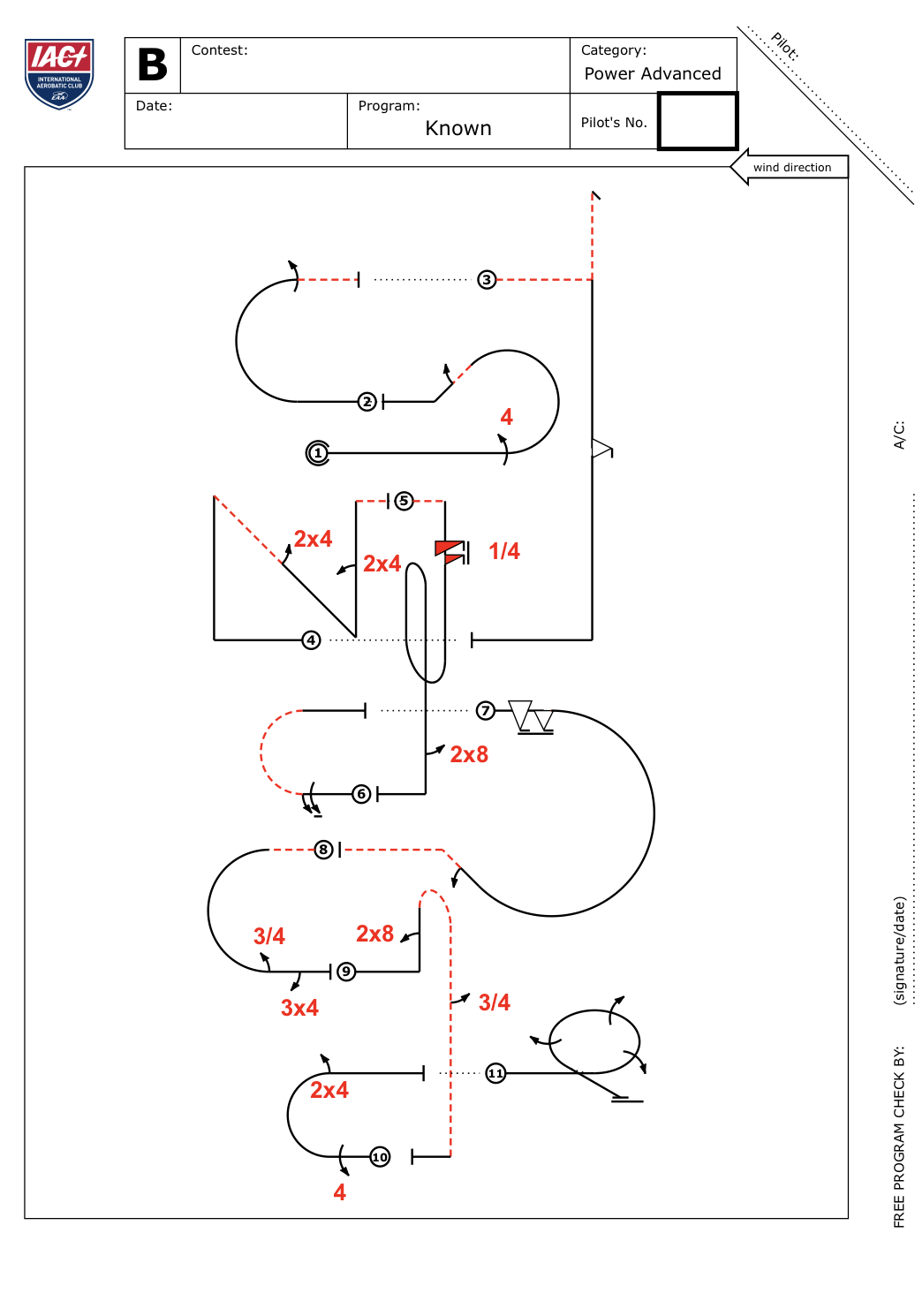
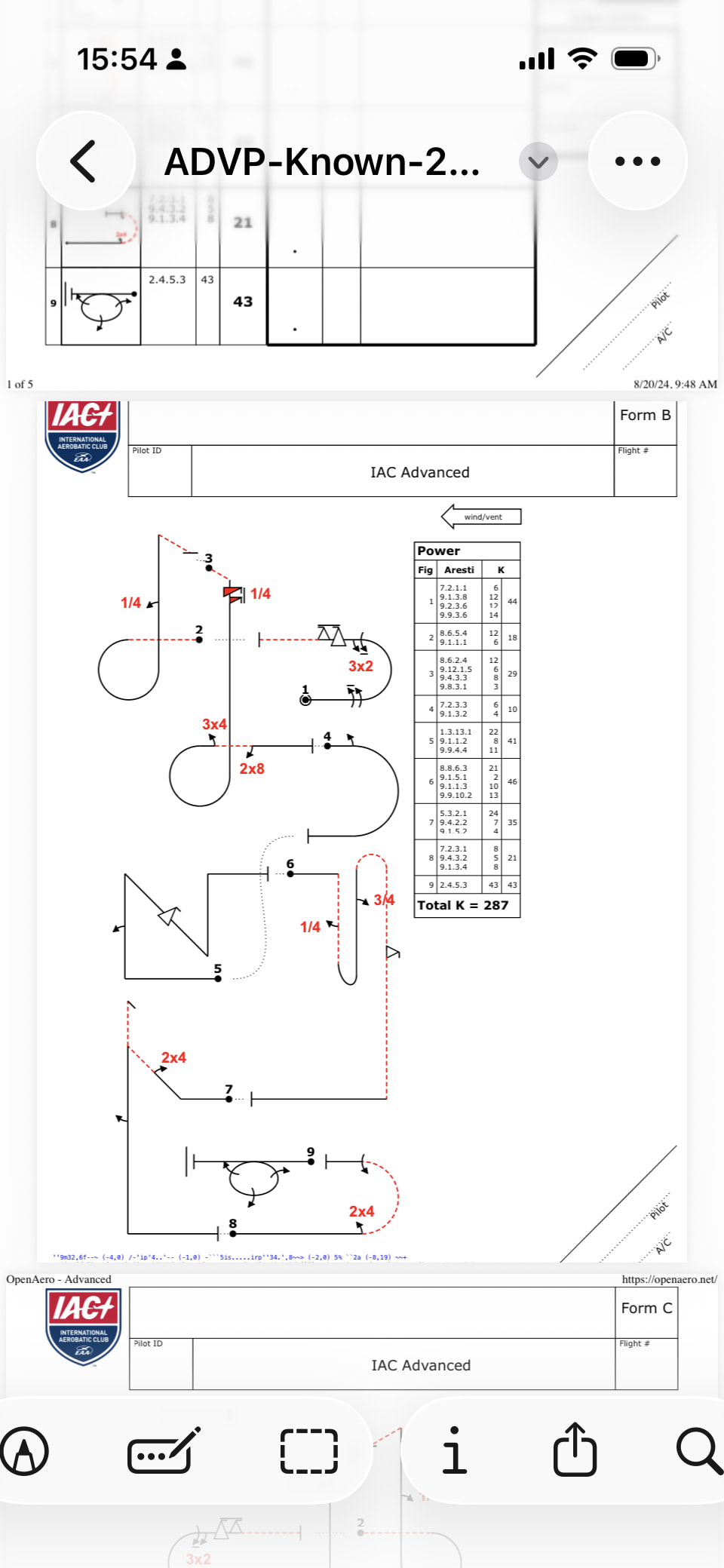
I find that simply “rolling my own” acro does nothing for skill-building. When looping and snapping randomly, we’re always the hero. But when forced to fly a pre-set sequence, we are then also forced to acknowledge our errors. In the video you see me staring ahead at what looks like the instruments. Never. There is no number that has any meaning durning those 4 minutes. What I am looking at is the card above.
Basically, everything is on a vertical, 45°, or horizontal line. ALL figures begin and end with a horizontal line. Combined rolls must either be of different types or in different directions. Rolls can be a fraction: 1/2 = a half roll. Or pointed. 4x4 = a four point roll. 2x8 is two points of what would be an eight point roll if it went all the way round (instead it amounts to a 1/4 amount of roll). Black lines generally mean positive loading. Dashed or red lines mean negative loading. Long right triangles are spins. Isosceles triangles are snap-rolls.
The big “B” on the card (also called a “flimsy”) above means that the winds are from the judges’ left to the judges’ right. That is the X-axis (usually a runway). On yesterday’s flight, the judge’s line was the left edge of the photo. The only other possible direction of flight is the Y-axis. Most of the sequence flows along back and forth on the X. There is some movement on the Y. If you look closely at the card you’ll see it. The last figure, the roller, ends on the Y axis; either direction—pilot’s choice. (Y is always pilot’s choice.).
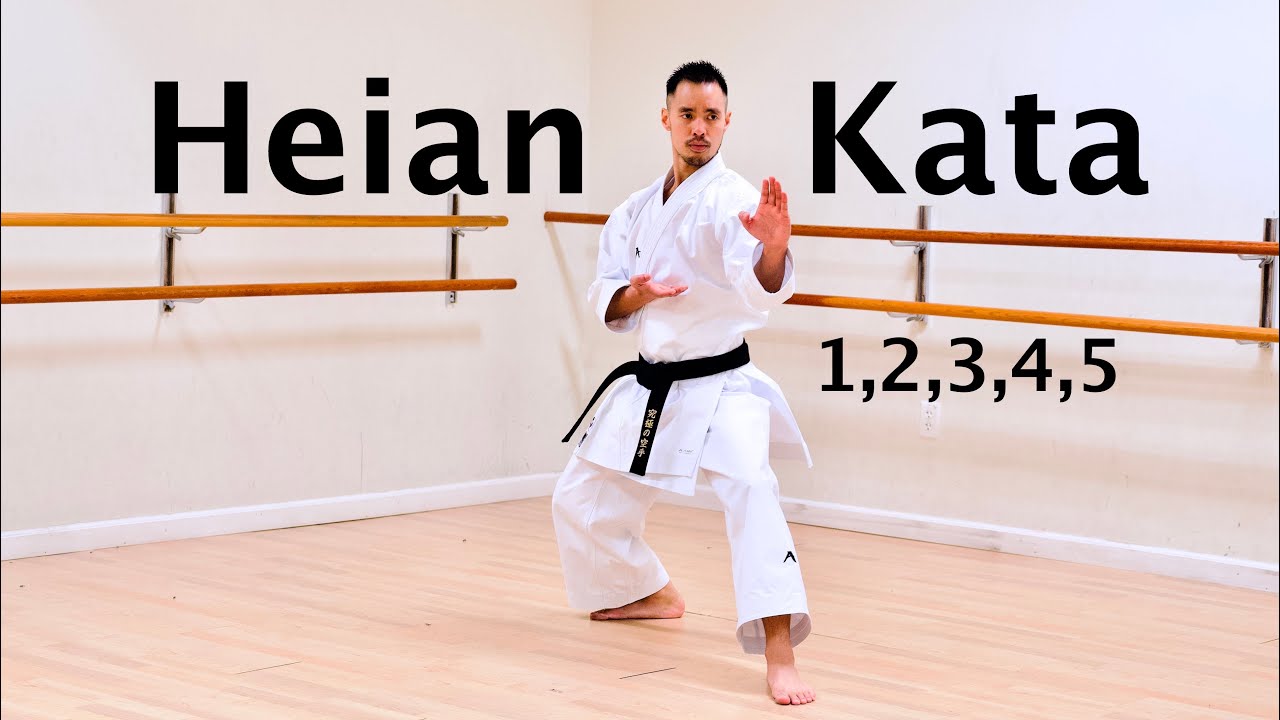
That is exacly why in martial arts such as Judo and Karate kata is practiced. It allows you to shave off imperfections in your moves and gain a deep understanding of them that other forms of practice never will.
In a sense a kata is like a dance, one you want to perform to utter perfection. Much like an aerobatic airshow routine.
The equivalent of what we in judo call ‘randori’, or play fighting would be to do BFM in your little biplanes. But I bet that is rather illegal, though it would be hella fun!
Dog fighting and formation flying are not illegal so long as both parties agree. But funny enough I’ve never done it. I think we all are smart enough to leave dogfighting to the professionals. They have thoroughly briefed ROE and I would never trust someone to comply in the heat of battle. What happens when you lose each other? What do you do when one of you calls “knock it off”? Formation flying I’ve done quite a bit of. But never formation acro except forming on someone while I was inverted. That also calls for a level of professionalism that I don’t possess.
There is a bit of snobbery when it comes to airshow performers. The real greats, like Rob Holland, flew sequences like they were law. But because the crowd knows no better, the randos at local shows just do whatever they wish from their bag of tricks. So generally, airshow performers are not looked at as aerobatic greats unless they also compete.
Hey @schurem in the video there—OK this is a really stupid question—there are sounds, cool sounds. Like added sound effects almost. Is that just the sound that a well starched ukatta makes? Or are the thrusts really swishing like that?
He is breathing as he punches and his feet swish over the floor. That is what you are hearing. But it is a Karate kata, so you should ask @keets as that’s his game
So competition in aerobatics, that is graded by judges on execution precision and maybe some artistic merit? That is very much the same for martial arts kata competition.
No artistic merit. Judges only do math. Every figure starts with a score of 10. Deductions happen because of errors in line, loop or symmetry. Basically. Figures like Spins will hard zero if they start with a snap or are obviously aileron rolled at the end. But the judging criteria is firm and not subjective. Or not subjective…much. Let’s take a basic loop. No rolls. Nothing crazy. First rule: must start and finish at the same altitude. If noticeably different then -1. Start the loop. Note altitude with your hand or sheet. 1st quarter establishes radius. Any variation on the next 3 quadrants is -.5 or -1.0, depending on severity (that’s the subjective part). So the second quarter of the loop matched the 1st. No deductions. But the plane is slowing and pilots really must push (float) or the loop will pinch. -0.5. That throws the last quarter off and the pilot pulls hard trying unsuccessfully to match the starting altitude. (On a calm day when you do it right you feel a burble as you hit your own wake. Feels great!). So 3rd quadrant is -0.5. 4th quadrant was worse so -1.0 and he closed late (off altitude) -1.0. The loop is now a 7.5. Any obvious heading issues are further deducted -1 per 5°. It only takes 7 seconds to do a loop so as you can see the judges are busy. There are always at least 3, hopefully 5. And it’s not uncommon to see both a score of 5.0 and 9.5 for the same figure by different judges. What is important is that the judge is consistent from flight to flight. The scoring software also statistically scores the judges. Most experienced pilots also judge. (And some great judges have never flown!). I sometimes get more stressed about judging than I do flying.
I did say “no merit”. There is a final Presentation score. The old guys call it “Positioning”. That’s mainly what it is. A good sequence is centered in the box. If the wind blows you right over the judges heads, you’ll get a terrible presentation score. Any merit or “hell yeah she’s good!” goes here and nowhere else.