3 Likes
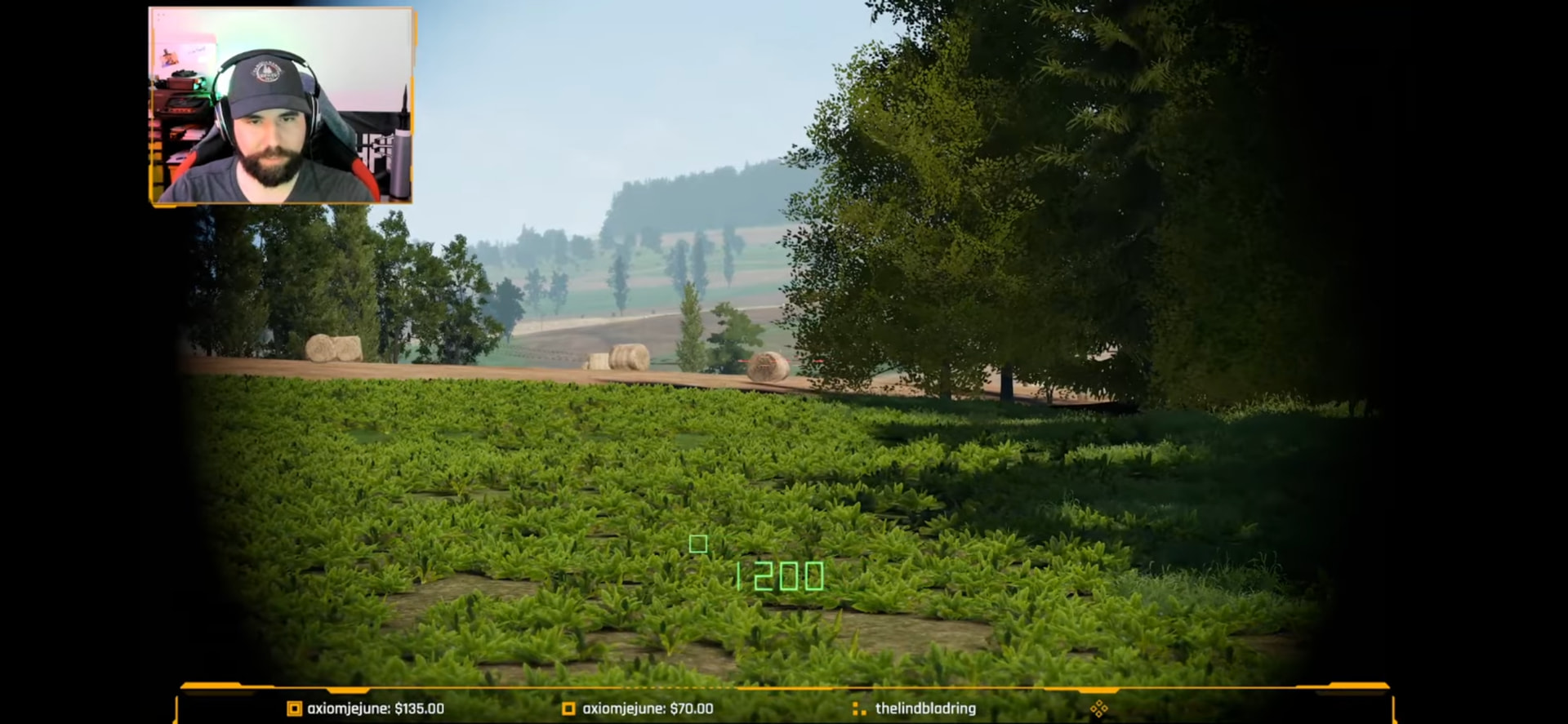
Not sure who rowed that field up before it was bailed, but they must have made it really difficult for the bailer.
Love the dev updates on this game, it’s looking amazing.
5 Likes
They need a farming advisor for realism 
3 Likes
GHPC Early Access has been updated to version 20260814. As always, you can get additional info on this and future updates by visiting our Discord server and YouTube channel. Links are on the GHPC website.
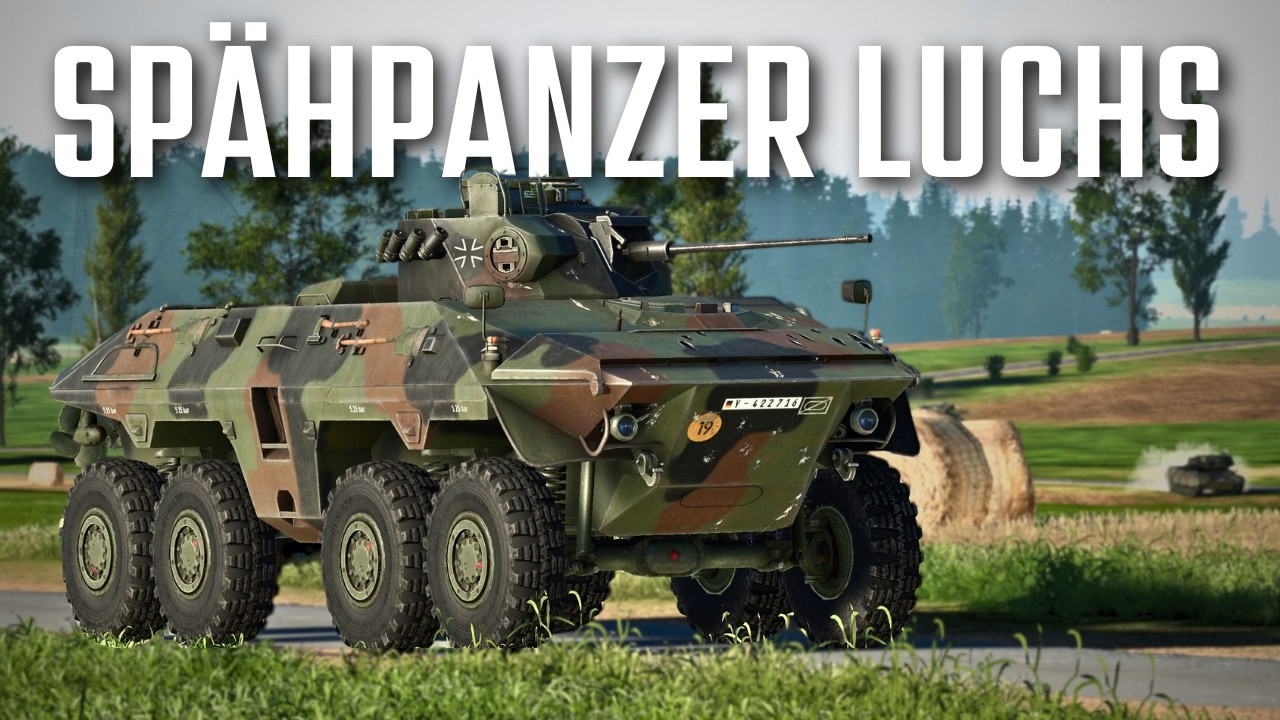
SPÄHPANZER LUCHS
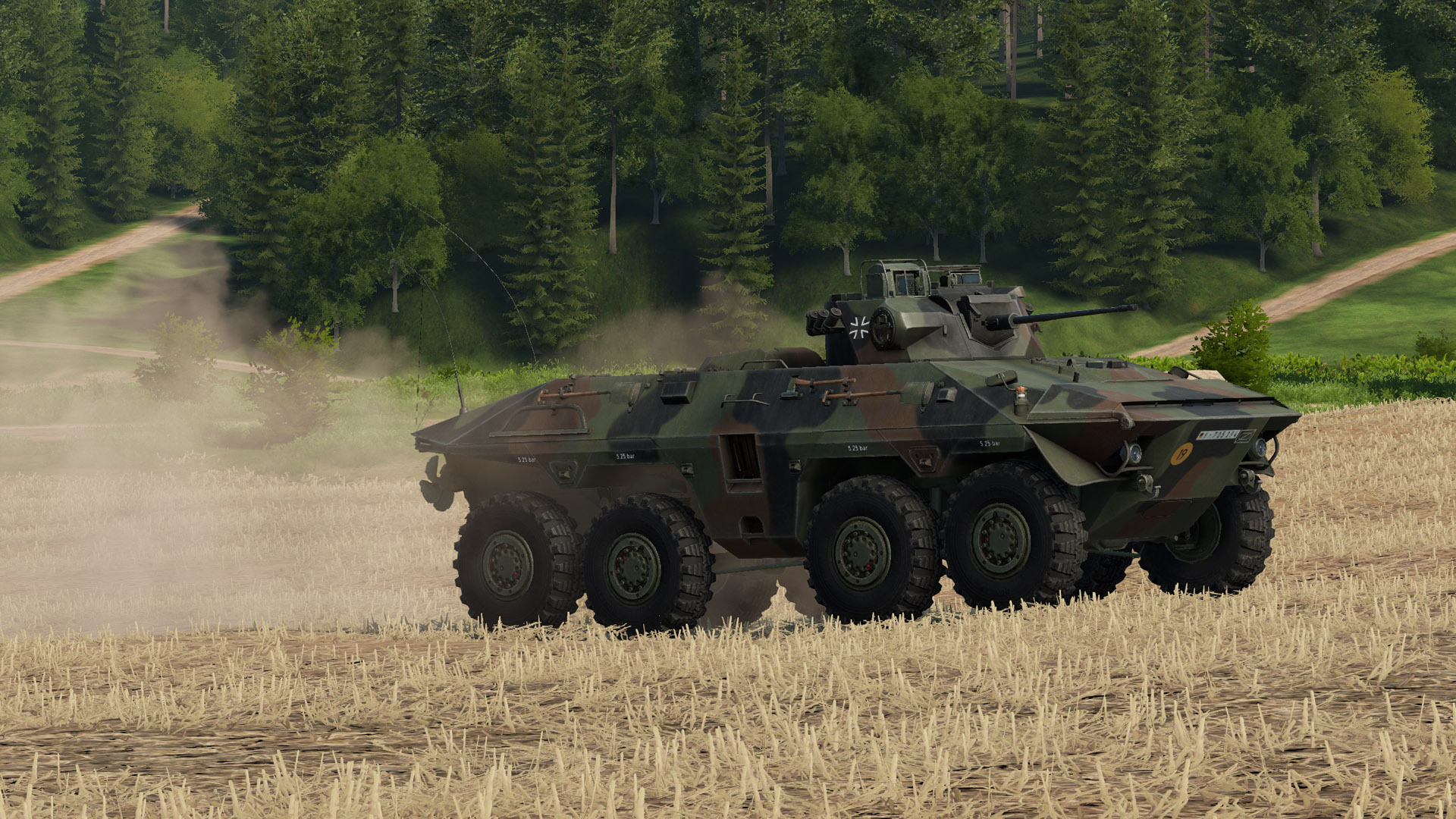
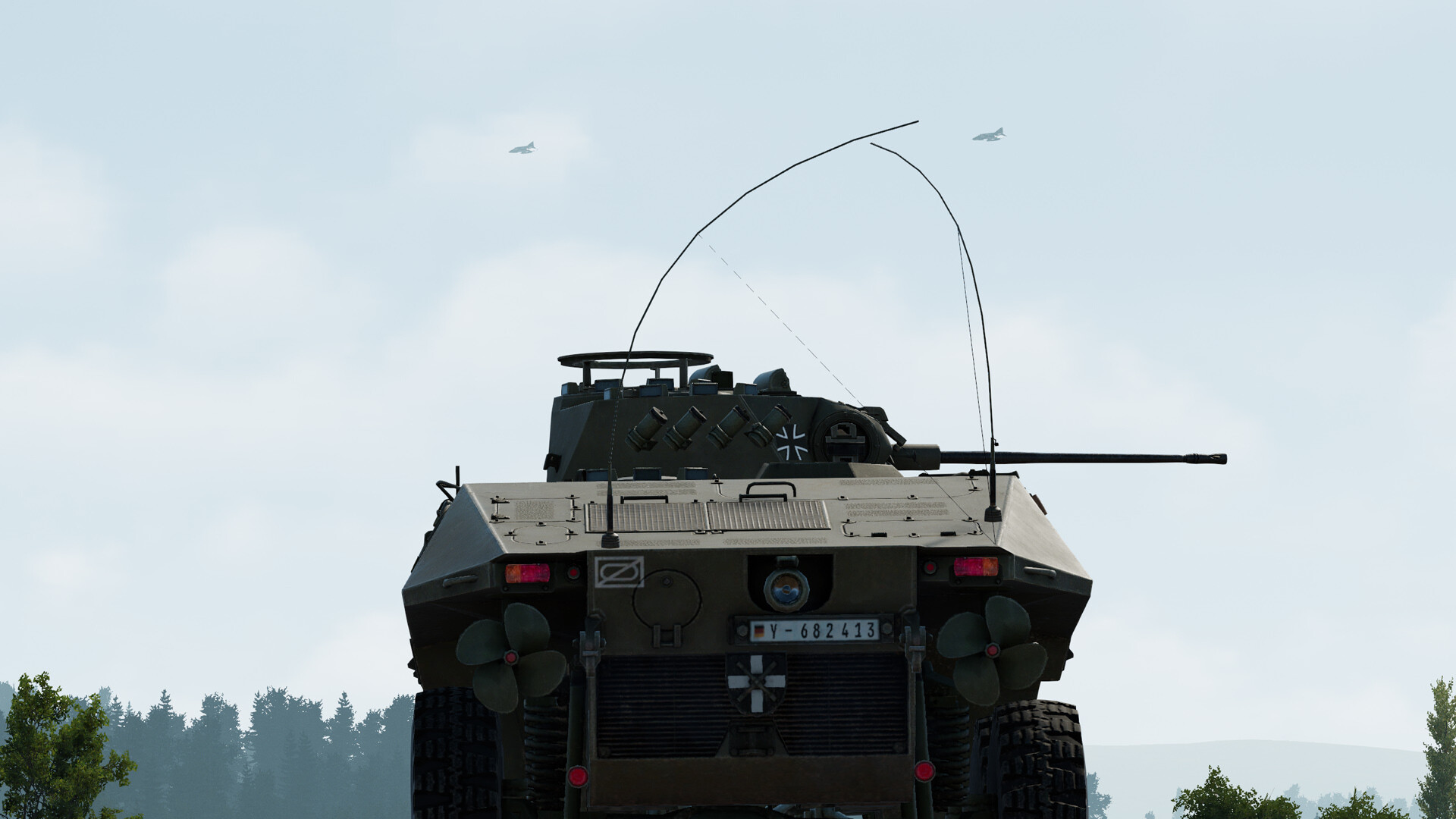
West Germany’s fleet has received a new member: the quick and well-armed “Luchs” armored scout car, available in its A1 and A2 variants. This unique vehicle combines a quiet engine and amphibious 8-wheeled mobility with the same MK 20 cannon used by the Marder IFV, allowing it to avoid extended confrontations while relaying enemy locations to the rest of the force.
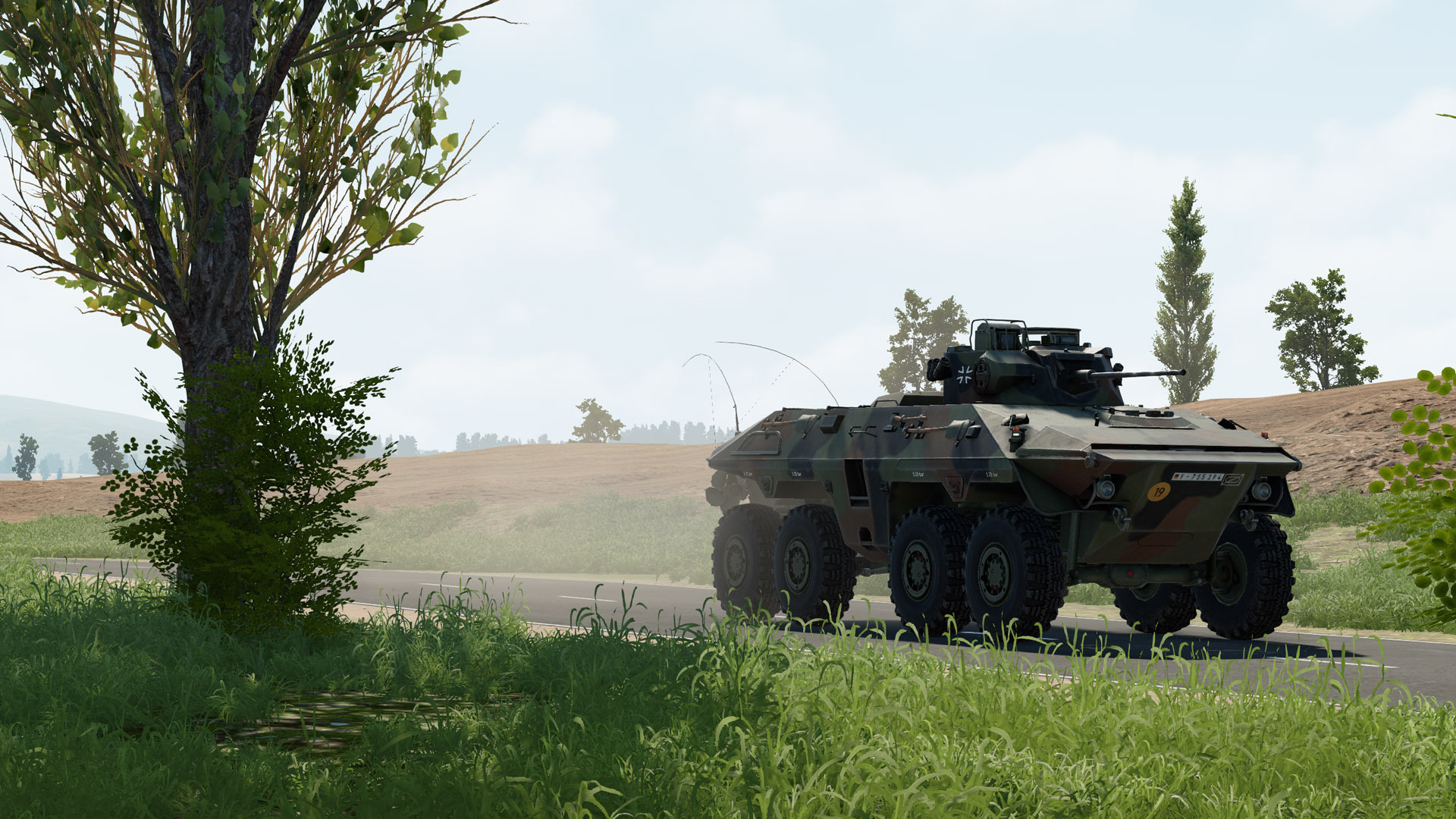
Unlike an Infantry Fighting Vehicle, the Luchs is essentially just an armored car, so it doesn’t have the firepower to take on anything more sturdy than an armored personnel carrier. It makes up for this by being ridiculously fast and agile, with a road speed of 90 km/h forward or backward, along with all-wheel steering. It’s prudent to watch your speed when driving the Luchs in GHPC, as undulating terrain will quickly become a stability hazard once you pick up the pace! (Remember, you can use the numpad +/- keys to set cruise control.)
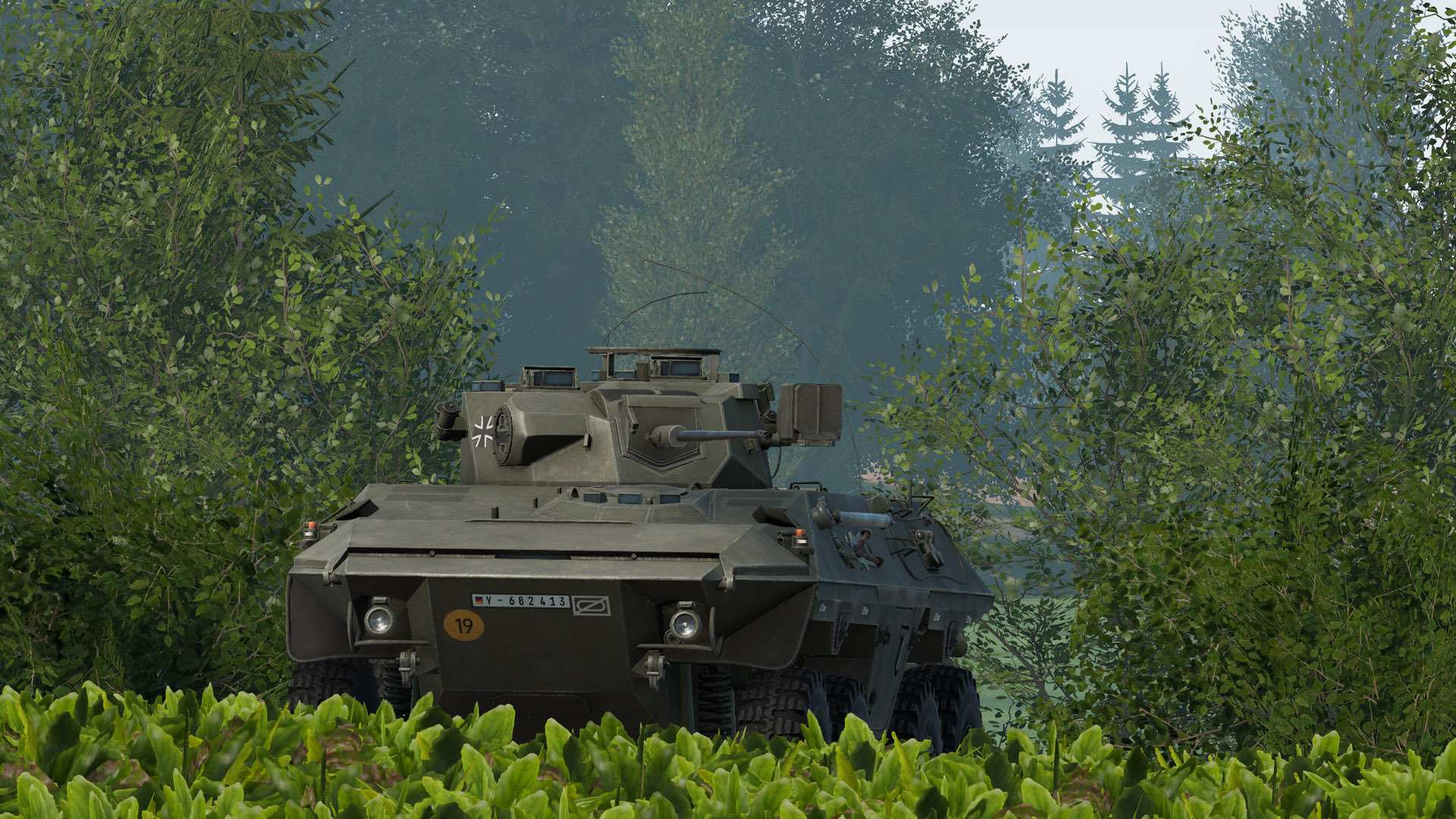
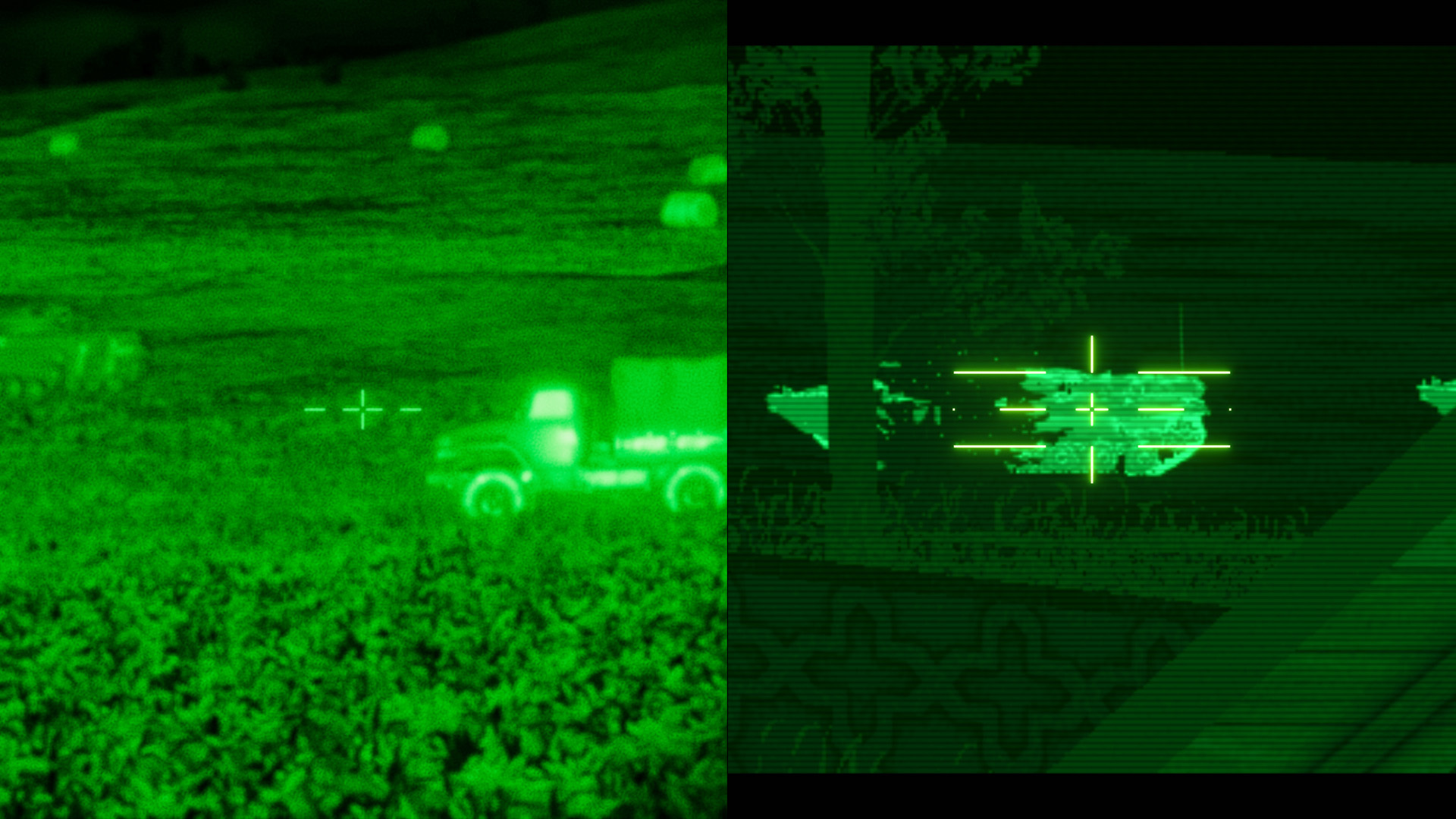
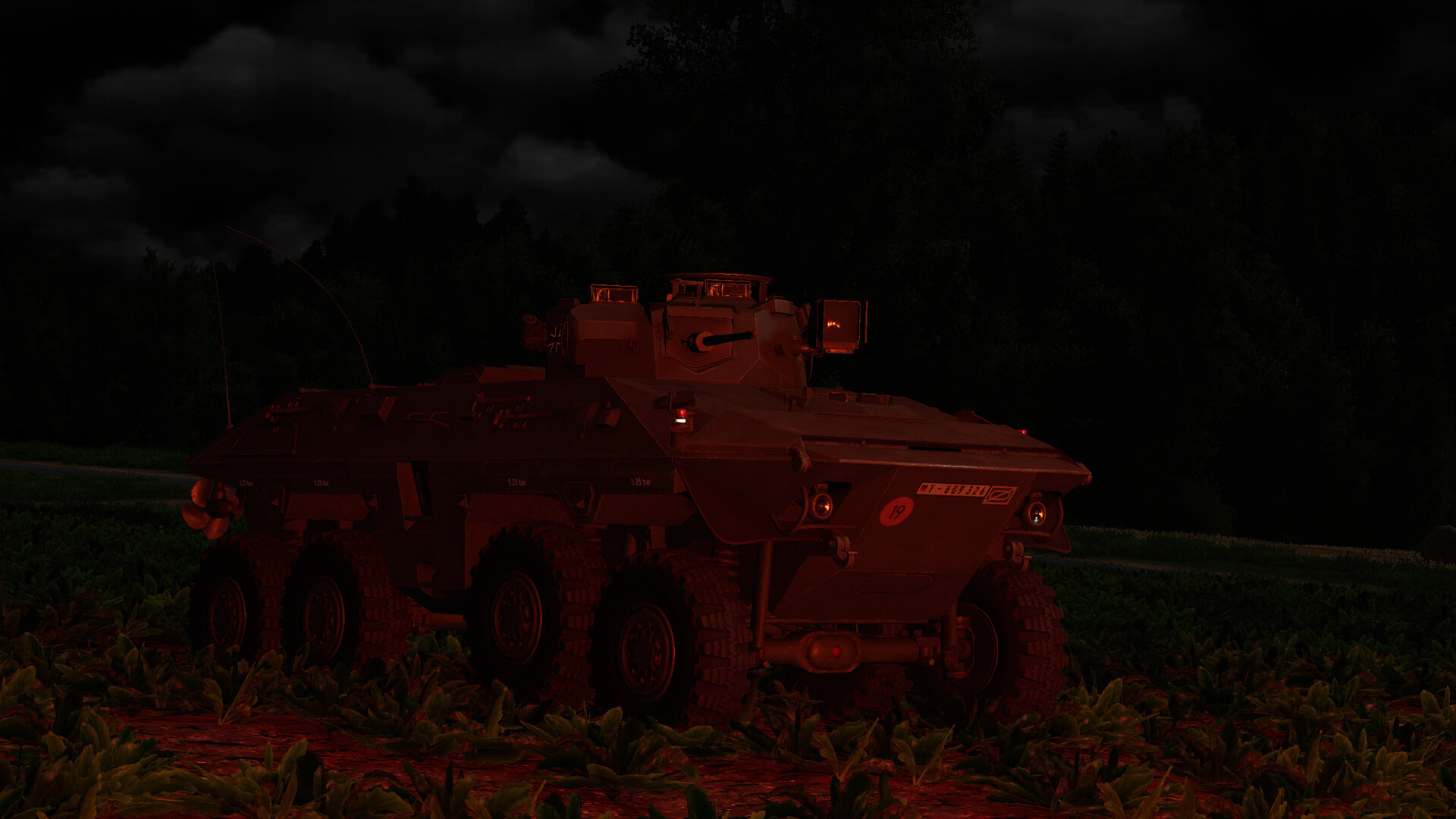
The two variants are primarily distinguished by their optics suites. The Luchs A1 is outfitted with the familiar pairing of IR searchlight and intensifier night vision sight. The Luchs A2, on the other hand, comes with a “WBG” thermal optic, putting its spotting abilities on par with the newest NATO vehicles in GHPC’s setting. And thanks to the recent overhaul to AI vision systems, the difference in optics is also reflected in the spotting speed of the AI crew of each Luchs variant - especially at night.
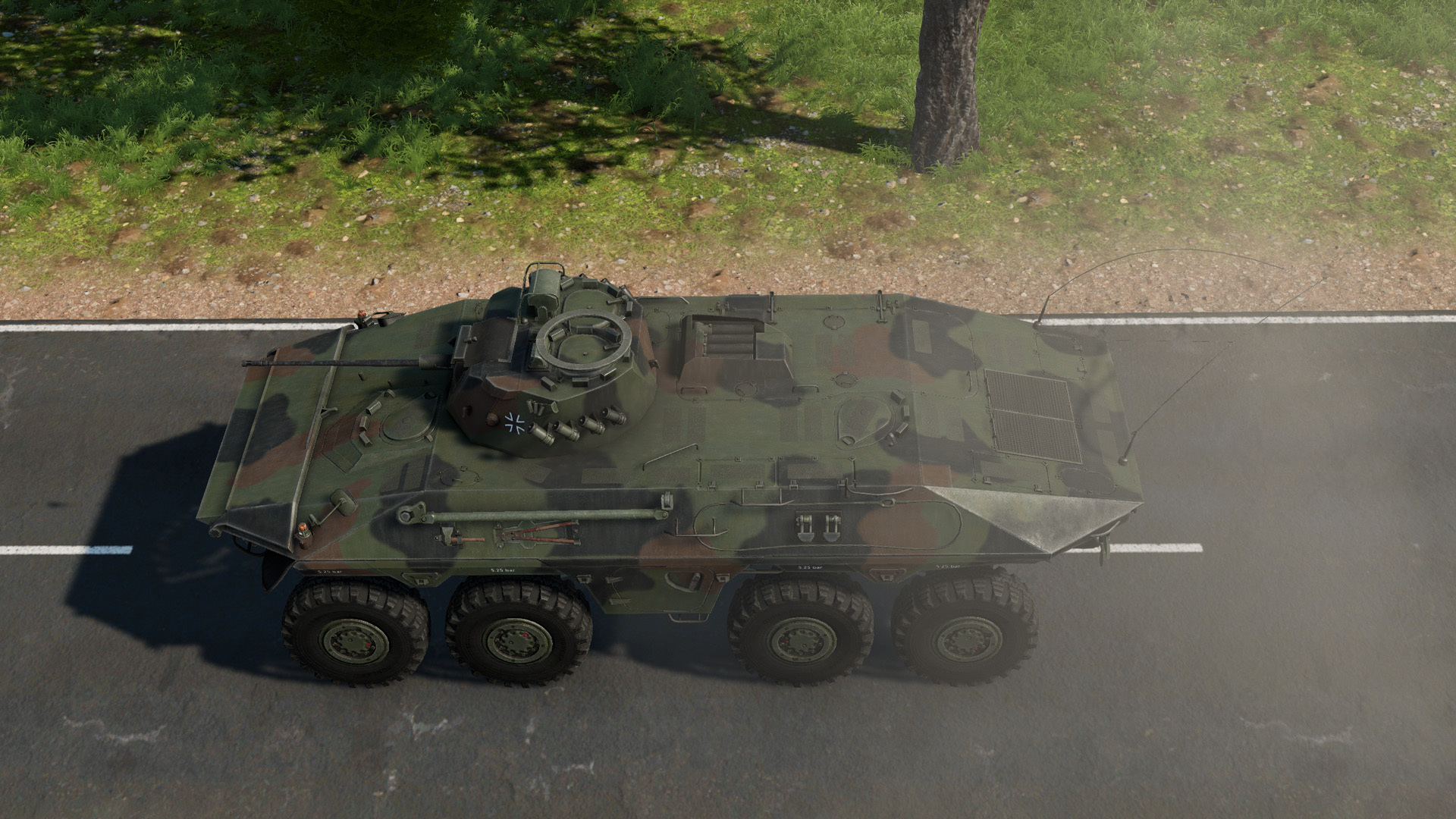
As for the rest of the differences between Luchs A1 and A2, they are not the sort of changes that will affect the experience of actually using the vehicle in gameplay. However, in keeping with our tradition for portraying West Germany’s fleet, we’ve chosen to give the latter variant its tri-tone woodland camouflage paint, as a nod to the fact that this paint scheme was coming into prominence in the mid-'80s. The Bundeswehr were early adopters of this camouflage, even before the arrival of the chemical-resistant CARC paint formula that has become (somewhat erroneously) associated with the color scheme in retrospect. If you’ve ever wondered why the West Germans in GHPC have this paint job while the Americans don’t, now you know!
Trigger control will be important when using this vehicle: it does not carry extensive ammo reserves like the Marder does, and it lacks a coaxial machine gun. Once your AP and HE belts are gone, your only remaining option is to pop smoke and get out of there! The armament of the Luchs is best used as a way to ward off enemy troops and light armor just long enough to clear your path, rather than an offensive weapon.
You can try your hand at this delicate balance in the two new recon-focused missions included with this update.
HE DAMAGE OVERHAUL
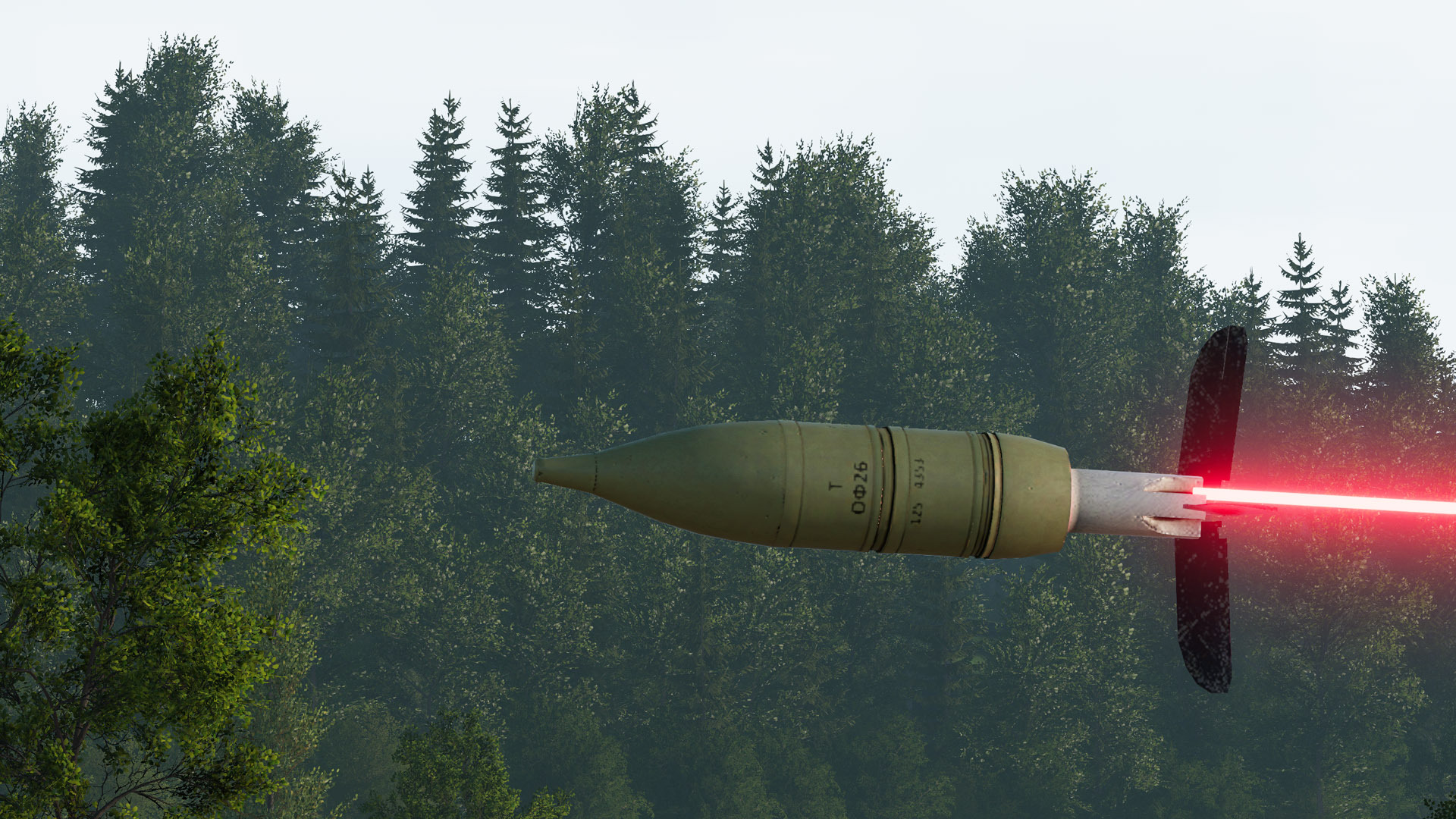
As the majority of the development team continues to work on the remaining roadmap goals for GHPC, we occasionally find time to implement features from our internal “wish list” of improvements. Today’s update brings one of those improvements: a complete overhaul of the high explosive (HE) damage system.
Previously, HE damage in GHPC consisted of exactly two mechanics: (1) direct simulation of ballistic fragments and (2) overpressure analysis against nearby destructible objects. However, there were notable shortcomings in this system:
-
The overpressure damage didn’t register as a hit for AAR mode, so it would be impossible to review it later and determine whether or not an explosion actually did anything against a target. Only direct fragment impacts would register the shot, which meant that many blasts simply registered as misses even after killing a target. This led a large portion of players to believe there was no overpressure damage at all!
-
The overpressure damage was easy to block completely, even in situations where intuitively that wouldn’t seem possible. If a small thick piece of armor or a piece of terrain got in the way of the direct path from an explosion to an item hitbox, the item would completely avoid pressure damage. This led to odd-looking results, such as a bomb landing on a trench lip just barely too far “around the corner” from the troops and therefore doing nothing to them.
-
In some cases, bugs would cause the overpressure damage not to trigger at all - occasionally in comical situations such as artillery landing directly on the deck of a tank.
-
Overpressure calculation was inefficient in several ways, leading to noticeable CPU strain when a heavy barrage or sustained autocannon fire was impacting near dense target clusters.
-
Overpressure on its own is relatively weak as HE damage effects go. It dissipates quickly in open air and has a far smaller lethal radius than many people assume. By making it the primary method of blast damage and adhering to a strictly realistic formula for its falloff, we created a situation that was actually less realistic in practice.
We have addressed all of these issues by doing an extensive rework of how HE damage is assessed and portrayed in GHPC.
New damage mechanics
HE and HEAT rounds in GHPC now apply blast damage in three distinct ways:
-
Overpressure - This system has been optimized to run efficiently, and the way it interacts with armor and components has been tightened up for more reasonable results. Overpressure is severely reduced or blocked by armor obstruction, but powerful explosives will still overcome weak armor and apply a portion of the blast wave through it.
-
Fragmentation Cloud - In addition to the large ballistic fragments seen in the AAR mode, all explosive rounds now have an invisible simulated fragment cloud, with parameters tuned based on what specific kind of munition they are. This allows a round’s realistic lethal radius to be portrayed without needing to fully render hundreds or thousands of “bullets” for the fragments. The intensity and probability of the frag damage is scaled on a curve based on how distance affects the density and velocity of the frag cloud. It’s possible for a target to avoid damage from this mechanic by either getting lucky or being behind sturdy armor, but even near the edge of the lethal radius, the effects will sometimes be felt.
-
Severe Blast - Large explosive rounds now do an extra form of damage, which is tuned based on proximity and the type of component receiving the impact. The purpose of this system is to account for the way large explosions physically overwhelm nearby structures - ripping holes in armor and cascading the blast wave around small obstructions. In extreme cases, such as large shells landing near targets, this blast mechanic will ignore obstruction checks and directly damage vulnerable items, especially fragile or unarmored ones. Among other effects, this helps ensure that trucks and other soft targets do not survive a blast simply by being turned away from it.
The net result of these changes is that troops and vehicles are now far more susceptible to attacks by explosives. Troops in the open will be cut down by fragmentation from even moderately nearby HE-frag shell impacts. Artillery will shatter optics and break tracks if it hits too close to a tank. Very large explosives, such as the bombs carried by close air support (CAS), will have devastating effects that make them worthwhile.
New visualization
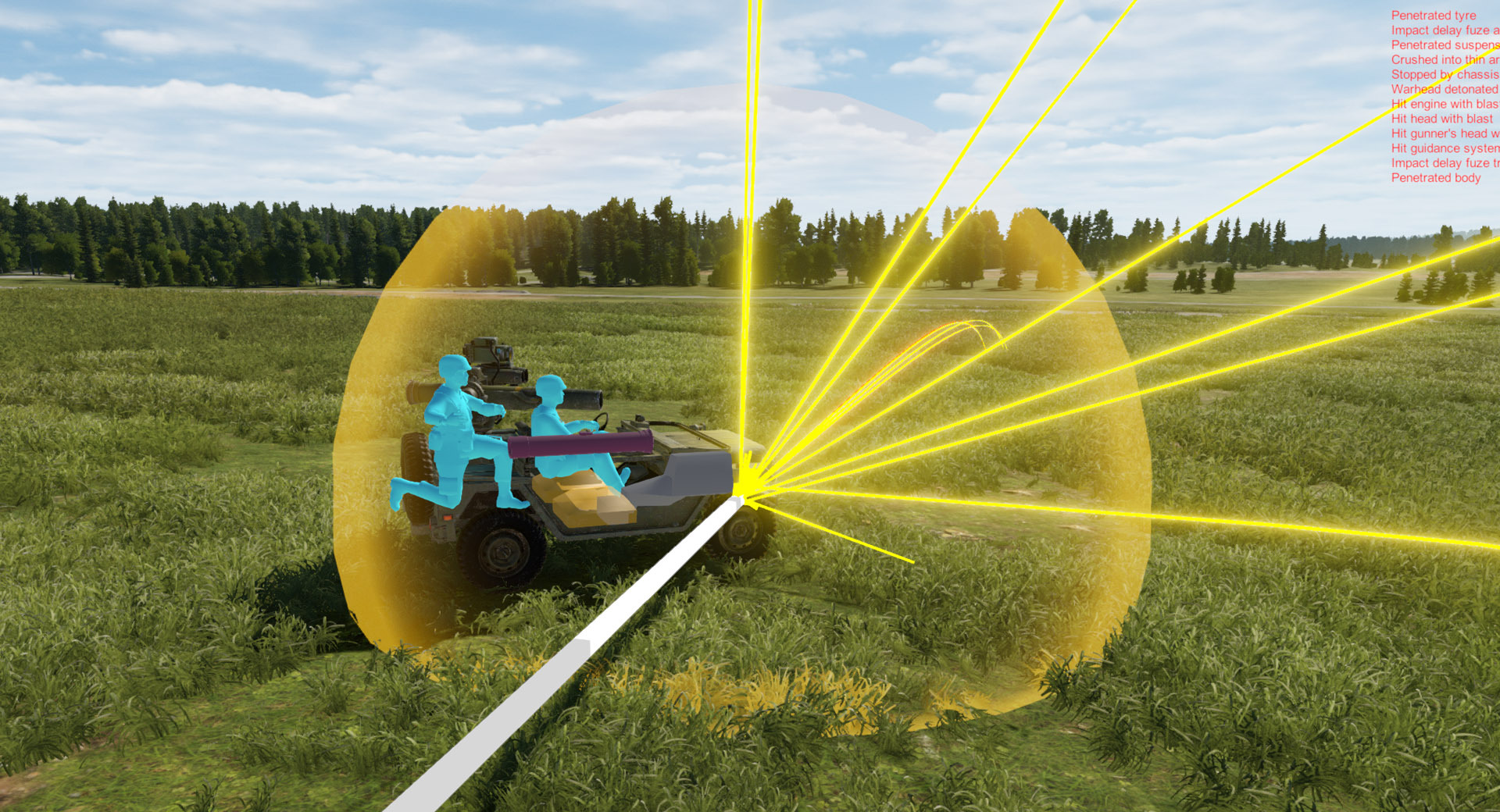
To solve the problem of figuring out whether explosives did anything to a target, we’ve updated the after-action review (AAR) mode with several changes intended to communicate HE blast effects:
-
An animated blast sphere emanates from the explosion’s center, with its size scaled by the power of the explosion. (Note that this does not directly correspond to the blast radius, as each HE damage mechanic has a different effective range and response to obstructions. The sphere is simply there to indicate that an explosion happened and to convey at a glance how much TNT equivalence was involved.)
-
Explosive effects are now registered as “hits” in the shot list, with the nearest affected entity listed as the target. This makes blast damage hits show up in the AAR rather than being discarded as misses, and you’ll be able to better review what happened during the battle.
-
Blast effects are now recorded in the damage log text. The red list on the screen during AAR mode will include entries with the structure “Hit [item] with blast”, indicating that one of the HE blast damage mechanisms (overpressure, frag, severe blast) came into play against the listed item.
With these changes in place, it should no longer be difficult to interpret how an entity was destroyed by explosives during a battle.
Fuzing changes
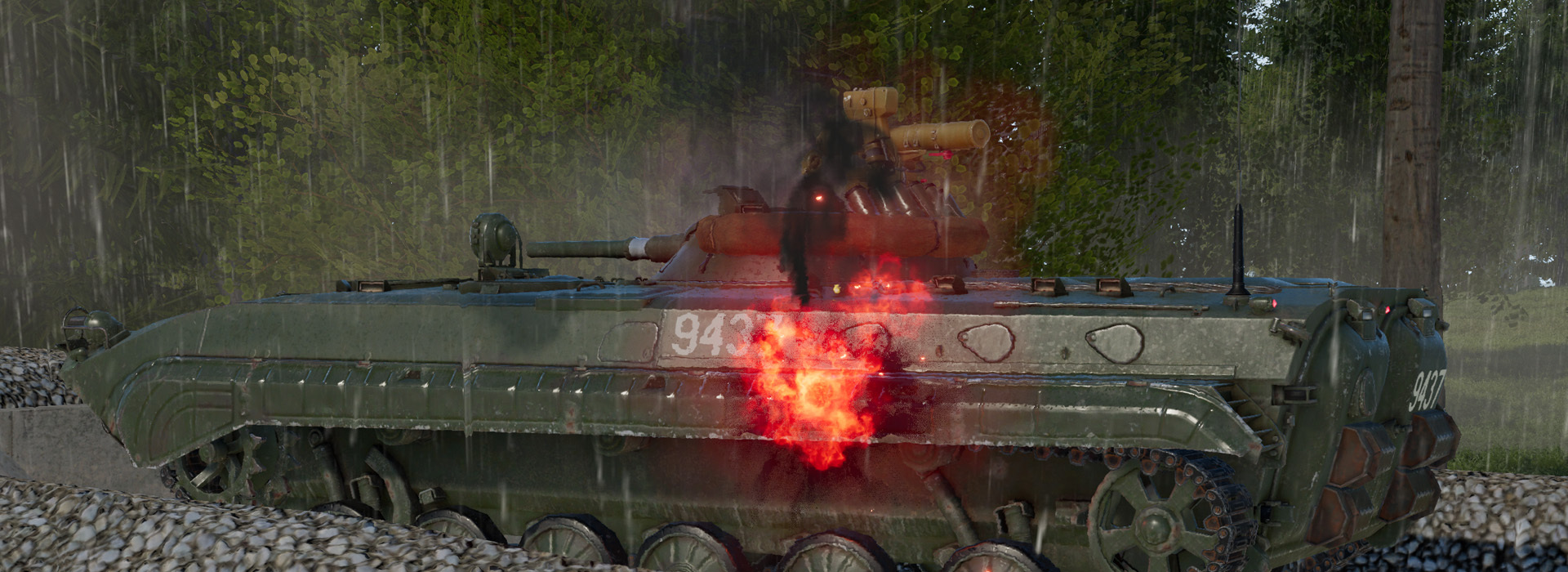
Due to the way the impact fuzes were set up, HE-frag rounds in GHPC previously had a habit of detonating on the surface of targets, even in cases where the armor was quite thin and the shell should have easily penetrated before detonating. Some rounds were set up for fuze delays, but even in these cases, the delays were often awkwardly timed and would result in serious overmatching, with the explosion happening well behind the target.
With this update, the behavior of HE-frag rounds has been unified. All “traditional” HE shells now have a short delay fuze, allowing them to defeat extremely weak armor before they detonate. (They will, of course, still detonate on the surface of the target if they fail to penetrate.) This change will make HE-frag rounds much more viable against APCs and trucks, which will alleviate some of the annoyance of running an HE-heavy ammo loadout in a mission with frequent vehicle targets.
But what about HESH rounds? They don’t fuze and penetrate like traditional HE-frag rounds, so they are exempt from this change. However, there is good news for HESH enjoyers! During the HE overhaul, we discovered that the West Germans’ 105mm HESH round was underperforming based on its explosive mass. As of this update, the warhead is now approximately 3x more effective against targets in the open.
CHANGE LOG
With all of that said, here’s the full list of changes in GHPC 20260814.
NEW CONTENT
-
Added Luchs A1 and Luchs A2 as scout vehicles
-
Added new mission “Mobile Spear” in North Fields
-
Added new mission “Eager Eyeball” in Eastern Road
-
Added new blast sphere visualizer for HE impacts in AAR mode
FEATURES AND ADJUSTMENTS
-
Overhauled HE damage system to introduce additional mechanisms besides existing overpressure
-
Significantly optimized HE damage system
-
Added indirect target tracking to register shots as hits in AAR if they deal blast damage
-
Added blast damage logging to “red text” in AAR mode
-
Revised blast damage tuning to be more reasonable when dealing with various armor levels
-
Set most traditional HE munitions to delay fuze mode to enable better penetration of soft targets
-
Added damage hitzones to IFV missile launcher tubes
-
Optimized loading times for all missions
-
Optimized multiple rendering and code systems
-
Reduced armor ratings of some helicopter parts
-
Made helicopter systems more vulnerable to explosives
-
Increased zoom level of BRDM and BTR gunner’s sights
FIXES
-
Fixed munitions, especially ATGMs, being able to clip through terrain at shallow angles
-
Fixed certain smoke effects rendering over distance haze
-
Fixed several issues that could lead to inconsistent HE performance
-
Fixed HESH having its explosive mass set too low
-
Fixed some blast damage calculations ignoring terrain obstruction
-
Fixed a rare issue that could lead to crew voices calling for direction adjustment despite main gun being on target
-
Fixed BMP-2 driving components not being destroyable
-
Fixed T-64R not making track marks at all
-
Fixed numerous vehicles not making marks with the whole ground contact zone of the tracks
-
Fixed vehicles not repeating looped patrol routes
-
Fixed an issue in wheel simulation that could cause physics instability
-
Fixed BMPs displaying restock options in the Q menu despite having no reserve ammo
-
Fixed an issue with subtitle display on ultrawide monitors
-
Fixed painted roundels not dissolving when vehicle becomes scorched
-
Fixed G3 rifles being silent in semi-automatic mode
-
Fixed mesh gaps when parts detach/open on PT-76B and M2 Bradley
-
Fixed some cases where armor or internal components were unlabeled in AAR damage logs
-
Fixed M151 driver not having a role label in AAR damage logs
-
Fixed an issue with Marder decorations not being randomized properly
Thanks for playing!
6 Likes
I’m not sure what other people’s experiences are, but GHPC is a humbling experience for me. I come from the M1 Tank Platoon series and dabbled with Steel Beasts, so you would think I would be ready for GHPC. Naaah… Disconnect! Shock and Awe!
3 Likes
If someone taste SBP is hard to be in love with something else.
2 Likes
I did not get SBP because of the dongle requirement, which made it the most cost-effective way to own the game. At the time, I wasn’t interested in either the time-limited license options or the dongle requirement. That said, I heard that it is an amazing tank simulation.
1 Like
It is like the dcs of tank sims 
SBP is a true SIMULATOR of modern tanks warfare and includes many features that not covered or not as detailed as anything else in the market. Its a must to have to all tank lovers. If someone wanna see it a bit, catch me and we can schedule a discord session where i can shows a bit of it.
GHPC is also very good and fun, but its a bit more of a fast food of tank sims, its fun nice and also have very nice features but its more into the “simcade” league. What i want it asap is the multuplayer coop feature on GHPC.
2 Likes
2 Likes