I wasn’t blown away by the Varjo Aero either, in the beginning, remember…
I think that the differences and advantages between the more recent VR headsets are small and as such depends on the expectations and needs of the user.
No particular headset stand out from the crowd, offering quantum leaps, anymore.
They are all from the last generation…
The Super at native resolution is 3840 x 3840 per eye (which is a lot of pixels!). The Quest 3 is 2064x2208 per eye. So the Super has almost twice the resolution. The image quality is extremely good. I will play more with medium settings, which is still going to be a good bit sharper than the Quest 3.
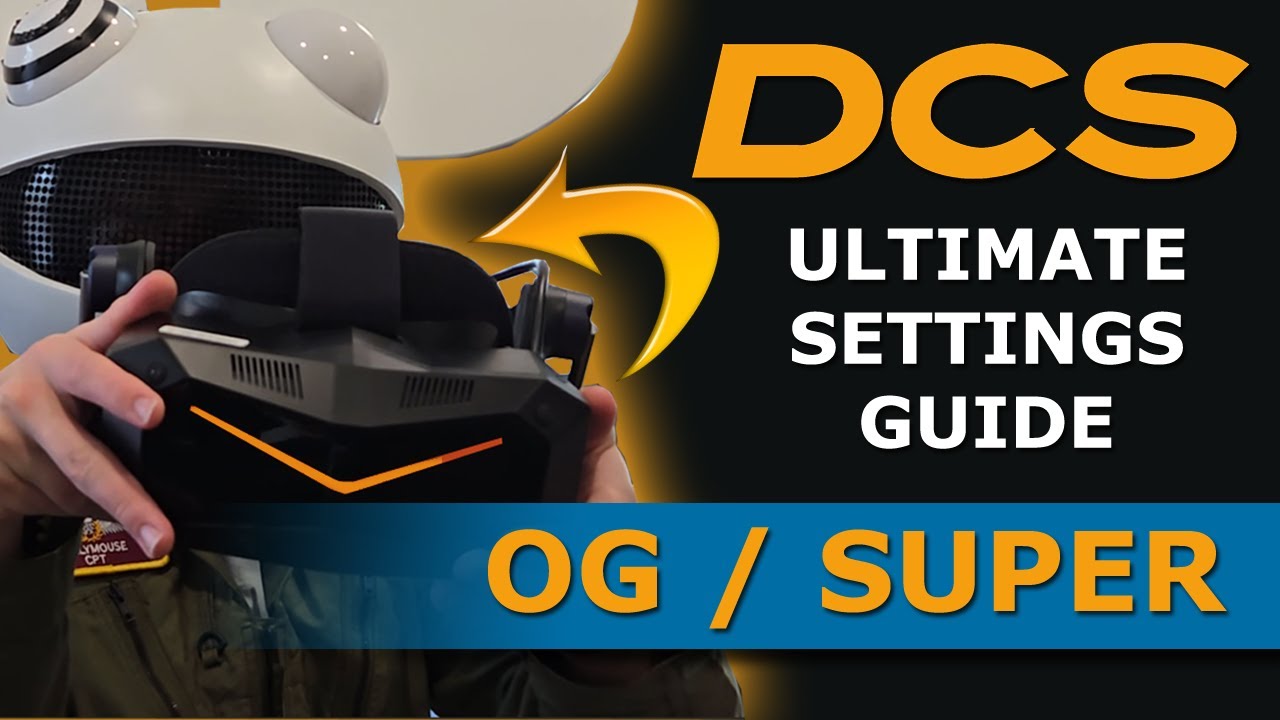
Yes, I am using quad views, but after watching a TallyMouse video, I am using QuadViews Foviated and Tallymouse’s QuadViews Companion. Maybe I should go back to the standard PiMax QuadViews?
So, fast forward 18 days and things are much, much better. I was debating sending it back for a refund before the 14 day trial period expired, but I had it ‘almost’ dialed in before having to head out on a week long trip. When I returned, I made the decision to keep the headset and I have spent a lot of time tweaking settings and experimenting.
For DCS, I am getting best results running the headset at native resolution at 90Hz, which surprised me. I have to dial things down, but it still looks great, and tack sharp. DCS does not seem to like Pimax’s Image Smoothing/ASW, but my system seems to be able cope without it (using DLSS).
MSFS is a different beast and has caused me the most problems but I now have it running smoothly at medium settings with the headset at ‘medium’ resolution, 90 Hz and locked at half frame rate with image smoothing (which works well with MSFS2024). I was still getting some random stuttering which I seem to have resolved with a piece of electrical tape being placed over one of the tracking cameras. I’m guessing the lighting in my gaming room isn’t quite good enough. I’m not sure exactly why covering one of the cameras made such a difference, but it definitely worked. I am going to look at better lighting options to see if that fixes the issue without needing the electrical. Anyway, after doing all that, I was able to take off out of Teterboro Airport and fly low over New York City giving a mostly very fluid experience. It was awesome.
I think the Quest 3’s lenses are have a wider sweet spot, and for any room scale VR gaming, the Q3 is great if you connect to your PC wirelessly. Head and hand tracking are also smoother on the Q3, maybe due to the cameras being better.
So, is it worth upgrading from the Quest 3? If you have a PC that can handle it, and the price tag isn’t a major obstacle then I would say go for it with the caveat being that it is a diminishing returns situation. The Quest 3 still represents the best bang for your buck (by far).
I have only briefly tried the Reverb, but the pancake lenses in Pico 4 is much better IMO, with close to edge to edge clarity and a large sweetspot. I sold my Index after getting the Pico, and havent looked back.
I run it over a seperate router, and Virtual desktop for PC games, and there is some pretty nice adjustability in that setup, with regards to perfomance/picture quality.
DCS ran with reasonable quality and FPS on a RTX3080, 10GB, though I have since upgraded to a 5080 in the eternal quest for FPS and higher resolution.
The price was really really good- plus I will probably sell (for peanuts) my Reverb G1… and working away from home these past two weeks gave me that little extra so I fell confident I can pull this little thing off.
@dachsdk Does it fit nicely? I reckon it’s slightly lighter than the Reverb… I can run it with a cable to the PC too, right?
Pico 4 has been my daily driver after my Reverb died.
I think it is a very good set. Lenses are good, resolution is good, probably the most comfortable headset I ever had (this of course is individual). You can run it wireless with Virtual Desktop or USB tethered with Pico Connect (which also works well). USB giving you lower latency and possibility to charge while playing. Both software allow seamlesly change the render resolution, so it is easy to accommodate to different requirements of the games.
If I would upgrade it would have to be in the class of Meganex Superlight or Pimax Crystal Light/Super. They are on different price levels though and there might even be some tradeoffs, so I am not in a hurry.
I’ve upgraded mine with aftermarket face gasket, and the BoboVR battery headstrap. Mostly because I always run it wireless, and then the extra battery juice is nice for long sessions. It also makes the already nice front/back balance even better, with the battery sitting on the back of the headstrap.
Its perfectly usable with the included strap and facegasket though, the Bobo is just a bit more plush and comfy.
I’ve never actually tried the wired option, but I see UncleZam answered that.
For those of us on Pimax headsets, they released a new version of their software yesterday, and I am noticing they did not lie about less CPU usage! Get 'em while they hot!
 .
.
 from here.
 Brilliant! Thanks!