Since the launch of the RX 480 there has been leak after leak of its upcoming competitor from the Green Team, the GeForce GTX 1060. Today, we have our first real indication (If these are to be believed) of the card’s performance. XFastest originally posted the leaks, which were then spotted by WCCFTech. The leaks showcase the GTX 1060’s performance in both 3DMark’s FireStrike and FireStrike Ultra benchmarks.

NVIDIA GeForce GTX 1060 Leaked FireStrike Benchmarks
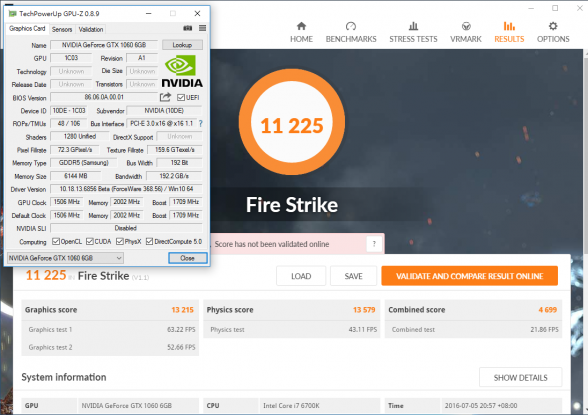
As we can see, the GTX 1060 model which features 6GB of VRAM offers a Graphics score which is significantly higher than we achieved with the reference RX 480, when we reviewed it last week. That score was 12,106 compared to the leaked GTX 1060 benchmark which scores 13,315, which is an increase of about 10%. The actual FireStrike score itself is also quite a bit higher as well, but that takes into account other factors such as Physics, which are mostly CPU bound. The leaked benchmarks utilize a Core i7 6700K, which is quite a bit slower than the Core i7 5960X which we use in our graphics testbench. So, that is much less of a 1-1 comparison. Still, these numbers (if real) should be a good indication as to the performance we can expect from the GTX 1060.
The leaks also included tests using 3DMark’s FireStike Ultra, which is the very same benchmark but at an increased resolution of 4K, rather than 1080p. Both scores indicate performance comparable to the GTX 980, which should make the GTX 1060 quite an impressive card at the $250-$300 price point it is expected to launch at.
These leaks also reaffirm earlier leaks of the GTX 1060’s specifications, including the 1280 CUDA cores, 6GB of GDDR5 and 192-bit Memory Bus. We also get a look at the clock speeds we can expect from the GPU which is 1506MHz on the Base Clock and 1709MHz on the Boost Clock. This is slightly higher than the reference clocks available on the GTX 1070.
As always, you should take these leaks with a grain of salt as there is no way of confirming their legitimacy. That being said, it definitely looks like we’re going to be seeing quite the fight in the sub-$300 GPU market this summer.
As the various board partners finally begin unveiling their custom GTX 1000 series designs, GIGABYTE has arrived with their latest entry in the Mini ITX game. GIGABYTE’s GeForce GTX 1070 Mini ITX OC is a compact 17cm (7in) in length, allowing it to fit into Mini ITX gaming builds. The cooler on this card houses a 90mm fan with custom blades, which GIGABYTE claims will enhance the airflow. In the heatsink itself we can find three heat pipes which make direct contact with the GPU core. The aim of this cooler is of course to bring higher performance at lower temperatures. Though from my own experience good performance a less audible GPU fan behind the television is greatly appreciated as well.
The board itself is built out of higher quality materials in an effort to increase lifespan while giving improved performance. To go with the cooler and component choices, this card has been given a 5+1 phase power delivery system, as compared to the 4+1 phase system of the GTX 1070 reference PCB.
| GTX 1070 Specification Comparison | |||
|---|---|---|---|
| Mini ITX (OC Mode) | Mini ITX (Gaming Mode) | GTX 1070 Founders Edition | |
| Core Clock | 1556MHz | 1531MHz | 1506MHz |
| Boost Clock | 1746MHz | 1721MHz | 1683MHz |
On the topic of overclocking this card comes with two performance profiles, Gaming and OC Mode. Gaming Mode is the default profile, which the slightly higher clocked OC Mode is enabled through their Xtreme Engine utility. Both the Gaming and OC Mode options offer a mild overclock over the founder’s edition card.
As more Mini ITX cards come along it will indeed be interesting to see how powerful compact gaming rigs will become. Beginning with cards such as the AMD Radeon R9 Nano, enthusiasts in the last generation who wanted to save on space gained a lot of freedom on what they could do while maintaining big performance. This generation should improve performance in mITX systems by a good amount, and I don’t expect this is the last mITX GTX 1070 we’re going to see.
NVIDIA announces its GeForce GTX 1060, ready to battle Radeon RX 480
After weeks of rumors and leaks on NVIDIA’s GeForce GTX 1060, the company has finally made it official. Riding on the wave of AMD’s new Radeon RX 480 which is priced at $199, the new GeForce GTX 1060 features GTX 980 level performance starting from $249
For $249, NVIDIA has constructed the GeForce GTX 1060 to be a mid-range monster with 1280 CUDA cores and 6GB of GDDR5 RAM at 8GHz. For clock speeds, NVIDIA has said that the boost clock on the GP106 GPU hits 1.7GHz, and can be “easily overclocked to 2GHz for further performance”. As for power consumption, thanks to the incredibly efficient Pascal architecture and the new 16nm FinFET process, the GeForce GTX 1060 has a power-sipping 120W TDP.
When it comes to performance, NVIDIA promises GTX 980 like performance, with the GTX 1060 being around 15% faster and over 75% more power efficient “than the closest competitive product”, adds NVIDIA. By “the closest competitive product”, we’re guessing NVIDIA means AMD’s new Radeon RX 480, which has a 150W TDP and can’t beat the GTX 980 on its own.
Now, the price; NVIDIA has priced the GeForce GTX 1060 Founders Edition at $299, which has “premium materials and components, including a faceted die-cast aluminum body machine finished for strength and rigidity and a thermal solution designed to run cool and quiet”. NVIDIA adds that like the GeForce GTX 1080 and GTX 1070 Founders Edition cards, the GTX 1060 has “a dual-FETs power supply is used to improve power efficiency, along with a low impedance power delivery network and custom voltage regulators”.
AIB partners will have their cards available from $249, so we should see the likes of MSI, ASUS, EVGA, GIGABYTE and others to have cards from $249 and up. Custom cards will be on their way very soon, with some great custom PCBs and cooling setups - so expect the same custom cards from partners like we saw with the GTX 1080 and GTX 1070 cards.
GPU unveiling just in time for my next build!
Nvidia’s Pascal Titan rumoured to launch in August
At this point, we have all had a good look at what Pascal can do following on from the launches of the GTX 1080 and GTX 1070. However, there is a more powerful Pascal card on the horizon- Nvidia’s next Titan, which is currently rumoured to launch at Gamescom in August.
According to a report from VRWorld, Nvidia’s next high-end GPU will be the GTX Titan P, sporting the GP102 chip, which is said to be at least 50% faster than the GTX 1080. That said, Nvidia is still focussing on its GP102 Quadro cards, which will launch first, so performance numbers for the next Titan are apparently based on internal targets.
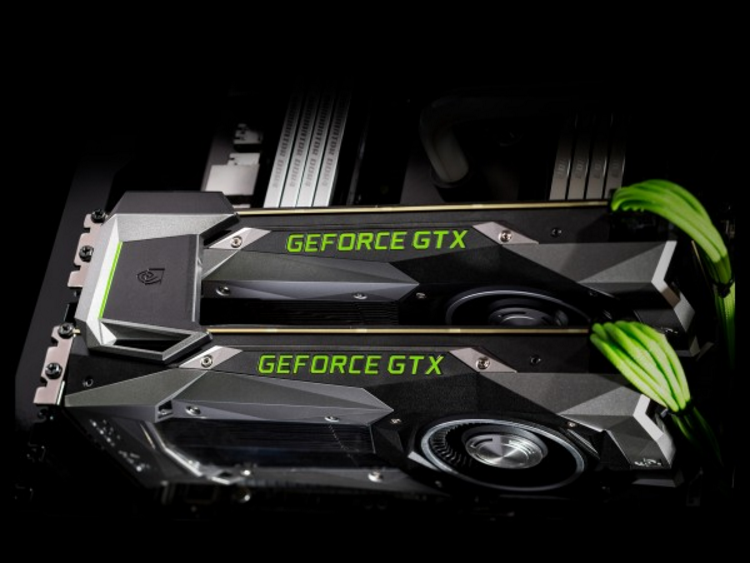
It is said that there are two different versions of Nvidia’s GeForce GP102 card, one with 6GB of HBM2 and another with 12GB of HBM2. Both will likely use an 8+6 pin power configuration, allowing for a 300W TDP. One interesting tidbit from the report is that the sources claim that these new GPUs are bound by the CPU, so a 3GHz Intel Core i7-6950x won’t feed the card as well as a 4GHz Core i7 6700K.
Obviously this is all unofficial for now so take it with a grain of salt. That said, if what is said was accurate, we should see Nvidia announce its next Titan at Gamescom sometime between the 17th of August and the 21st.
So does anyone have a good guess or estimation (actually a chart would be nice…LOL…) that shows how long I should wait for GTX1080 cards to fall in price? They appear to be running around $100 above MSRP at the moment (if you can even find them) and I’m just wondering at what point I should jump in. I’m definitely getting one…but if I can save $200 by waiting a month or two, I can live with this GTX760 for another couple months.
I think that by mid-august, there be more in store. But don’t hold me to that. It was paper launch, and it sells as fast as vendors are getting them, so yeah, the price is more than it should be.
The NVIDIA Titan X (Pascal) 12GB Graphics Card Review
A Beautiful Graphics Card
As a surprise to nearly everyone, on July 21st NVIDIA announced the existence of the new Titan X graphics cards, which are based on the brand new GP102 Pascal GPU. Though it shares a name, for some unexplained reason, with the Maxwell-based Titan X graphics card launched in March of 2015, this is card is a significant performance upgrade. Using the largest consumer-facing Pascal GPU to date (with only the GP100 used in the Tesla P100 exceeding it), the new Titan X is going to be a very expensive, and very fast gaming card.
As has been the case since the introduction of the Titan brand, NVIDIA claims that this card is for gamers that want the very best in graphics hardware as well as for developers and need an ultra-powerful GPGPU device. GP102 does not integrate improved FP64 / double precision compute cores, so we are basically looking at an upgraded and improved GP104 Pascal chip. That’s nothing to sneeze at, of course, and you can see in the specifications below that we expect (and can now show you) Titan X (Pascal) is a gaming monster.
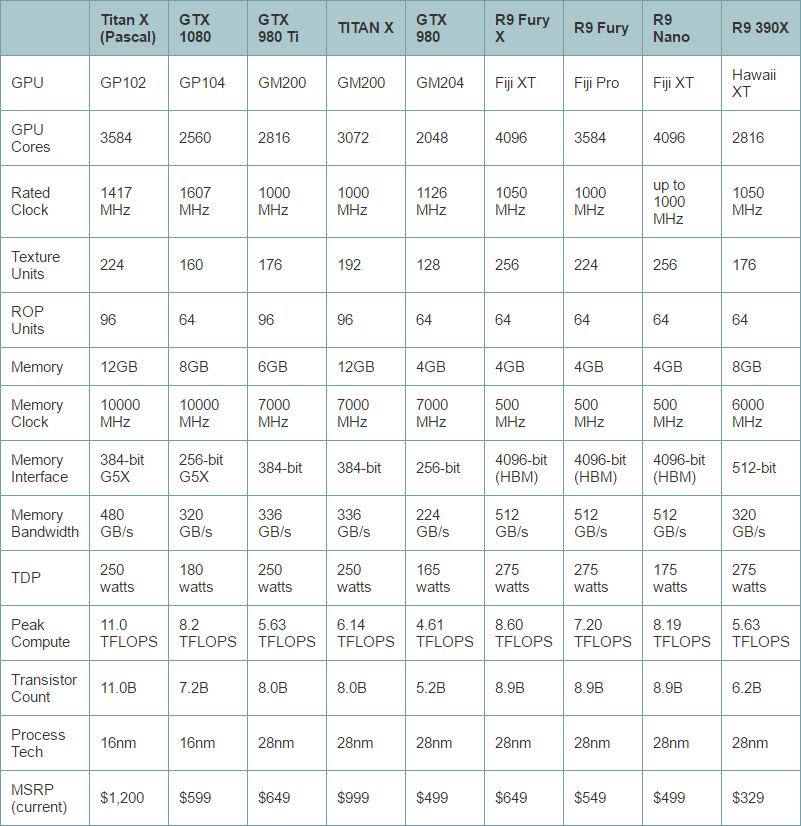
GP102 features 40% more CUDA cores than the GP104 at slightly lower clock speeds. The rated 11 TFLOPS of single precision compute of the new Titan X is 34% higher than that of the GeForce GTX 1080 and I would expect gaming performance to scale in line with that difference.
Titan X (Pascal) does not utilize the full GP102 GPU; the recently announced Pascal P6000 does, however, which gives it a CUDA core count of 3,840 (256 more than Titan X).
A full GP102 GPU
The complete GPU effectively loses 7% of its compute capability with the new Titan X, although that is likely to help increase available clock headroom and yield.
The new Titan X will feature 12GB of GDDR5X memory, not HBM as the GP100 chip has, so this is clearly a unique chip with a new memory interface. NVIDIA claims it has 480 GB/s of bandwidth on a 384-bit memory controller interface running at the same 10 Gbps as the GTX 1080.
Continue reading our review of the new NVIDIA Titan X (Pascal) Graphics Card!!
Other than these changes, and corresponding improvements in texture units and ROP count, there really isn’t anything architecturally different in the Pascal-based Titan X over a GeForce GTX 1080. Just more, better and faster. If you are new to NVIDIA’s latest Pascal architecture, product features and what the move to 14nm nets them, you definitely should read our GeForce GTX 1080 review that covers all of that!
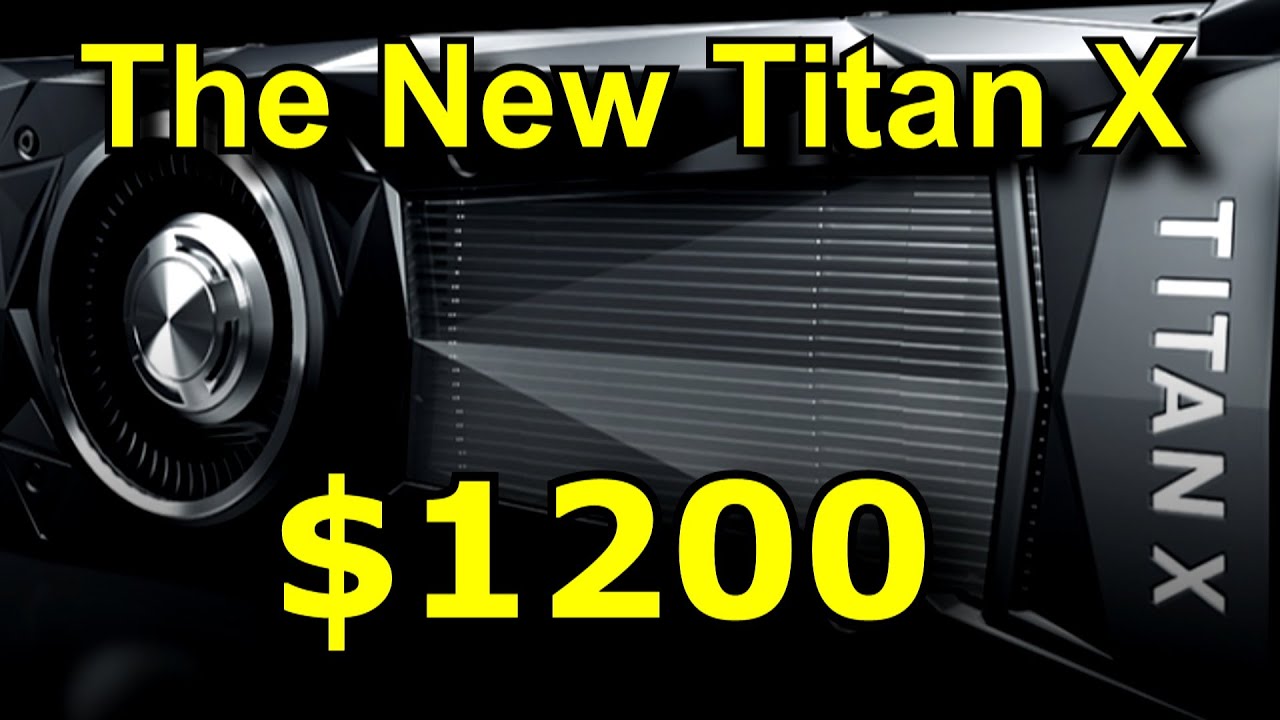
What will you be asked to pay for this performance? $1200, going on sale today, and only on NVIDIA.com, at least for now. Considering the prices of GeForce GTX 1080 cards with such limited availability, the $1200 price tag MIGHT NOT seem so insane. That’s higher than the $999 starting price of the Titan X based on Maxwell in March of 2015 - the claims that NVIDIA is artificially raising prices of cards in each segment will continue, it seems.
The NVIDIA Titan X (Pascal) Graphics Card
Our time was short with the new Titan X, as our team prepares for a three week whirlwind of events, but we wanted to get a quick review of this beast out the door ASAP.
The new Titan X features the same design language started with the GTX 1080, a rif on the now aging design for NVIDIA reference products. This includes a blower style cooler with an illuminated GeForce GTX logo along the top of the card (interestingly, one of only a few places I see referencing GeForce with this product) and a window to see the heatsink under the shroud.
Rotating the card around the back we find a full cover backplate on the Titan X with an optional segment on the back half you can remove to improve airflow on adjacent graphics cards in SLI. The backplate even has a custom Titan X stamp on it.
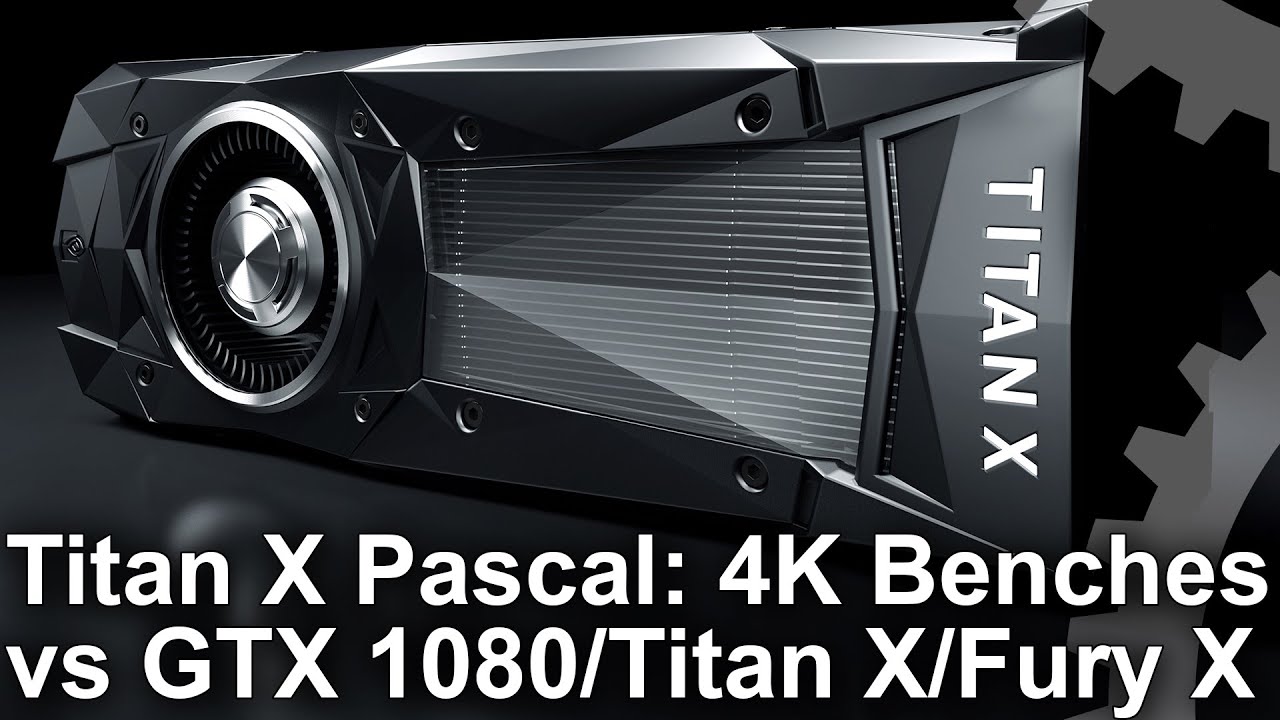
Though the shroud design is shared with the GTX 1080, the Titan X goes with a black out color scheme and a chrome “TITAN X” logo along the front.
Display connectivity remains unchanged: three full size DisplayPort connections, one HDMI 2.0a and a dual-link DVI connection for legacy displays.
With a 250 watt TDP, the card includes both a 6-pin and an 8-pin external power connection. This is more than enough to hit 250 watts but allows the card to draw as much as 300 watts when overclocked.
Titan X (Pascal) includes a set of SLI connections to support the new high bandwidth SLI connections, though still only in 2-Way SLI officially.
Rest of the review can be read at:
New Titan Xp. It’s slightly faster than the old Titan X Pascal…
I guess everyone knows about the 1080ti by know though 
Volta coming out
nvidia can blow me i just bought a card  fingers in ears I can’t hear youuuuu
Still waiting for EVGA hydro 1080TI…
More Volta, rip 1080’s
And here I am…Just want to buy 1080TI hybrid from EVGA. But it’s sold out everywhere.
I’m very happy with my 1080 stop tryin to ruin my honeymoon kthx