Interesting article from Tom’s Hardware on the Pimax 8K:
Wow… while prduction values apparently are not the absolute top, it totally looks like something viable for the masses.
I expect this to make a nice positive impact on the market…
We’ll see…
According to Wags re Pimax:
“While it’s too early to know exactly what will come from it, we are in touch with Pimax regarding their 8K system and how we can best cooperate for an amazing DCS VR experience.”
I’ll be interested to see how that works out.
Ditto. Like everyone else, resolution is my biggest complaint with the Rift. I can’t wait to be able to turn labels back off!
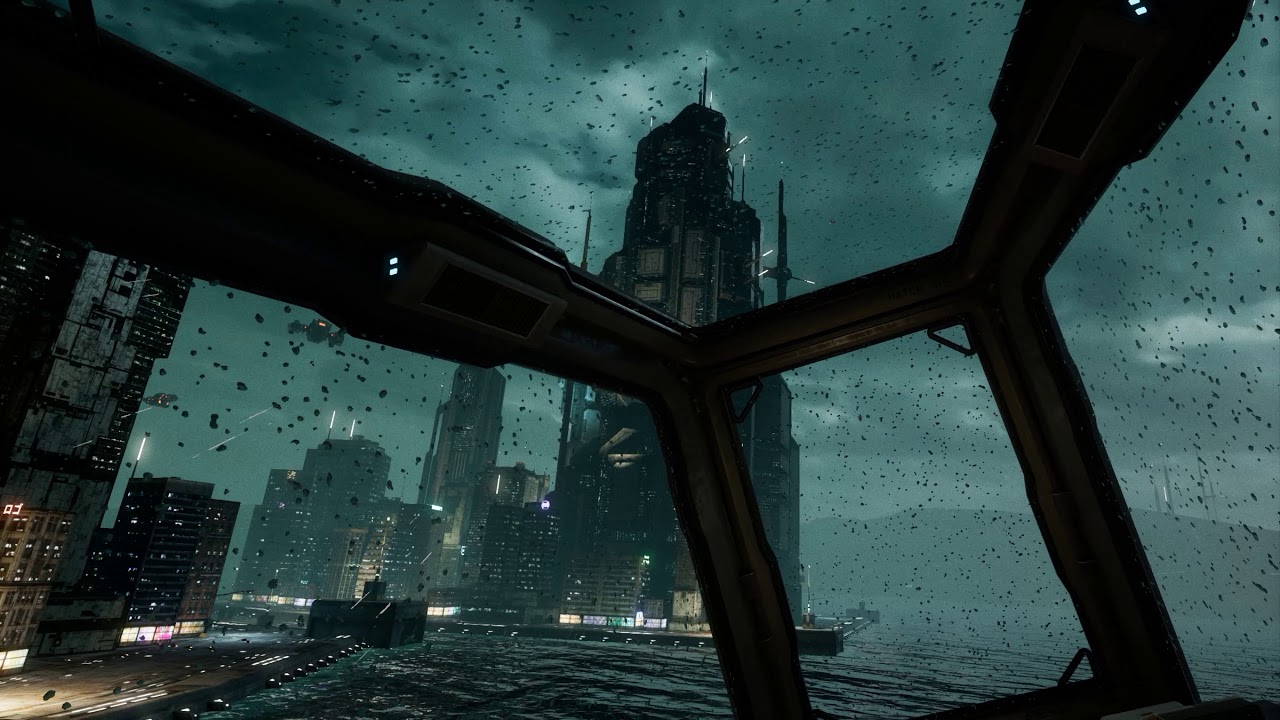
Yum. Had a chance finally to play the Aircar VR demo…wow…pretty darn cool. Not hard to imagine that they might be able to turn that into some sort of decent game. It had shades of Hardwar to it (and obviously Blade Runner). It is just a vehicle demo essentially, you don’t do anything…but it is fun to fly around.
1 Like
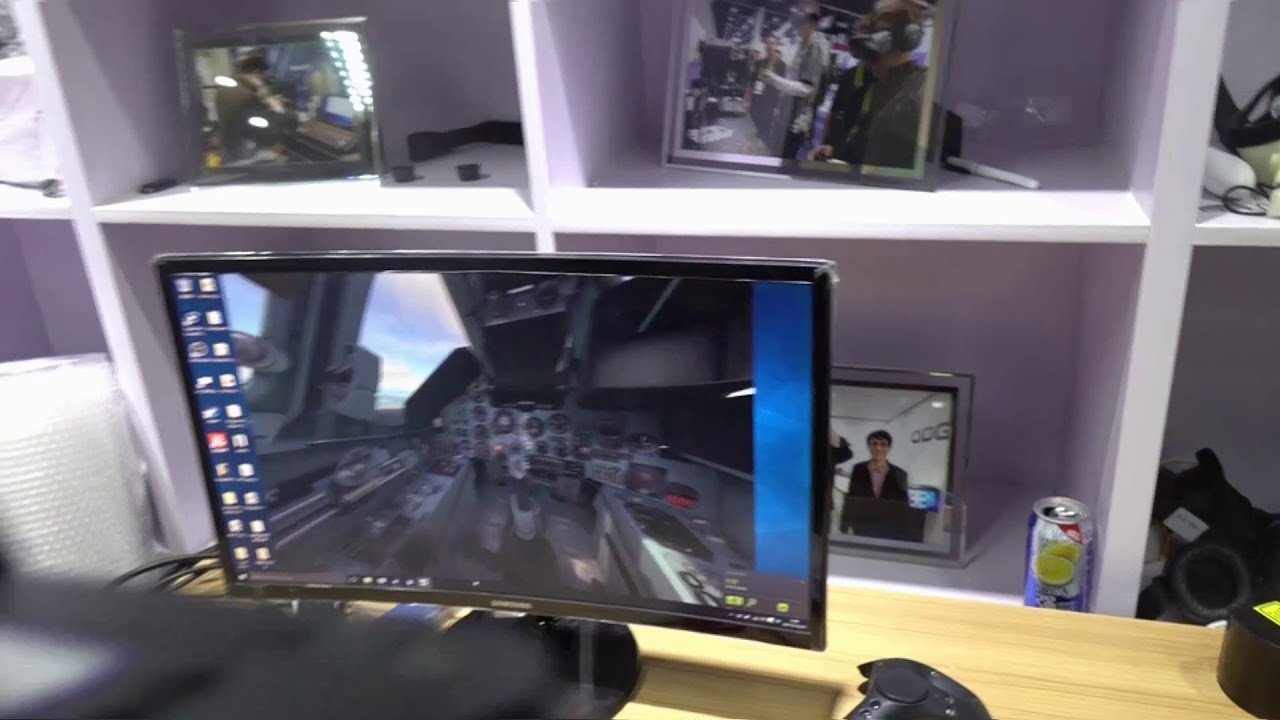
The cockpit is particularly sharp compared to my rift. I would like to see him try Normandy 
3 Likes
Interesting!
Sure, resolution and FoV improvements are important, but the real challenge is interacting with the virtual world.
You can use hand trackers, gloves and what not. But if your physical world obstructs your virtual world, you’re in trouble. Plus, using a physical HOTAS and rudderpedals, clicking real switches, pressing real buttons, will be prefferable to reaching for virtual controls, that may be seen, but not touched 
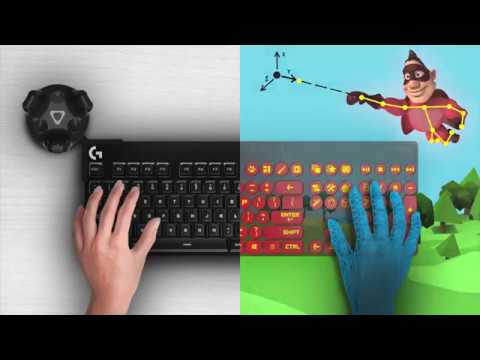
Bringing physical controllers into the virtual world, like Logitech is doing here, may be an important step in the right direction.
Does the Rift have anything comparable to the HTC puck add on? I which there was just a simple way users could somehow mark things (buttons, joystick controllers, etc) in the real world that would somehow give you a way to see them in the virtual world. Even if they just showed up as small dots in VR we could still be able to reach out too and know where that object is.
No, it doesn’t.
I like your idea of marking physical stuff so it shows up in VR.
I do too! You should file a patent! It could be just a dot with a simple pattern and a couple of colors and just big enough to be resolvable at a distance of a few feet.
Since the headsets work off of IR for head tracking (right?) I would THINK you could add some reflective stickers, like you do with trackIR and some of the DIY implementations. Of course this wouldn’t show your hands like in the above video, but I think with some muscle memory you could get some orientation … come to think of it, you could put a few dots on you hand that you could use to track. There has to me some really simple way like this that can be implemented. If I only had the time, I would try to really figure something like this out, life is just too busy anymore.
Not sure this is how the VR headsets work though. But even if they require an active IR source, a simple IR LED with a small battery would probably work.
Or, if there was a way to use the touch controllers to mark a spot, that then remained visible in VR. Just place the touch controller where you want your marker and tell the Oculus software to flag this spot for future reference… But that flag wouldn’t move with the keyboard, or whatever you wanted to flag.
Yeah, I think the Rift needs a small camera some of the MS Kinect tech (scans scene) and displays some representation of it in the headset.
Someone needs to make a simple way to address stuff like this. Cheap, simple and accessible to normal people (well that would disqualify most of us here xD ) to just pop on.
Sometimes I think companies go so far overboard to make a simple solution … but thats big business that I know very little about.
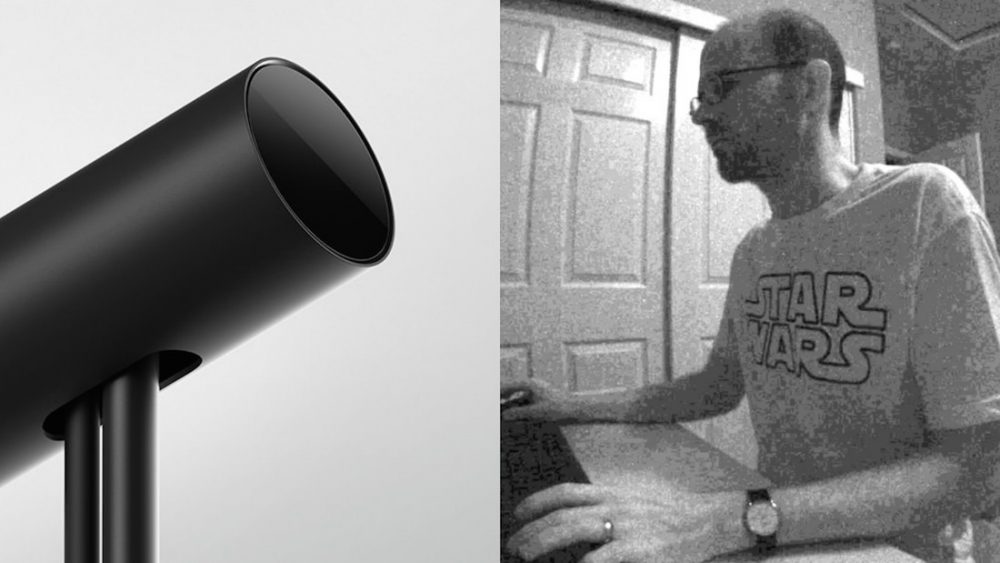
The Oculus Rift uses a tracking system called ‘Constellation’. It’s infra-red based with LED’s on the headset and controllers, with the sensors being cameras. The cameras use the pattern of the IR lights it sees for the headset and/or touch controllers. Both the headset and controllers have supplementary magnetometers, gyroscopes and accelerometers built-in to provide additional accuracy (plus useful for when the camera or cameras can’t see the lights). The tracking software only tracks the headset and touch positions so far, with more sensors (camera) meaning less chance of something blocking a view (occlusion) plus more accuracy. Constellation is a private tech owned by Oculus/Facebook, and it is not likely to be extended. Future headsets will probably use cameras mounted on the headset with image processing to work out where they are (some of the new Microsoft headsets use this ‘Inside out’ form of tracking. Here’s what a Constellation Rift CV1 headset looks like with an IR image:

The Valve Lighthouse tracking system used by the HTC Vive is quite different, in that it uses base stations that aren’t cameras (like the Rift) but laser light emitters instead. They work in a way similar to real-world lighthouses, in that they sweep a timed (invisible, IR) pulse around the room. The headset, hand controllers and other peripherals (like the Logitech keyboard puck) are the things that detect the laser light ‘pulse’ (using simple IR detectors over the device surface) and then decode where they are in 3D space (plus additional on-device systems like the Rift, i.e. accelerometers etc). This means that the lighthouse boxes (the more the better, for more overlapping sweeps of light pulses) can be dumb and cheap, as the ‘smarts’ is in the thing receiving the light pulse (the headset, the hand controllers etc decode the timed pulse). The Lighthouse spec is open and can be freely licensed for 3rd party use (like this Logitech keyboard) here:
https://partner.steamgames.com/vrlicensing
You can build your own trackable Lighthouse peripherals for about $15 USD with parts from Triad. More info for that here:
Here’s an animation of the pulses (it pulses 60 times a second but the idea is sound):
Who’d guess that @fearlessfrog of all people had a grasp of the tech behind VR tracking… 
So, the Oculus Rift is basically a TrackIR on steroids then? I have never tried the Vive, but the tracking of the Rift is absolutely rock solid.
Yes, although the Rift sensors can work great as webcams. Facebook has said on record that having multiple cameras pointing at you continuously is not data they would ever use, and who are we to doubt that? Besides, if you aren’t doing anything wrong what have you got to worry about?
(Not me in the pic below, the researcher that mounted the sensors under linux and decoded the signal it sees):
Seriously though, it is interesting to see the different technical approaches. Rift was ‘all in’ on a sitting experience and the tracking is great for that. The Vive was more always about standing/moving around like some sort of Wii/Kinect ‘VR is a physical experience’. For us in our cockpits the Rift is fine (plus getting cheaper all the time, perhaps those webcam images are supplementing the hardware costs )
PS Just to be ultra clear on my wink above, if Oculus/Facebook did send imagery to a host it would be detected and shouted from all rooftops. If your PC is compromised enough for a hacker to use these then it’s game over already. This guy gets it - Mark Zuckerberg tapes up his webcam - The Verge
It has a demo, but it seems a bit out of date compared to the main game (I hate it when devs do that, I know it takes time but it really is the best ad of your game so make it good).
Quite good fun. Sat on the floor and played and kept ducking to avoid being hit by the boom multiple times. As someone that sailed a bit it does seem pretty good, plus a lot cheaper:
That’s a great idea for a game.